


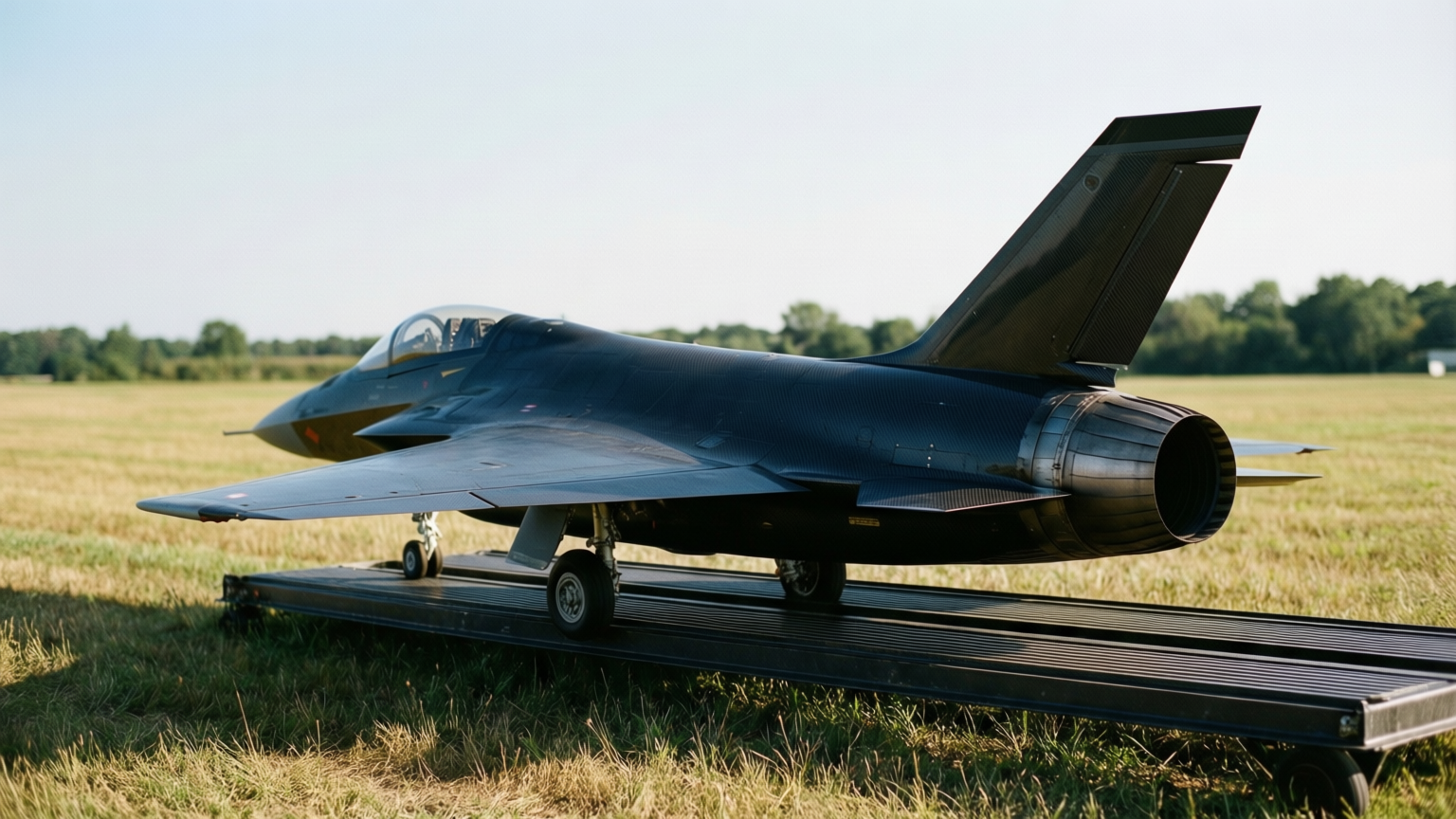
Tomas Salvo, an aerospace engineering student at Georgia Tech, has unofficially set a new world speed record for a jet-powered drone. The aircraft, named Reaper, reached 491 mph (790 km/h) during a test flight, surpassing the previous benchmark of 465 mph set by Niels Herbrich. Salvo assembled the entire project in his university dorm room, utilizing a combination of custom manufacturing and 3D printing techniques.
Dorm-Built Aircraft Specifications
The Reaper drone features a custom-molded carbon fiber shell and a laser-cut internal structure. At its core is a JetCat 250N jet engine equipped with a titanium 3D-printed nozzle. This specific nozzle design allows the engine to sit further forward in the fuselage, improving the center of gravity without requiring additional ballast. The total weight of the aircraft is 11 pounds.
Salvo stated that the drone can maintain its top speed for four minutes on a full tank of fuel. The aircraft is capable of rail or truck launch, climbing to 2,000 meters (6,600 feet) in under 20 seconds. During the record-setting run, the Reaper carried a 1.2 kg (2.6 lb) payload and flew a distance of 50 km (31 miles) at full speed. Salvo indicated that future optimizations could push the top speed past 500 mph.
Competition for the Boom Prize
The achievement has drawn attention to the Boom Prize, an $800,000 award sponsored by Boom Supersonic CEO Blake Scholl. The prize aims to encourage the development of supersonic personal aircraft. To win, an entrant must fly an air-breathing aircraft past Mach 1 for at least five seconds while climbing or flying level. The aircraft must land intact, and the same unit must complete two flights in a single day. The rules strictly prohibit corporate backing, venture capital, or government funding, targeting individual hobbyists and small teams.
While Salvo’s current speed of 491 mph is significantly below the Mach 1 threshold of 767 mph, the Reaper is currently the only US-based project in the running for the prize. Other competitors, such as the Mach Initiative’s Kingchaser, are ineligible due to citizenship restrictions. The Kingchaser, which uses a more powerful 300N engine, reached only 273 mph in testing due to space constraints during acceleration.
Funding for the Reaper project has come from a mix of early sponsorships and recent crowdfunding efforts. Salvo raised $20,000 in August and subsequently asked for an additional $50,000. The source of the initial sponsorship that provided the JetCat engine remains unclear, as does how it aligns with the Boom Prize’s strict anti-corporate rules. Salvo has not yet announced a formal entry for the prize, but his project stands as the fastest small jet-powered drone currently in operation.
Source: Tom’s Hardware
