


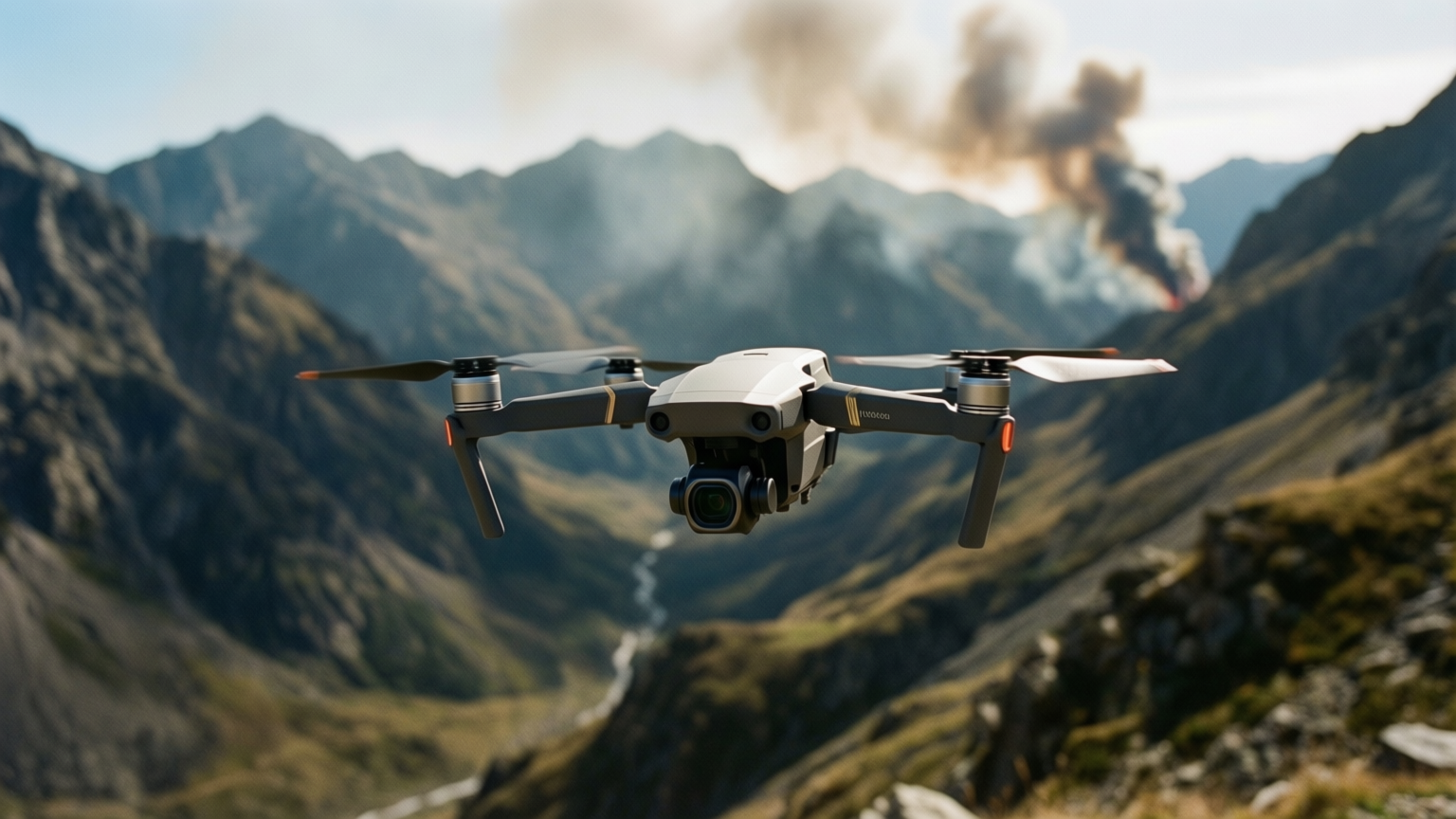
The San Bernardino County Fire Protection District has acquired a fleet of five autonomous drones designed to attack wildfires before they escalate. The equipment, provided by Seneca Systems, includes a mobile operations base and specialized autonomy software. This deployment marks a significant shift in how the largest U.S. county by land area manages its high-risk terrain.
Seneca Systems Drone Fleet Capabilities
The new system allows a single pilot to supervise the entire five-drone strike team. Each unit can deliver over 500 gallons of firefighting foam to a targeted area. The drones are equipped with onboard sensor suites that enable 24/7 operations, including nighttime missions and access to difficult-to-reach locations. According to the district, the aircraft can reach a detected fire in under 10 minutes.
Fire Chief Dan Munsey stated that the goal is to stop 90% of fires before they grow larger than 10 square feet. The autonomous rapid initial attack capability is intended to force-multiply the efforts of human firefighters. This technology aims to keep crews safer by addressing threats in high-risk zones without immediate physical presence.
Impact on Wildfire Suppression Strategy
San Bernardino County covers a vast area prone to wildfires, particularly during the spring, summer, and early fall seasons. The integration of these drones supports the district’s ambition to contain incidents at their earliest stages. By automating the initial response, the department hopes to free up other firefighting crews to handle different incidents across the county.
The system represents one of the first deployments of AI-powered drones for civilian first-responder agencies. While drones have been used to augment operations for years, this specific autonomous rapid initial attack model is a newer development. Other companies, such as BRINC and Flock, are also offering drones-as-first-responder units to cut 911 response times in various U.S. states.
The five-drone strike team is expected to enter service ahead of the 2027 wildfire season. The district has been working with Seneca Systems for over a year to develop a system that meets its specific operational needs. The mobile operations base allows the drones to be launched from anywhere, providing flexibility in rapid response scenarios.
Source: Tom’s Hardware
