


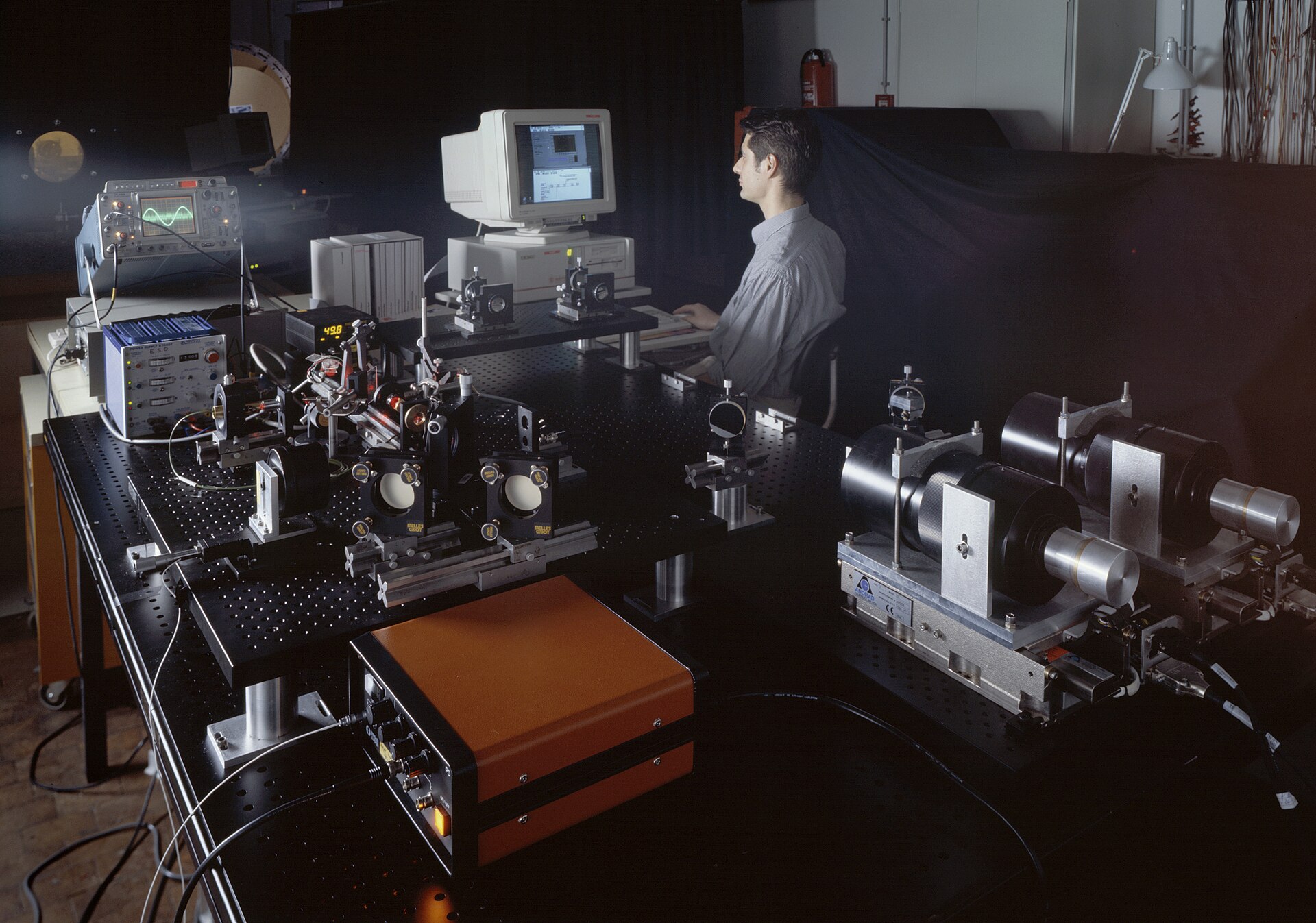
Chinese startup Langdao Silex has demonstrated a prototype extreme ultraviolet (EUV) light source at the 26th China International Industry Fair in Shanghai. The company claims the device produces over 15W of output power and utilizes 90% domestic components. Despite this milestone, industry analysts estimate that commercial viability remains three to five years away.
Langdao Silex was established in 2024 by alumni from Tsinghua University’s Gas Discharge Plasma Laboratory. The startup presented its FlintNano LPP-OXXO system, which uses laser-produced plasma (LPP) technology. This method generates EUV radiation by bombarding tiny heated metal droplets with high-energy laser pulses to create extremely hot plasma.
Technical Specifications and Performance
The FlintNano LPP-OXXO system features a 1,000W driving laser, likely a carbon dioxide laser, operating at a frequency between 1 kHz and 20 kHz. The system achieves a conversion efficiency exceeding 2%. According to the company, the EUV output exceeds 15W, with a brightness reaching 100 W/(mm sr). The plasma generated has a diameter of 60 micrometers.
Langdao Silex states that the prototype can operate continuously for over 100 hours. The company reports plasma stability of 3% RMS and EUV output power stability of 5%. These characteristics make the system suitable for semiconductor exposure experiments, although the output remains insufficient for high-volume chip production.
The startup is also developing a high-power version called the FlintMicro-LPP. This device has completed proof-of-principle validation, but Langdao has not disclosed its output power, conversion efficiency, or operating lifetime.
Comparison with Global Standards
On paper, Langdao’s EUV light source output is comparable to some of the earliest EUV sources developed by Western and Japanese equipment makers. For context, ASML’s early EUV demonstration equipment used approximately 10W at intermediate focus in 2007. Cymer’s LPP sources installed in early NXE:3100 systems delivered up to 11W during wafer exposure in 2012.
By 2013, Cymer demonstrated approximately 40W at intermediate focus over extended operating periods. Japan’s Gigaphoton targeted 25W with its first prototype in 2013 and demonstrated 43W in early 2014. By late 2014, Gigaphoton had achieved 118W during a 10-minute test.
Modern EUV lithography equipment requires considerably more powerful sources. ASML introduced 250W-class EUV sources for commercial production in 2018 and 2019. Increasing output requires more powerful CO2 lasers, highly accurate tin-droplet generators, effective debris mitigation, durable collector mirrors, and considerably better long-term reliability.
Langdao Silex has not demonstrated its EUV light source in action. All available data comes from the company itself. The company claims that 90% of its prototype’s components are domestically sourced, but it has not explained whether this figure reflects component count, value, or another metric. Representatives acknowledged that increasing EUV output and improving long-term operational stability are the targets to be achieved in a bid to commercialize the source.
Even without complete EUV scanners, Langdao’s source could support EUV photoresist development, mask inspection research, and the development of EUV collection and illumination optics. However, developing a complete EUV lithography scanner will require further advances in EUV collection and illumination systems, high-precision multilayer mirrors, wafer and reticle stages, overlay accuracy, and system integration. All of these devices require a separate supply chain that hardly exists in China today.
TrendForce reports that Langdao will need another three to five years to commercialize its technology. A light source alone does not make an EUV scanner. Even if Langdao successfully develops its EUV source and increases its output to levels suitable for high-volume manufacturing, this would not necessarily mean that China could manufacture its own EUV lithography machines any time soon.
Source: Tom’s Hardware
