


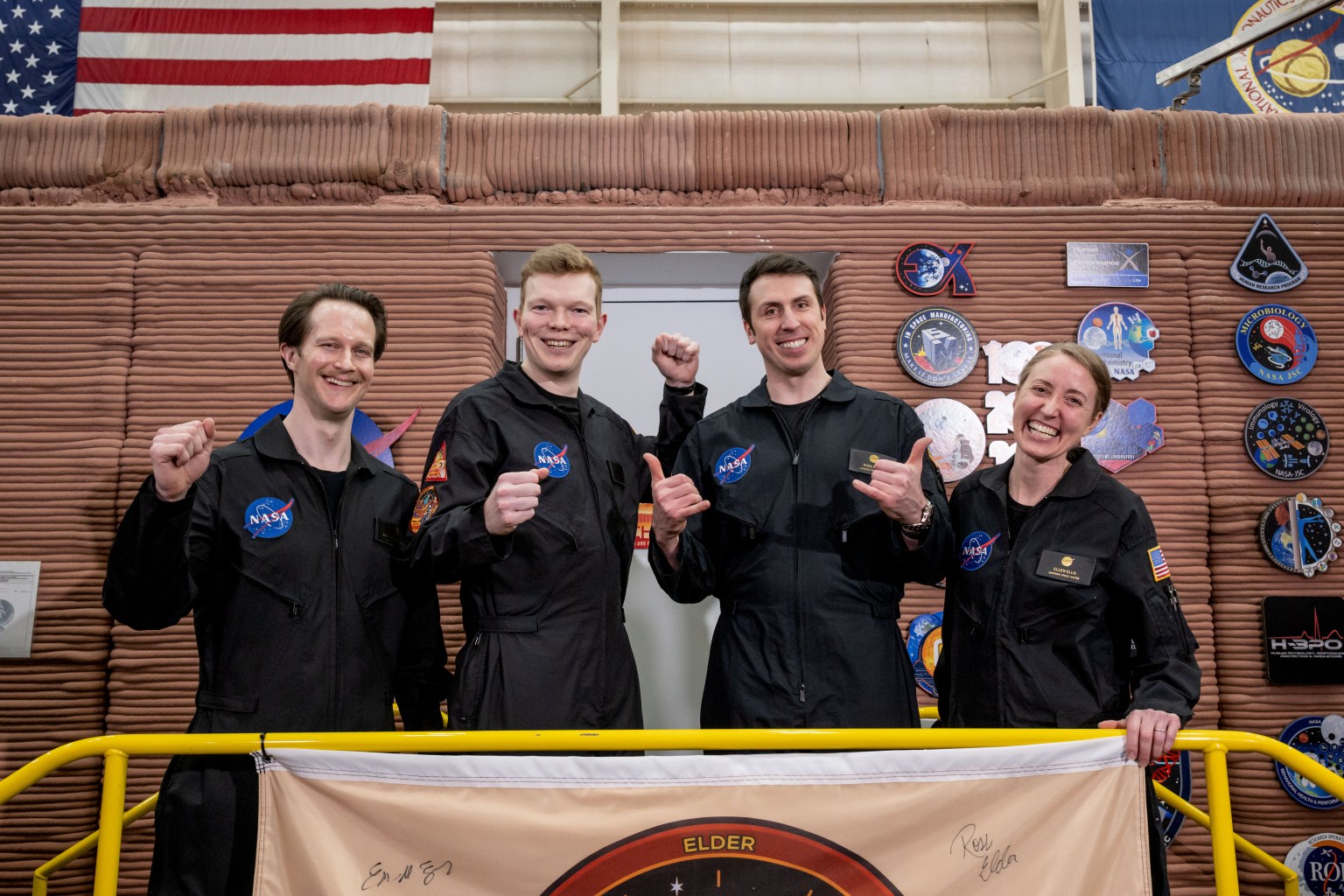
Four research volunteers exited NASA’s Mars Dune Alpha habitat on Oct. 31, marking the end of the agency’s second yearlong Mars surface simulation. The crew spent 378 days inside a roughly 1,700-square-foot, 3D-printed structure at the Johnson Space Center in Houston, living without windows, outside sounds, or real-time communication with the outside world.
Ross Elder, Ellen Ellis, James Spicer, and Matthew Montgomery entered the habitat on Oct. 19, 2025, for the Crew Health and Performance Exploration Analog (CHAPEA) Mission 2. Their work involved simulated Marswalks, robotic operations, habitat maintenance, exercise, and crop cultivation, all while navigating communication delays of up to 22 minutes each way.
Leadership and Team Dynamics in Isolation
Ross Elder, a U.S. Air Force experimental test pilot, led the crew through the demanding schedule. He found the simulated Marswalks and robotic exploration similar to flight operations. From inside the habitat, the team remotely operated a drone and a rover to survey terrain and collect rock samples. The physical preparation required for these tasks, including suit preparation and airlock procedures, highlighted the stamina needed for future explorers.
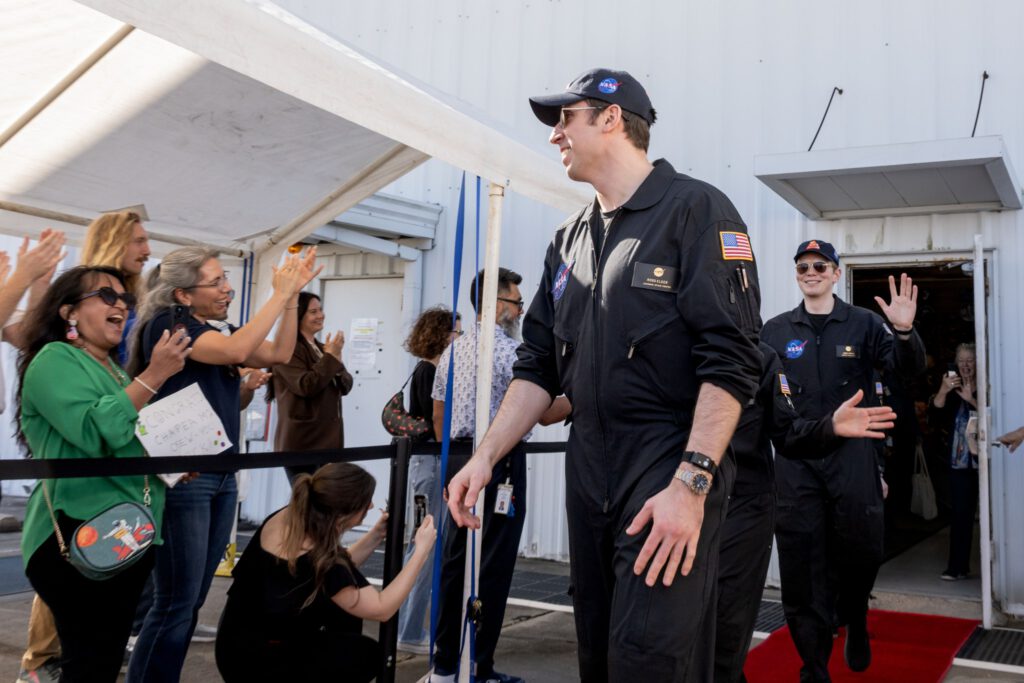
Elder praised the team’s cohesion. “The real magic has been the privilege and pleasure of seeing everyone come together, with the makings of one of the finest teams I’ve ever been a part of,” he said.
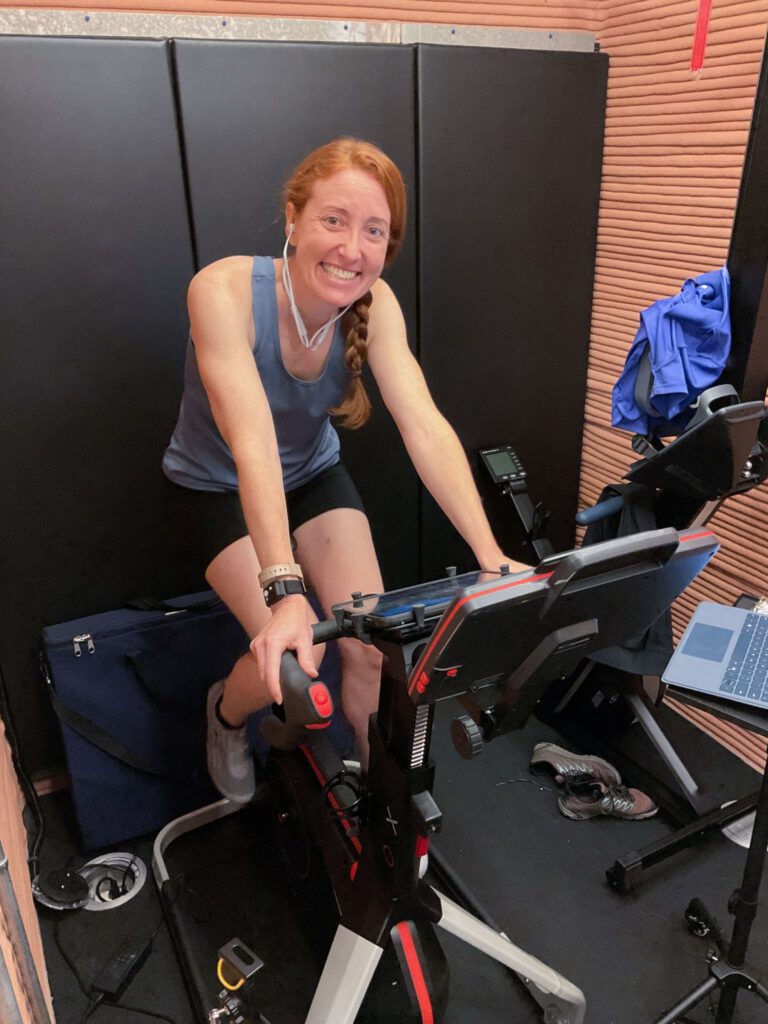
Ellen Ellis, a U.S. Space Force officer and the crew’s medical officer, focused on biological sample collection and health research. She emphasized the discipline required to follow procedures carefully and the value of tactical creativity when solving problems with limited tools. Ellis credited the coordinated support from exercise, behavioral health, and nutrition specialists for sustaining the crew’s motivation.
“When I look back on the mission, the most salient point I’ve learned is that a future Mars crew requires a highly integrated ground team,” Ellis said.
Resource Management and Daily Life
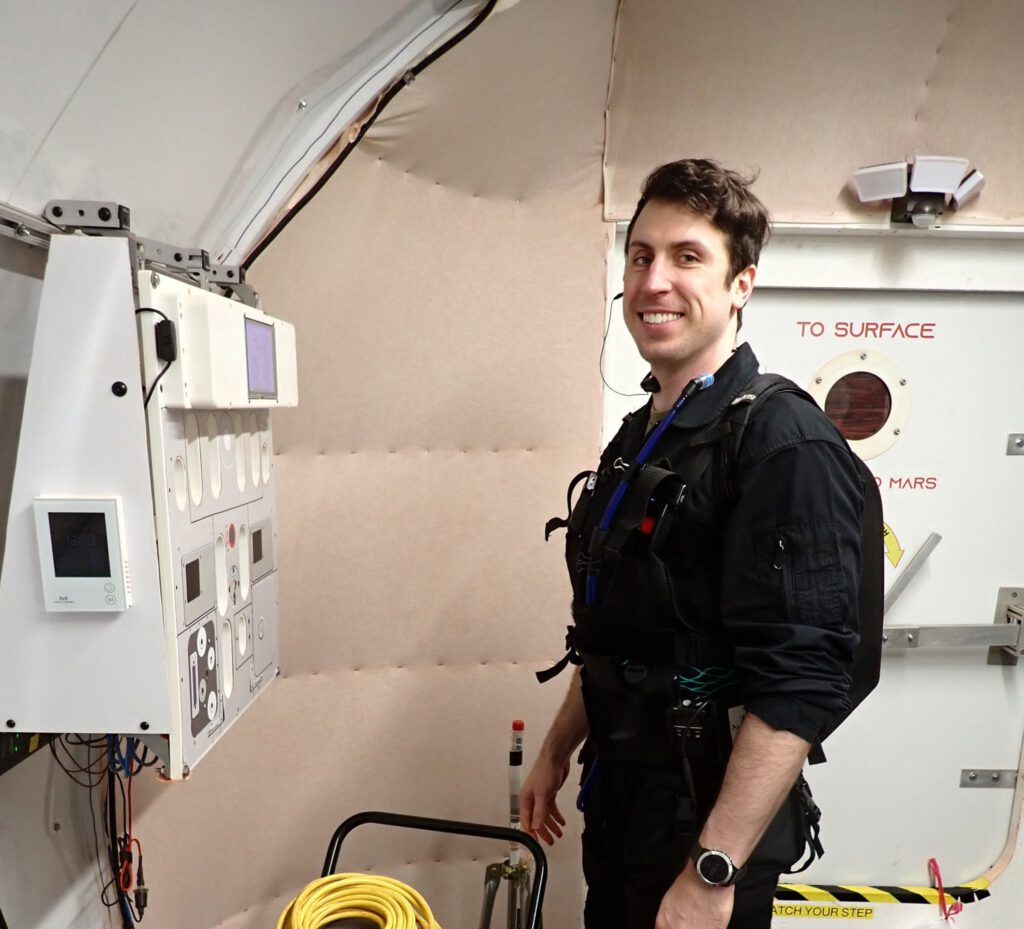
James Spicer, with a background in satellite communications and spacecraft development, managed the habitat’s maintenance. He compared the year to living aboard a submarine, where limited supplies shaped daily decisions. The crew tracked everything from dish soap to respirator filters, carefully managing food and water.
Spicer noted that the break from constant news and social media updates helped him focus on the mission. Inside the habitat, stories and jokes around the kitchen table provided relief during demanding days. He described the year as “not a chore, but a joy” thanks to his crewmates.
Matthew Montgomery, a hardware engineer with experience in robotics and technology startups, served as the crew’s technical problem-solver. He helped identify rock samples, set up the habitat’s 3D printing capabilities, and conducted a seed-germination experiment using simulated Martian soil. Montgomery learned to investigate any anomalies in equipment or data quality and to give himself grace when outcomes fell short.
“It’s really the people that make exploration possible,” Montgomery said.
NASA astronaut Jack Hathaway, who completed a 237-day mission aboard the International Space Station during the crew’s isolation, highlighted the physiological and psychological strength required for the task. He noted that while the CHAPEA crew was inside, other NASA milestones occurred, including the Artemis II astronauts traveling around the Moon and the 25th anniversary of continuous human presence on the space station.
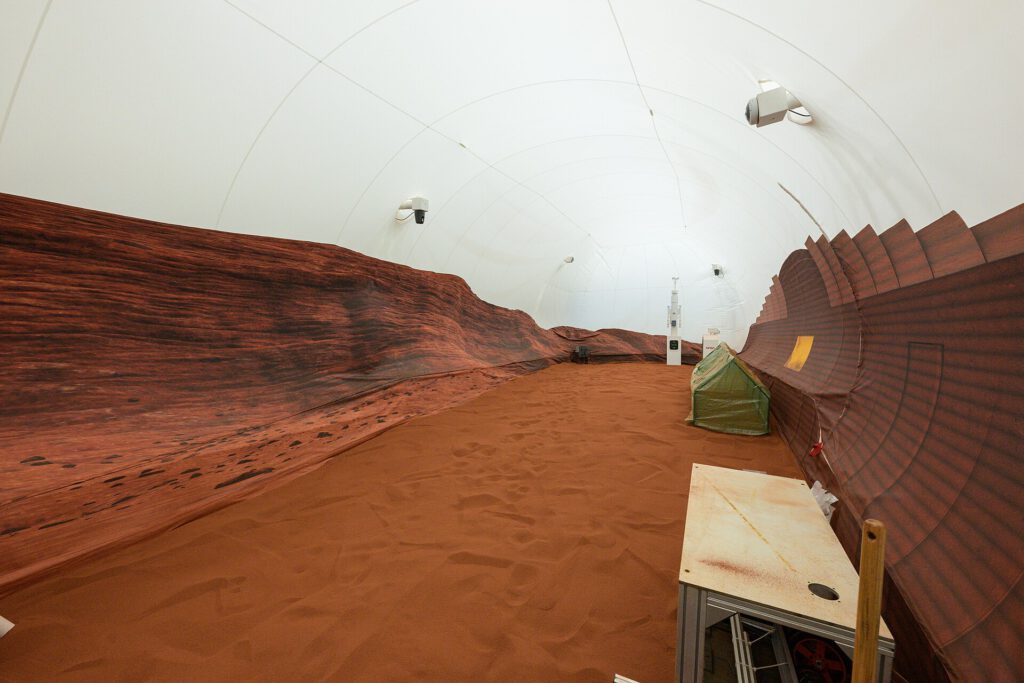
Grace Douglas, CHAPEA’s principal investigator, stated that the research will help NASA weigh human health and performance risks against resource constraints. Sara Whiting, the CHAPEA project scientist, added that the data is critical as NASA plans the Moon Base, humanity’s first lunar outpost near the Moon’s South Pole. The study builds on the first CHAPEA mission, which concluded in July 2024.
Two weeks of post-mission evaluations and debriefs will help researchers interpret the crew’s data alongside their experiences. The findings aim to inform Martian mission planning and increase the safety, health, performance, and comfort of future crews.
Source: NASA
