


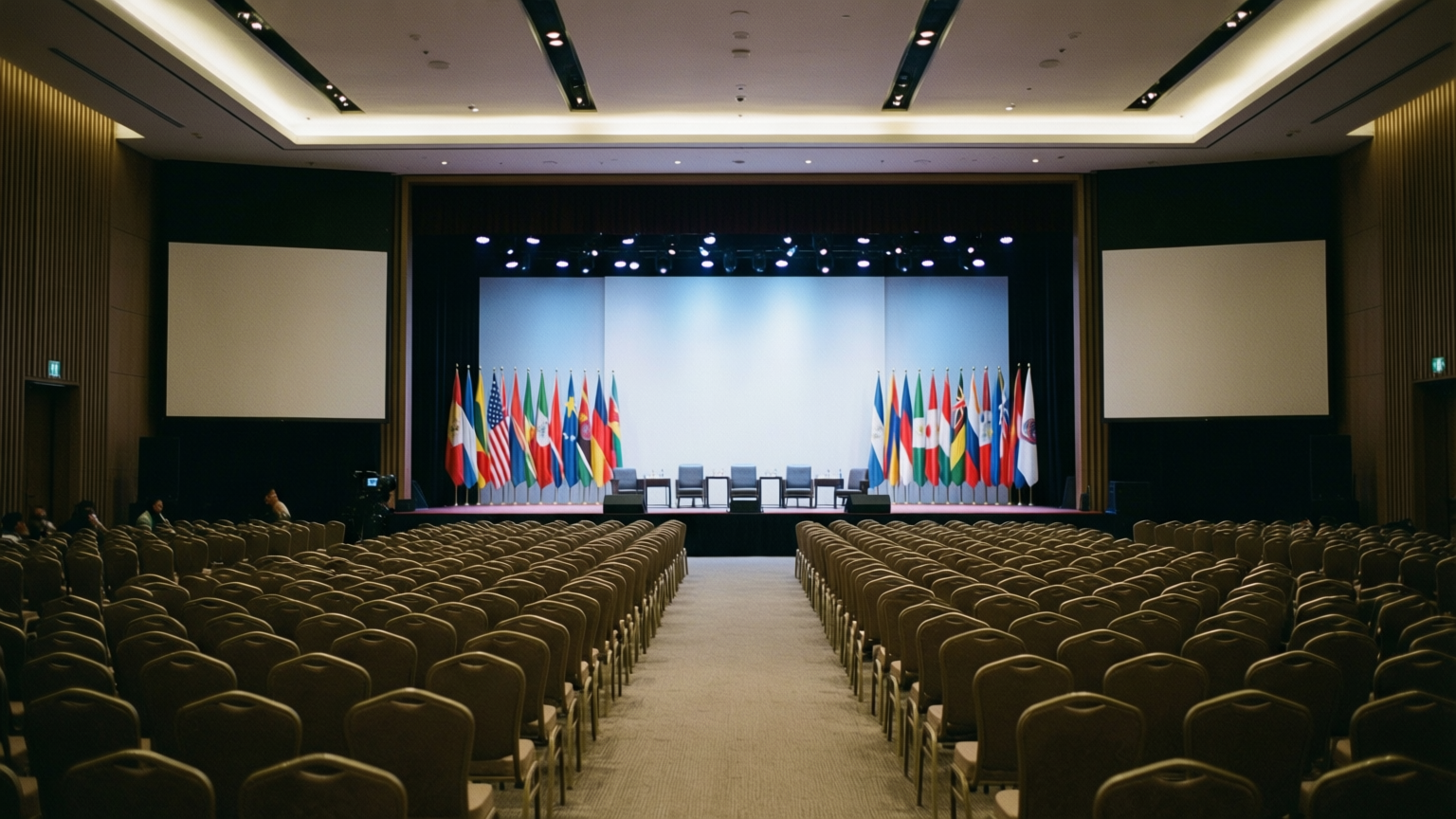
Officials from the Group of 20 economies are convening in Bangkok, Thailand, this week for a critical series of financial meetings. The gathering coincides with the annual assemblies of the International Monetary Fund and the World Bank, running from October 12 to October 18. The global economic outlook remains heavily clouded by the ongoing conflict between the United States, Israel, and Iran.
The G20 represents 19 of the world’s largest economies, including the United States, China, Japan, and the European Union. Collectively, these nations account for approximately 85 percent of global gross domestic product and three-quarters of international trade. The forum was originally established in 1999 to address shared economic concerns following the Asian Financial Crisis.
Energy Prices and Economic Strain
Discussions at the Bangkok summit are expected to focus heavily on the economic fallout from the war in the Middle East. Attacks across the region have disrupted shipping lanes, particularly in the Strait of Hormuz, leading to a sharp increase in global energy costs. Crude oil prices have remained above $100 a barrel for much of the past eight months.
This sustained price hike is placing significant pressure on government budgets and household finances, especially in Gulf states and across Asia. Australian Treasurer Jim Chalmers stated that he would use the meeting to call for an end to the conflict and the reopening of the Strait of Hormuz. He noted that the war is pushing up fuel prices, inflation, and interest rates worldwide.
Debt Concerns and Trade Tensions
Beyond the immediate energy crisis, the finance ministers must address the ballooning debt levels of many major economies. The United States, Canada, Japan, Italy, and France all carry national debt exceeding 100 percent of their GDP. IMF Managing Director Kristalina Georgieva warned that this mounting debt poses a serious threat to the global economy. She stated that there is no easy solution to avoid tax increases or spending cuts.
Trade imbalances also remain a point of contention. The United States has expressed concern over China’s state-driven industrial model, which allows Chinese exporters to flood overseas markets with low-cost goods. US Treasury Secretary Scott Bessent previously called for action to address these mismatched trade balances, citing distortionary policies that skew competition.
Leadership Absences and Future Summits
US Treasury Secretary Scott Bessent will not attend the Bangkok meetings, citing domestic engagements. Deputy Secretary Francis Brooke and Undersecretary for International Affairs Erin Browne will represent Washington. The US currently holds the rotating presidency of the G20.
The outcomes of these finance minister meetings will help shape the agenda for the upcoming G20 leaders’ summit in Miami, Florida, scheduled for December 14 and 15. Past attempts at coordination have faced hurdles, such as the failure to issue a joint communique at the August meeting in Asheville, North Carolina, due to disagreements over trade language.
Source: Al Jazeera
