


Physical activity during childhood may have lasting effects on how efficiently the body moves as an adult, according to a new study from Penn State. The research provides the first direct evidence that early-life experiences can alter the energy demands of movement throughout an animal’s lifespan.
Published in the journal Proceedings of the Royal Society B, Biological Sciences, the findings suggest that the energy required for locomotion is more adaptable than previously believed. This adaptability could play a significant role in evolution, as animals that expend less energy moving have more resources for survival tasks like hunting and reproduction.
Guinea Fowl Study Design
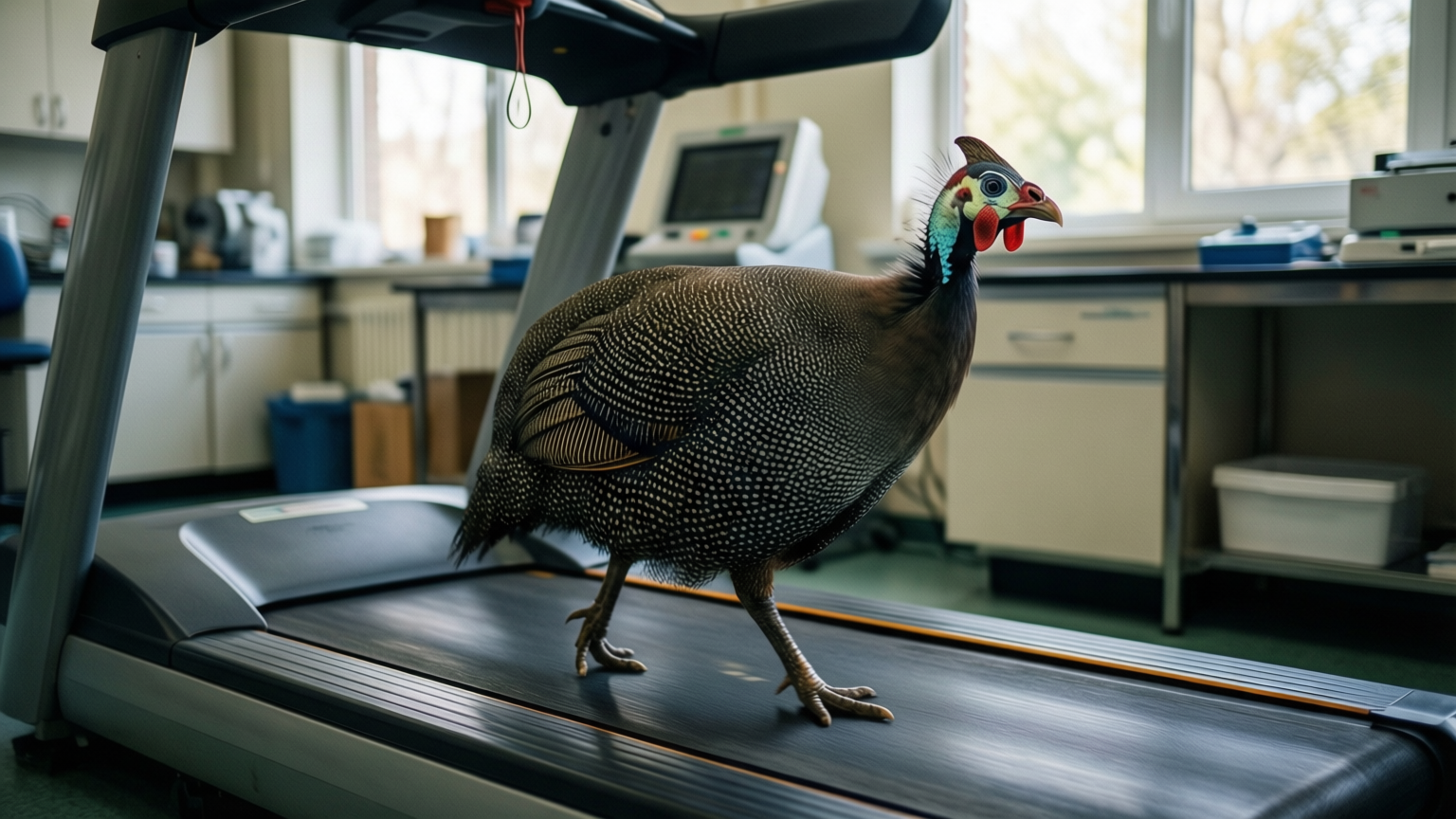
To test this hypothesis, researchers led by Jonas Rubenson, a professor of kinesiology at Penn State, conducted an experiment using guinea fowl. These birds were chosen because they walk on two legs, similar to humans. The team tracked 12 birds from two weeks of age until they reached 16 weeks, a stage where they approached full adult size.
The birds were divided into two groups. Half of the animals wore lead bands on one leg, with each band weighing 4% of their body weight. The other six birds developed without any added weight. All animals shared the same living conditions and exercise routines apart from this variable.
Starting at nine weeks of age, the birds underwent treadmill training. By 16 weeks, the researchers used a flow-through metabolic chamber to measure energy expenditure. This method, considered the gold standard for determining energy use, tracked oxygen consumption and carbon dioxide production while the birds stood still, walked without weights, and walked with the added load.
Energy Expenditure Results
The results showed a stark contrast between the two groups. Birds that grew up without weights required 23% more energy when walking with the added load compared to walking without it. In contrast, the birds that had carried weights throughout their development showed a remarkable adaptation.
These birds could walk with the extra load without expending additional energy. In fact, their bodies had adapted so effectively that walking with the weight required slightly less energy than walking without it. On average, the weighted birds used no more energy carrying their bands than the unweighted birds used walking freely.
“This study showed how limb loading during development can help an animal save energy during movement throughout its lifespan,” Rubenson said. “This is one of the first studies to indicate that animals’ behaviors and environments in youth can affect how effortful moving is as adults.”
The study also highlights the potential public health implications of these findings. Rubenson noted that children in the United States are currently much less active than previous generations. If early activity influences movement efficiency in humans similarly to guinea fowl, less active children might need to expend more energy to perform the same movements as adults.
This increased effort could make exercise feel more demanding, potentially discouraging physical activity later in life. Conversely, regular exercise through play and activity during childhood could build a capacity for efficient movement, making it easier for individuals to remain active as adults.
The research was co-authored by Talayah Johnson and Kavya Katugam-Dechene, with additional contributions from Stephen Piazza and other graduate students. Funding was provided by the National Institute of Arthritis and Musculoskeletal and Skin Diseases.
Source: ScienceDaily
