


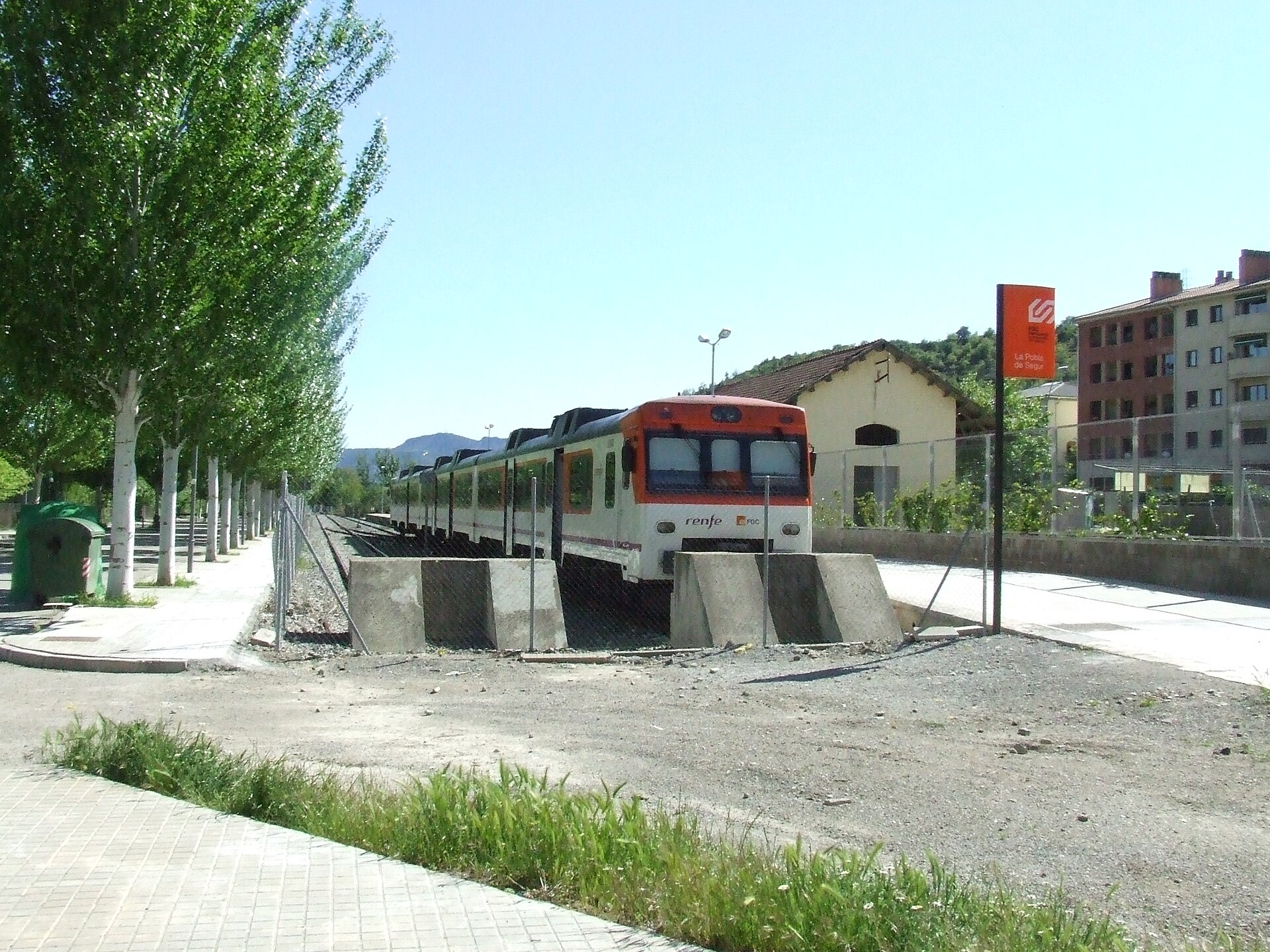
A historic single-track railway line running through the foothills of the Pyrenees is providing access to a remote wilderness of forests, gorges, and thundering rivers in northern Spain. The route, known as the Tren dels Llacs or Lakes Train, connects the city of Lleida to the mountain town of La Pobla de Segur, winding through the spectacular landscape of the pre-Pyrenees.
The Tren dels Llacs Railway
The 55-mile (89km) line follows the river valley, passing through 40 tunnels and 75 bridges. Travelers can choose between the modern Tren Panoramic or the Tren Historic service, which features a 1960s locomotive in original livery, complete with a period dining car and mail carriage. The vintage option offers varnished wood interiors and period furnishings that match the timeless quality of the valley.
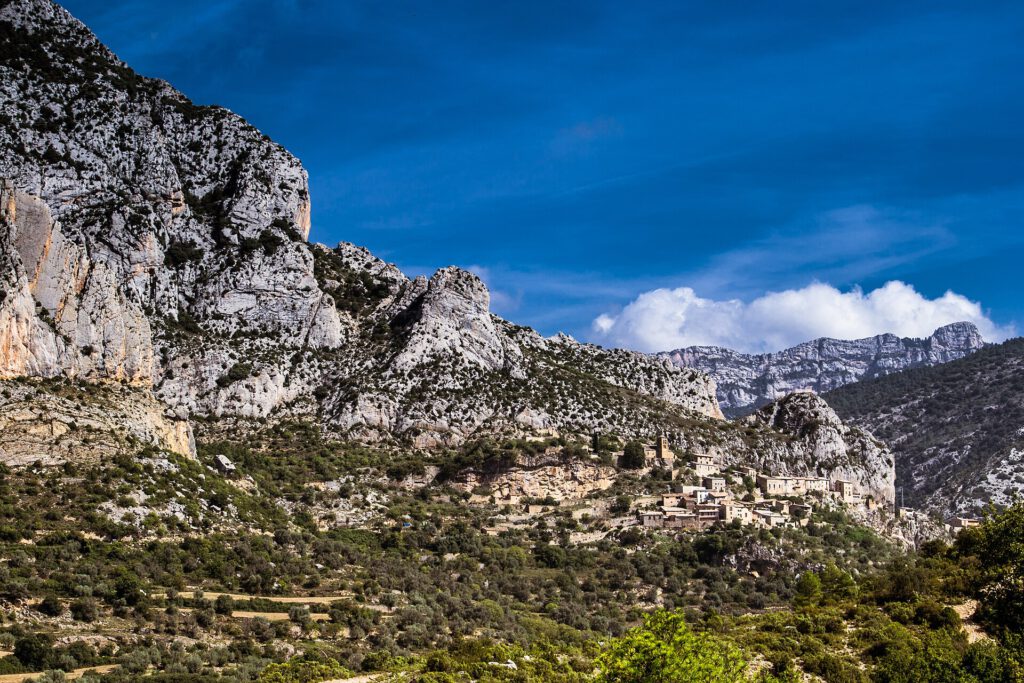
One of the most striking stops on the line is the station at Santa Linya. The halt is hewn directly into the mountainside, featuring a single platform with no ticket office, waiting room, or visible human habitation. From this remote point, a rocky trail leads up a limestone cliff to the village above, offering a steep climb of 190 meters (623ft) over three and a half miles.
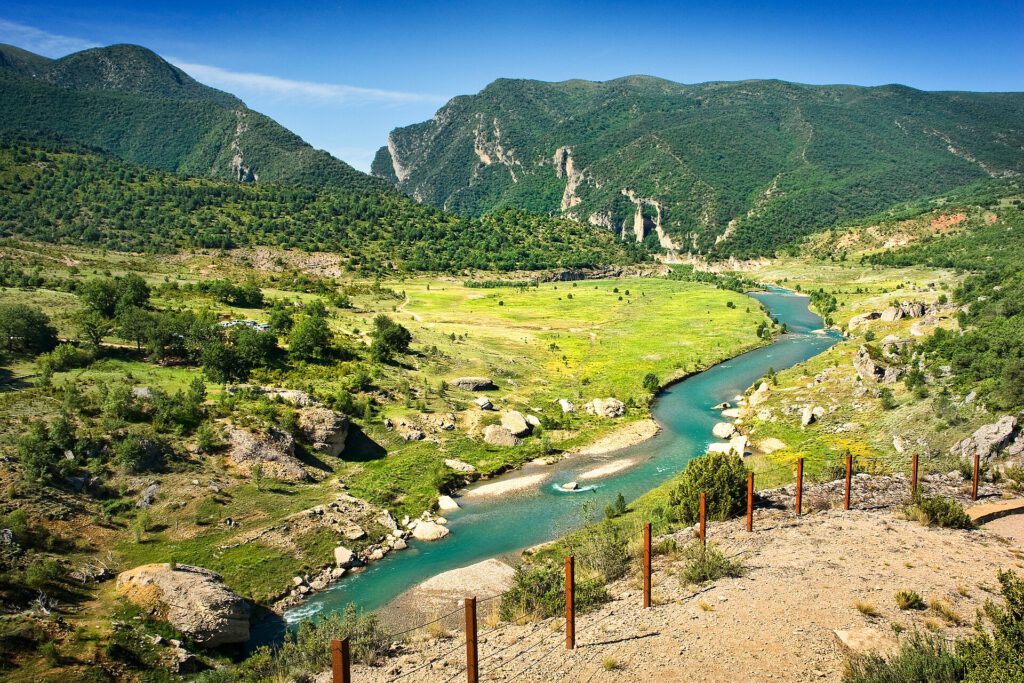
The journey rewards those who make the ascent with views from the Mirador del Balconet. This cliff edge overlooks the Collegats Gorge and the Noguera Pallaresa River, which drops 300 meters below. The area is known for its silence and wildlife, including griffon vultures that soar on the thermals above the gorge.
Mountain Biking in Pallars Jussa
While the train provides access to the region, adding a bicycle allows for deeper exploration of the Pallars Jussa area. The region features a vast network of ancient trails suitable for mountain biking, ranging from steep climbs to gently rolling farm tracks. These paths link numerous ruins, including castles, chapels, and farmhouses scattered across the hilltops.
Autumn temperatures in the foothills remain pleasant into November, making it an ideal time for cycling. Visitors can hire bikes in towns like Tremp and ride to lakeside accommodations such as the Hotel Terradets near Cellers. The hotel, which dates back a century, was originally an inn for merchants and muleteers. It now offers bike and kayak hire, along with a workshop for guests.
The Hotel Terradets sits on the shores of the Embalse de Terradets, a reservoir created in 1935 when the Noguera Pallaresa was dammed. The lake’s shores are wild and unspoiled, with sandy beaches and pine groves. Beneath the calm waters lie the ruins of the monastery of Sant Miquel de Cellers, which were submerged during the flooding of the valley.
Kayaking the Mont-Rebei Canyon
The region’s most dramatic natural feature is the Mont-Rebei Canyon, where the Noguera Ribagorçana River carves a path through 500-meter vertical cliffs. The river forms the border between Catalonia and the Aragon region, creating a natural frontier that is impassable by road. The canyon is surrounded entirely by pristine wilderness, with no roads, railways, or power lines crossing it.
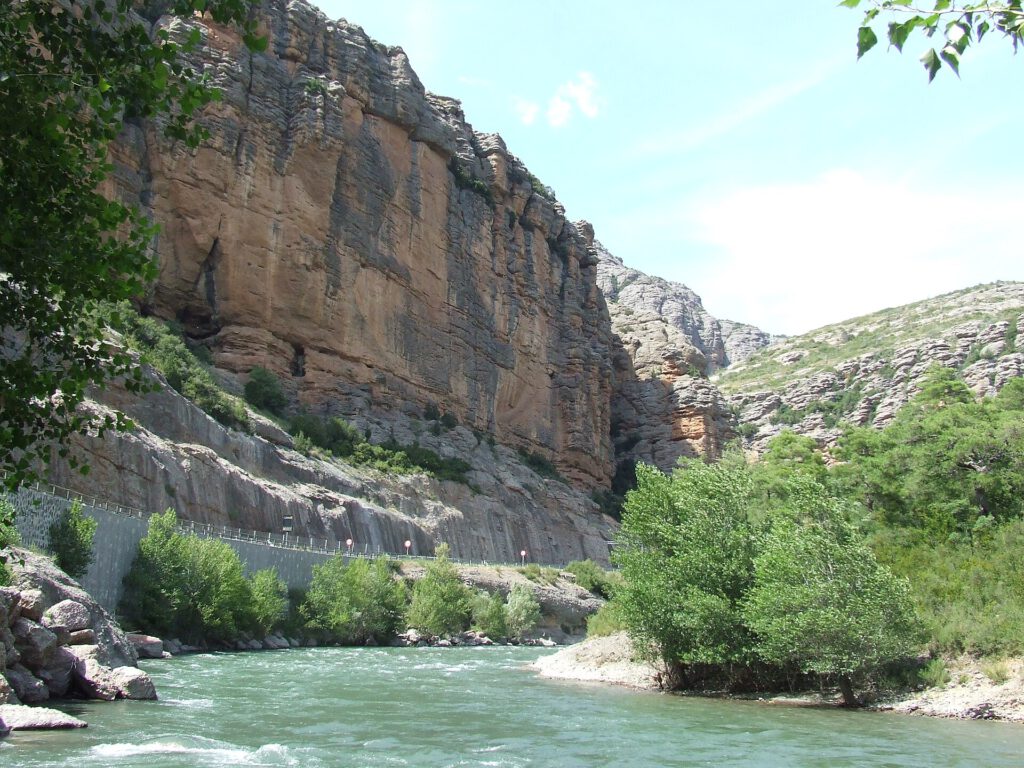
Access to the canyon is via dirt tracks, and the best way to view its scale is from the water. Visitors can hire kayaks to paddle a three to four-hour round trip from nearby Corçà. High above the water, walkers can be seen navigating a narrow path cut into the rock face, a route created a century ago using dynamite and hand tools to connect remote communities.
The culture in Pallars Jussa remains distinct from the rest of Spain. Local menus feature regional dishes such as escudella pallaresa, a meat stew, and Pyrenean river trout cooked in local Montsec honey. The separatist Estelada flag is visible in towns, reflecting the strong local identity. Life in the region moves slowly, with a focus on resourcefulness and a connection to the land.
Source: The Guardian
