


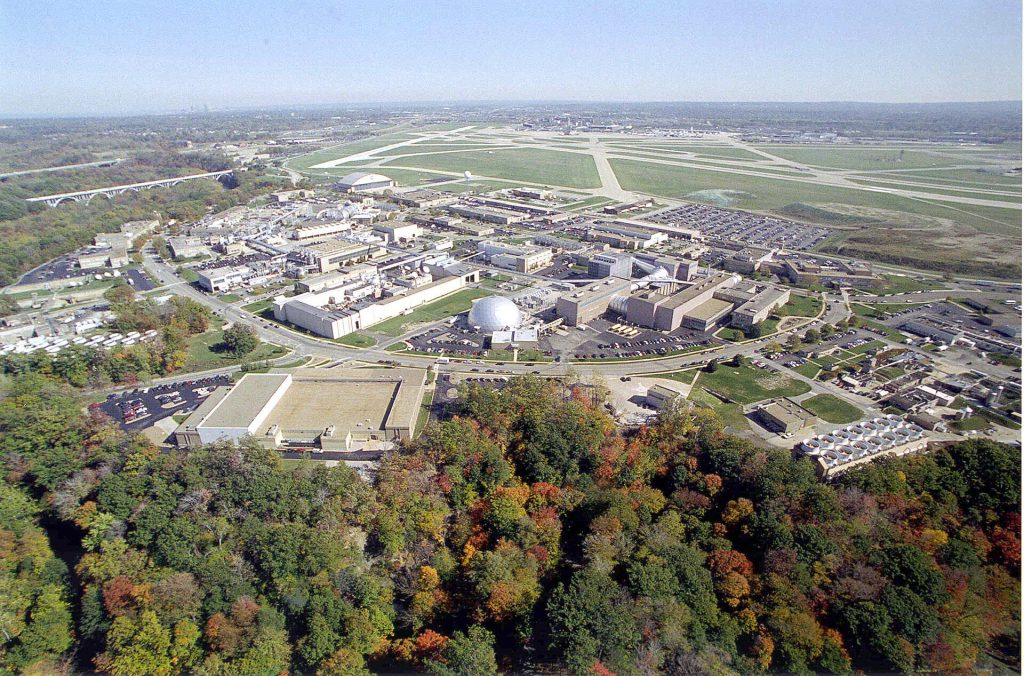
Research teams at NASA’s Glenn Research Center have developed a suite of specialized software tools designed to predict the noise generated by aircraft engines. These programs assist engineers in designing and analyzing new propulsion systems that are quieter and more efficient. Copies of the software are available for public request through the NASA Software Catalog.
Jet Noise Prediction Codes
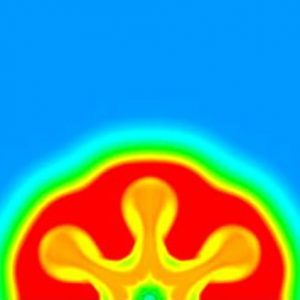
The development of jet noise prediction codes involves multiple approaches. The JeNo code predicts jet noise using Lilley’s Acoustic Analogy and mean flow solutions from a Reynolds-Averaged Navier-Stokes (RANS) code. This method provides relatively quick answers compared to more computationally intensive methods like Large-Eddy Simulations (LES) or Direct Numerical Simulation (DNS). JeNo calculates the far-field sound spectral density for axisymmetric jets at user-specified locations and frequencies. It has been validated for subsonic and low supersonic, unheated jets.
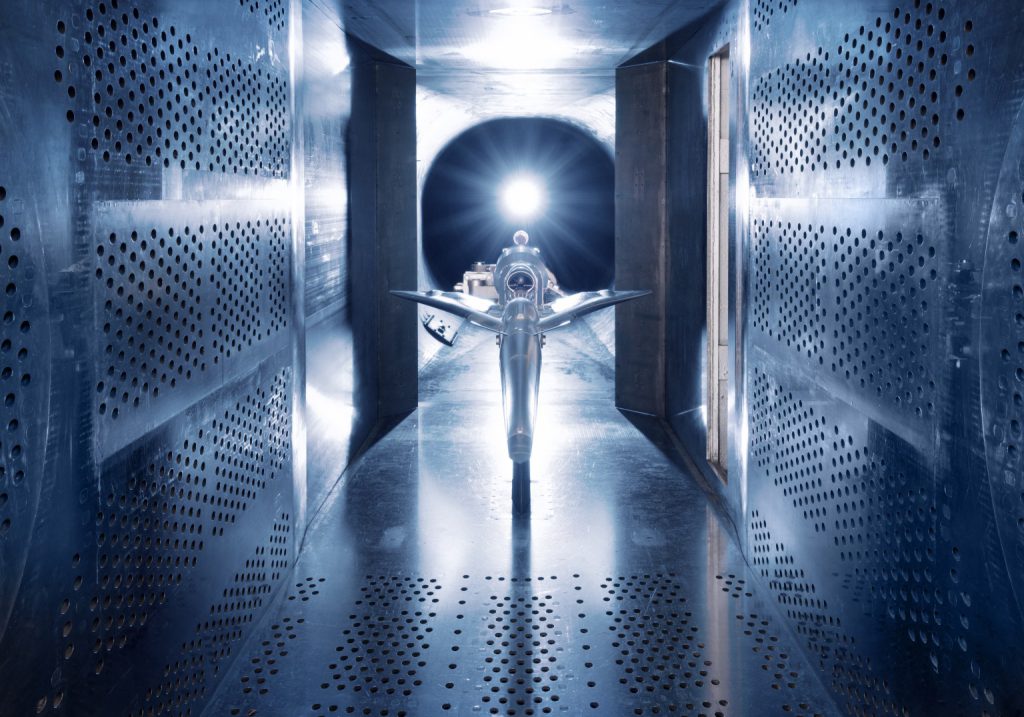
Before JeNo, researchers developed the MGBK code. This tool predicts noise trends for complex aircraft engine exhaust nozzles. MGBK was used to analyze the noise reduction benefits of chevron serrations on the edges of turbofan nozzles, a feature now common on many commercial aircraft engines.
Fan and Rotor Noise Analysis
For fan and rotor noise, NASA offers several codes tailored to different design stages. V072 uses simplistic models of fan flow and geometry to study rotor/stator interaction tone noise. It helps engineers make design choices regarding blade and vane counts, rotor-stator spacing, and stator vane sweep and lean. V072 is particularly useful for quick noise estimates early in the design cycle.
TFaNS takes rotor/stator interaction noise prediction further. It calculates tone noise levels and accounts for blade row acoustic coupling effects, such as transmission and reflection. Like V072, TFaNS runs quickly and is suitable for early design stages. For more complex scenarios, Linflux models realistic three-dimensional flows and blade geometries. It requires significantly more computational resources but predicts rotor/stator tone noise with high fidelity. Linflux has been rigorously validated against experimental data.
BFANS calculates broadband noise generated by turbulence impinging on the leading edges of rotor blades and stator vanes. It uses estimates of turbulence intensity and characteristic length scale as input. Combined with experimental data from facilities like NASA Glenn’s 9’x 15’ Low Speed Wind Tunnel, BFANS helps identify the noisiest components in a fan stage. RSI calculates the spectrum of broadband noise produced by the interaction of fan rotor wake turbulence with fan exit guide vanes. It computes acoustic power spectra upstream and downstream of the stator on a mode-by-mode basis.
Specialized Propulsion Tools
Propeller noise can be strongly affected by inflow conditions. The WOBBLE code computes tone noise associated with propellers under varying inflow angles. It predicts axial and circumferential directivity and accounts for all unsteady sources, including thickness and loading effects from the blades. Inflow angle is specified in terms of yaw, pitch, and roll angles of the aircraft.
MPT estimates multiple pure tone noise, also known as buzz saw noise, which occurs when fan blade tip speed is supersonic. MPT uses flow predictions from a Computational Fluid Dynamics (CFD) code as input. It allows engineers to study the effects of blade-to-blade differences caused by manufacturing variations or hot-running operation. ADPAC, developed by the Allison Engine Company under contract with NASA, solves tightly coupled internal and external flows through future-concept short-duct turbofan engines. It is a flexible CFD tool capable of modeling 2D, axisymmetric, 3D, and mixed steady or unsteady flows.
Engineers can request copies of all these codes from the NASA Software Catalog to aid in the development of quieter, more efficient aircraft propulsion systems.
Source: NASA
