


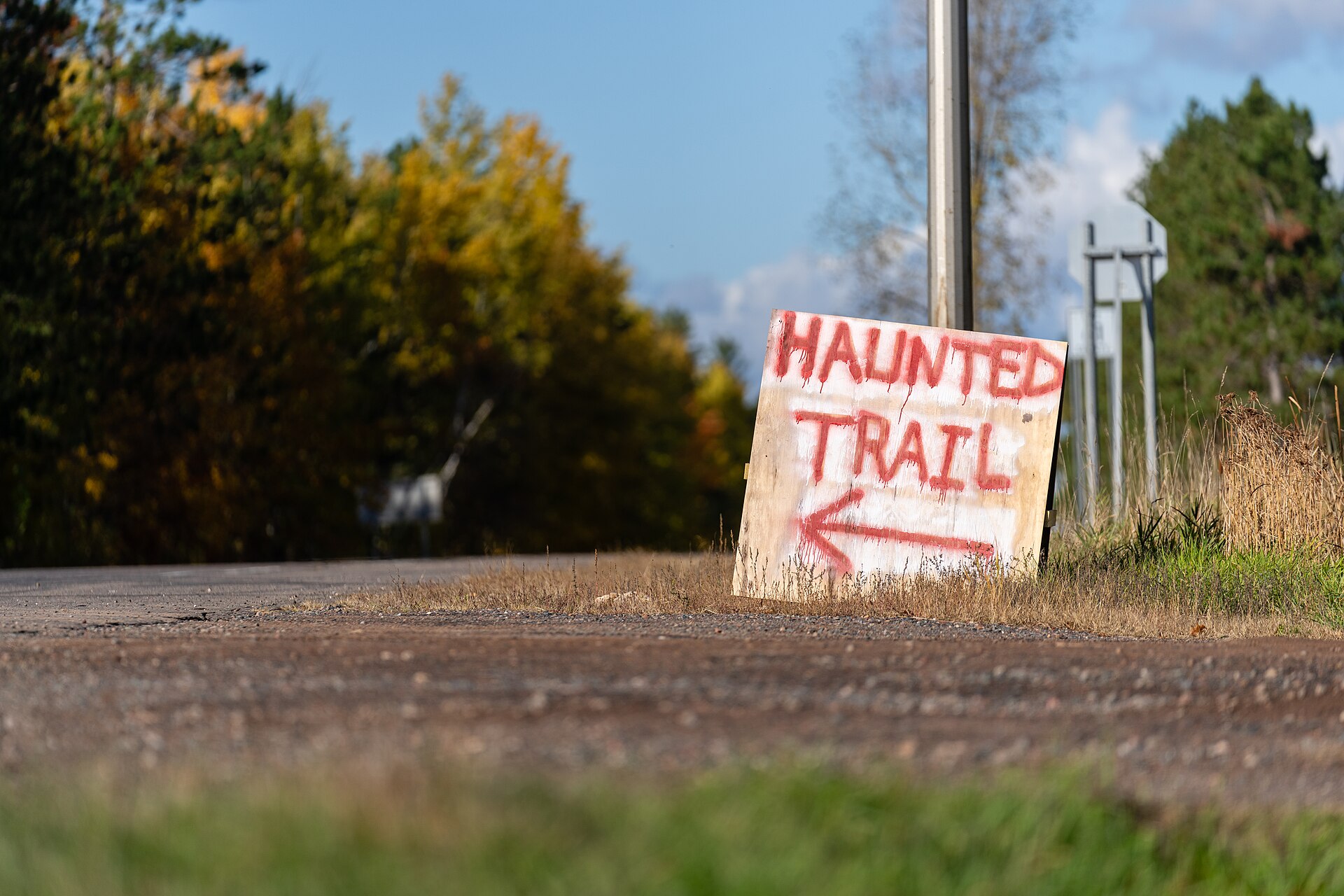
October marks the peak of the spooky season, driving Americans to spend more than $13 billion on holiday-related activities. According to the National Retail Federation, a significant portion of that total, estimated between $300 million and $500 million, comes directly from ticket sales to haunted attractions. Tens of millions of people participate in these events annually, willingly paying to experience fear in a controlled environment.
One of the largest venues for this activity is Markoff’s Haunted Forest in Dickerson, Maryland. Open since 1992, the site features over a mile of trails and dozens of themed houses. The operation employs hundreds of workers, including engineers, makeup artists, and actors, to create an immersive experience that begins with towering wooden gates designed to evoke folk horror classics.
Behind the Scenes at Markoff’s Haunted Forest
Paul Brubacher, the director of operations, oversees the complex logistics required to run the attraction. He notes that the design draws inspiration from music festivals and vampire village aesthetics. Safety is a primary concern behind the curtain. Each scene is equipped with emergency radios to handle actor injuries or visitor evacuations immediately.
The transformation of staff into frightening characters happens in a barn behind the main entrance. Chris Knowles, the art director and makeup manager, leads a team that uses pressurized airbrushes to apply special effects makeup. The process is highly efficient. Knowles explains that his team has only two hours to prepare over 100 people, requiring them to swap colors and cover areas in roughly seven minutes per actor.
Scare actors like Robert Doyle, who has worked at the site for five years, view their role as providing entertainment and a dopamine rush. Doyle has portrayed various characters, including clowns and demons, and believes visitors return to challenge themselves in a safe space. Another actor, Jermaine Hoes, describes his character as a creature seen in the early morning hours. He enjoys the reaction he elicits from guests.
The Psychology of Recreational Fear
Scientists have long studied why humans seek out frightening experiences. Nouchine Hadjikhani, an associate professor at Harvard Medical School, researches brain activity during fear responses. She notes that the amygdala activates almost instantly when a person sees a threat, such as a snake or spider, even if the image is displayed for only 30 milliseconds. This biological reaction causes a faster heart rate and sweating.
While the physical response is automatic, the enjoyment of fear is more complex. Researchers at the Recreational Fear Lab at Aarhus University in Denmark have identified that fear-for-fun is a universal trait. Matthias Clausen, a co-director of the lab, compares the experience to a fear vaccine. He suggests that seeking out controlled scares helps people prepare their bodies for real-world dangers.
The lab has also found anecdotal evidence that some individuals use horror media to manage clinical anxiety. Additionally, the experience serves a social function. Clausen states that groups often report a stronger sense of bonding after navigating a haunted trail together. This shared intensity turns the activity into a communal event rather than just a solitary thrill.
The economic impact of these attractions continues to grow. As the industry expands, it relies on the psychological benefits that keep visitors returning year after year. The next phase of coverage will examine the financial side of the monster and slasher economy.
Source: NPR
