


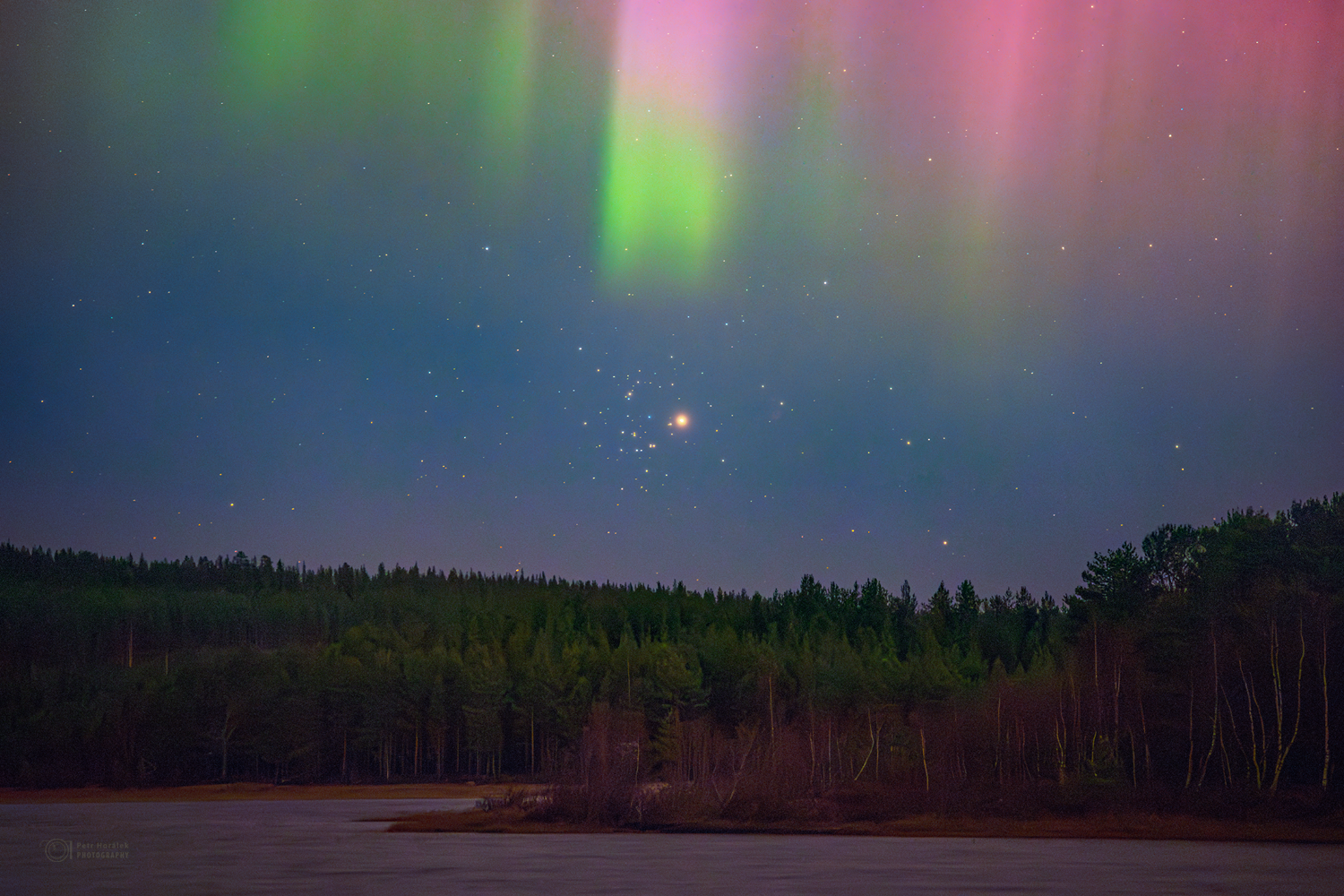
A rare celestial alignment placed Mars directly below the Beehive star cluster, known as M44 or Praesepe, while a vibrant aurora stretched across the sky above. The scene was captured near Lansjärv, Sweden, on October 14, 2026. This specific arrangement occurred because Mars happened to be closest to the center of the Beehive cluster in the night sky at that time.
Solar Eruption Triggers Aurora Display
The colorful lights in the sky were not a random occurrence but the result of solar activity. An eruption off the surface of the Sun reached Earth on October 10, 2026. This event caused strong disturbances in Earth’s magnetic field, setting the stage for the visual display seen four days later.
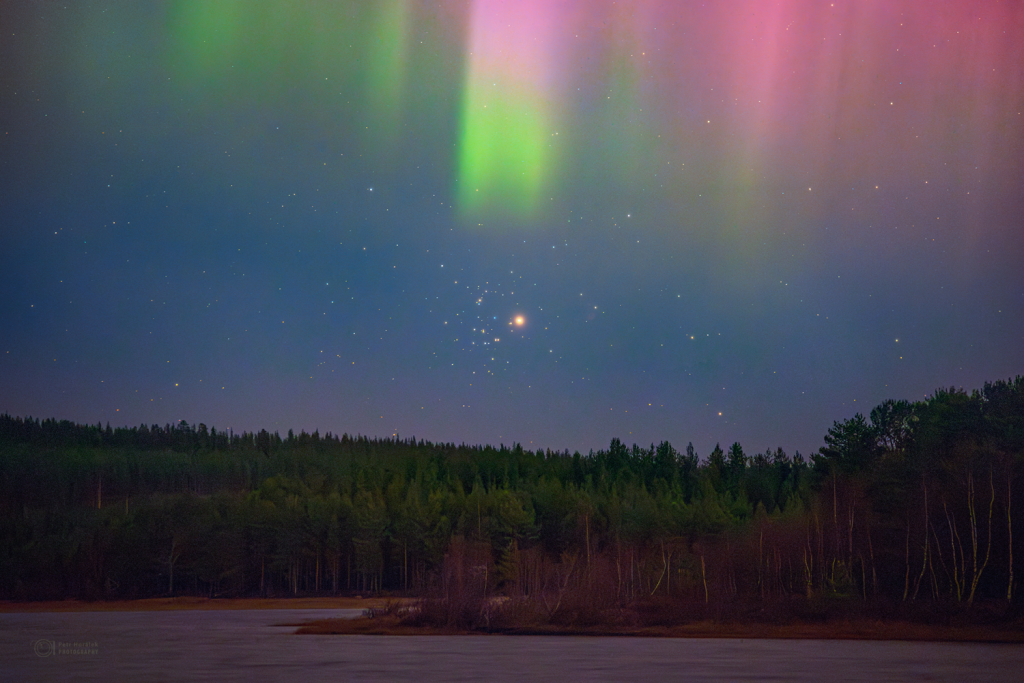
Energetic particles from the solar eruption collided with molecules in Earth’s atmosphere. These collisions energized the atmospheric molecules, which then released the extra energy as the colorful aurora captured in the image. Auroras are known as guovssahasat in North Sámi, the language of the Sámi people indigenous to Sweden and other Arctic regions. The Sámi traditionally view these lights with respect.
Understanding the Beehive Cluster
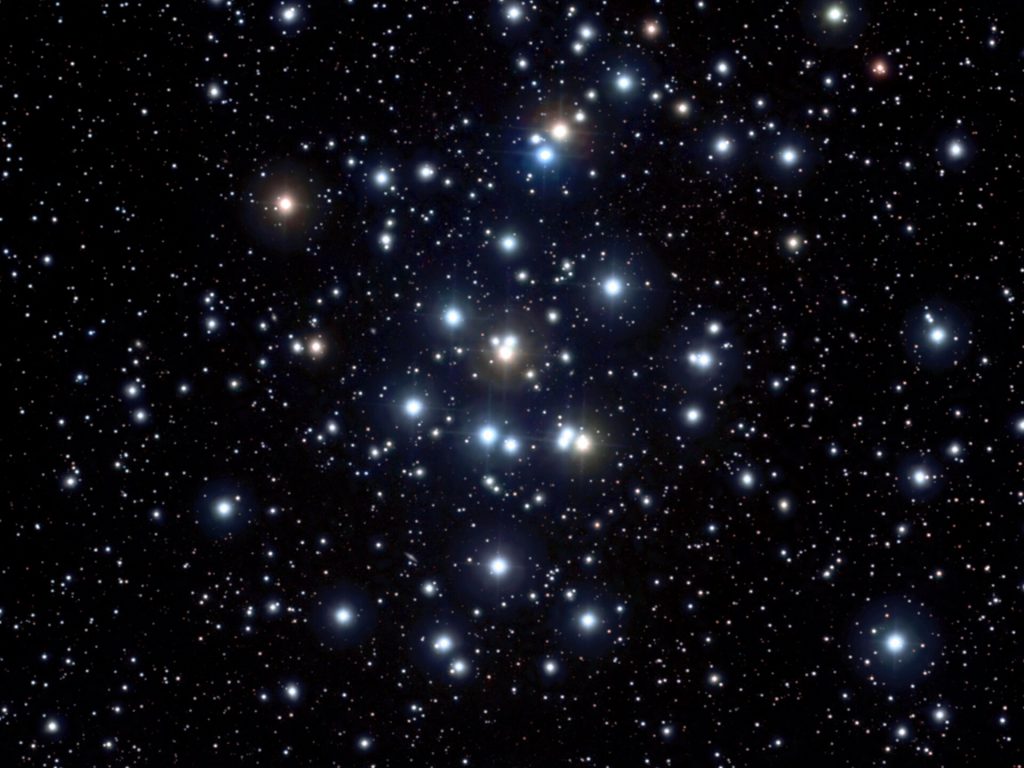
While the name Beehive might suggest a swarm of insects, the cluster is actually a group of young stars. Astronomers have studied the rotation periods of these stars to understand how stars spin slower over time. This slowing occurs as the stars lose mass through stellar winds. Although bees have previously traveled to space, the celestial object in this image remains a distant collection of stars.
The combination of the planet Mars, the star cluster, and the atmospheric lights created a unique photographic opportunity. The horizon below the sky features a line of trees, grounding the cosmic event in the local landscape of northern Sweden.
Source: NASA
