


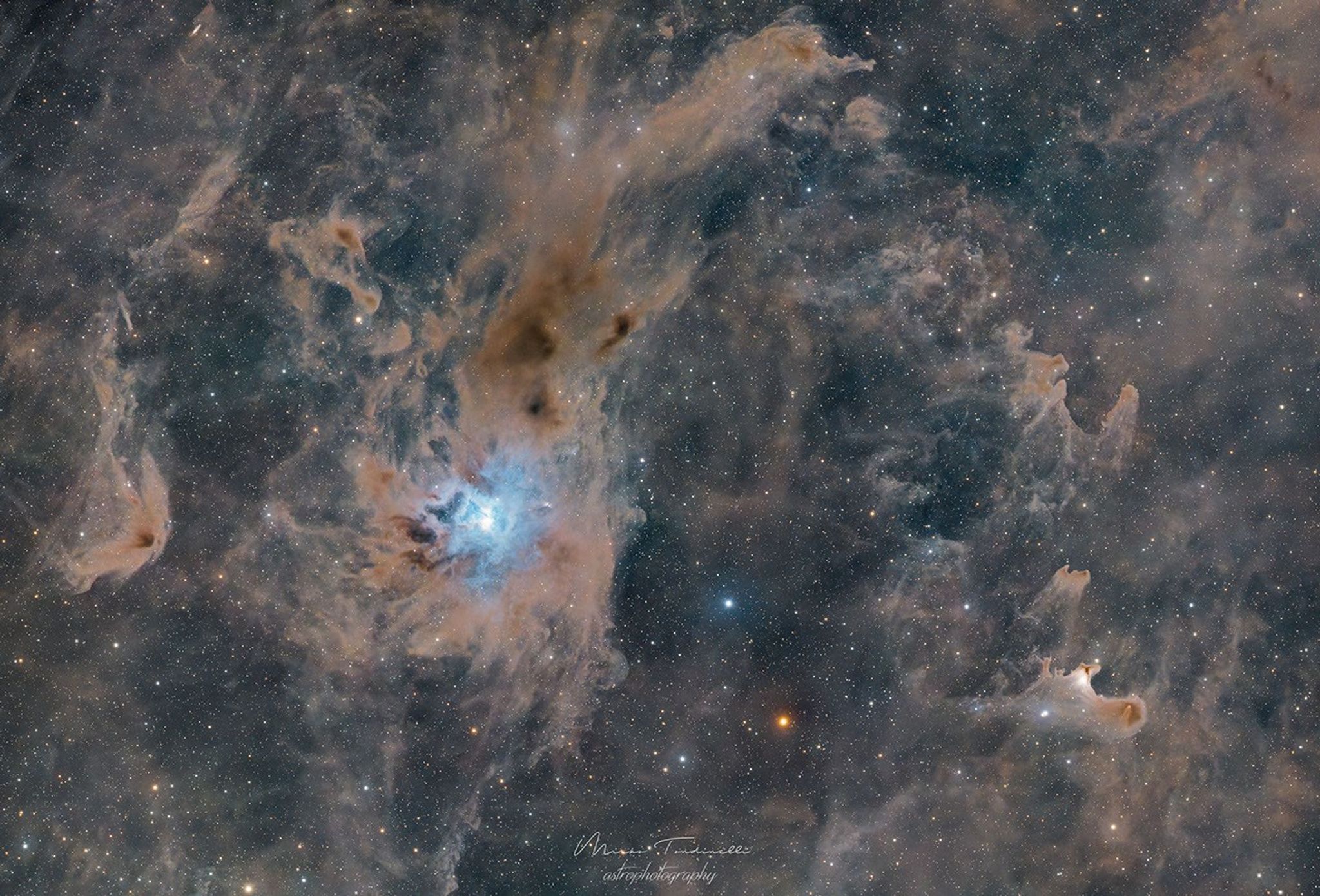
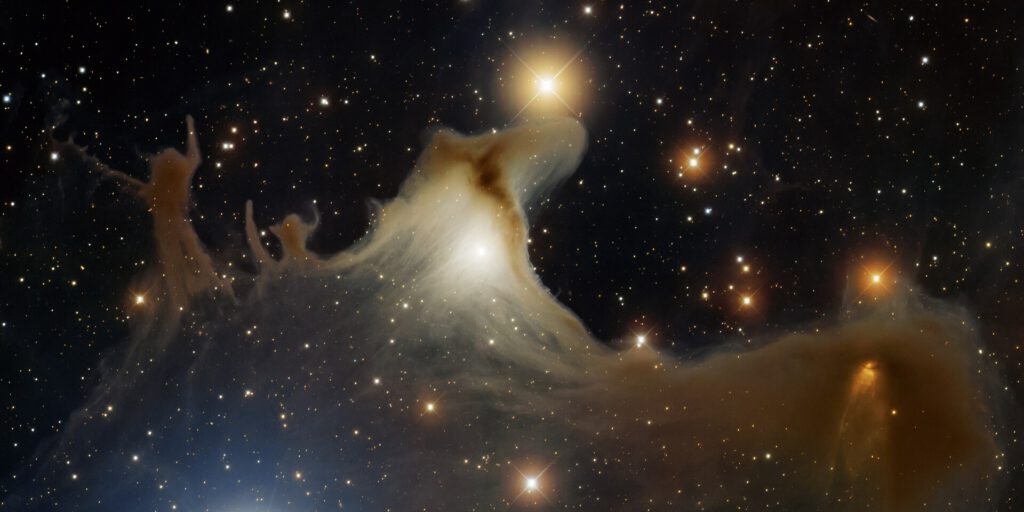
NASA has released its Astronomy Picture of the Day for October 30, 2026, featuring a detailed view of the Cepheus Flare molecular cloud complex. The image captures a vast expanse of interstellar dust located approximately 1,200 light-years from Earth, situated above the plane of the Milky Way.
The Ghost Nebula and Star Formation
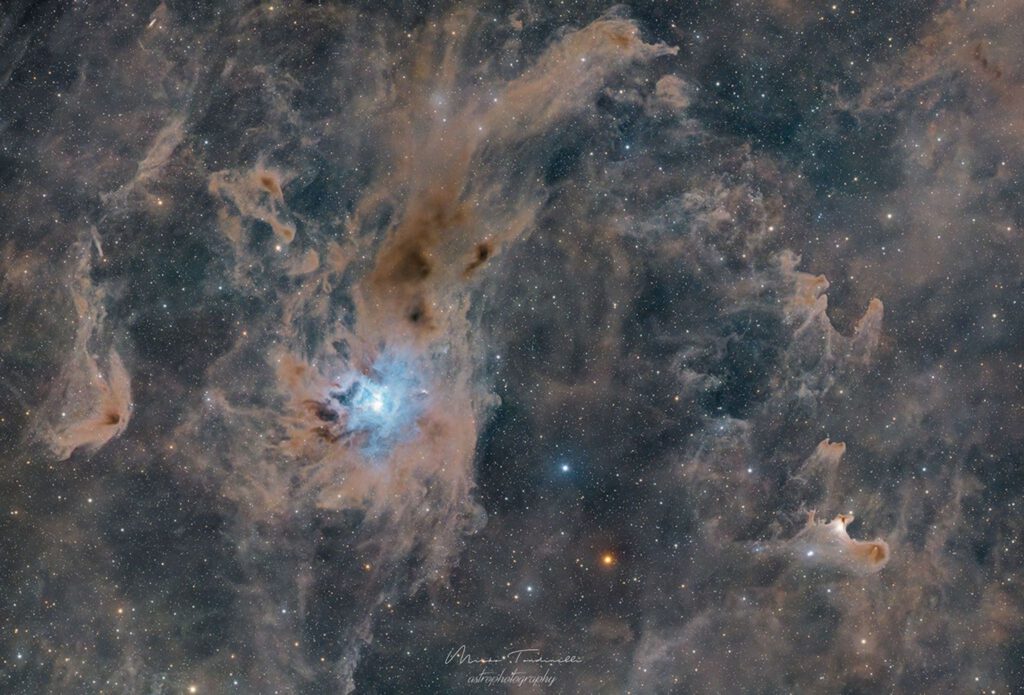
One of the most prominent features in the lower right of the frame is vdB 141, also known as Sh2-136 or the Ghost Nebula. This structure spans more than 2 light-years and appears brighter than the surrounding dusty formations. The nebula contains reddish indicators of dense cores that are currently collapsing, marking the early stages of new star formation.
The Ghost Nebula stands out against the darker background of the Cepheus Flare complex. Its size and brightness make it a focal point in the telescopic view, offering astronomers a clear example of how stellar nurseries appear within molecular clouds.
The Iris Nebula and Reflected Light
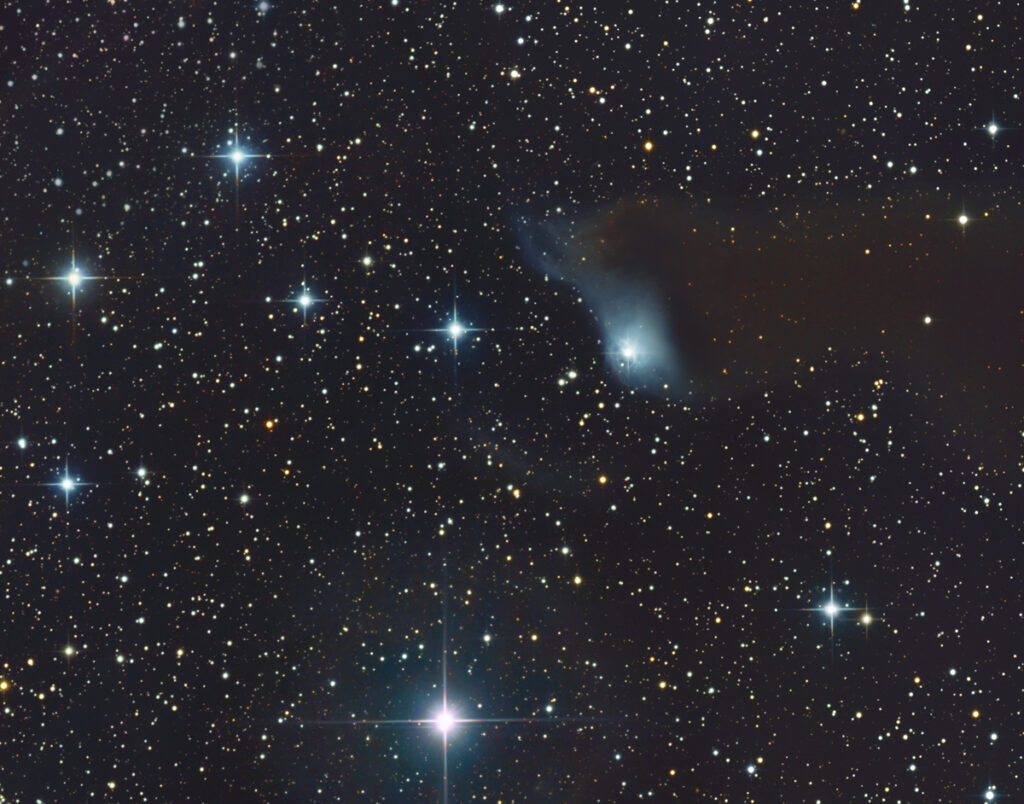
To the left of the center, the Iris Nebula, identified as NGC 7023, presents a distinct blue hue. This coloration results from interstellar dust reflecting the bluish light emitted by hot, young stars nearby. The contrast between the blue reflection and the dark dust lanes creates a striking visual separation within the field of view.
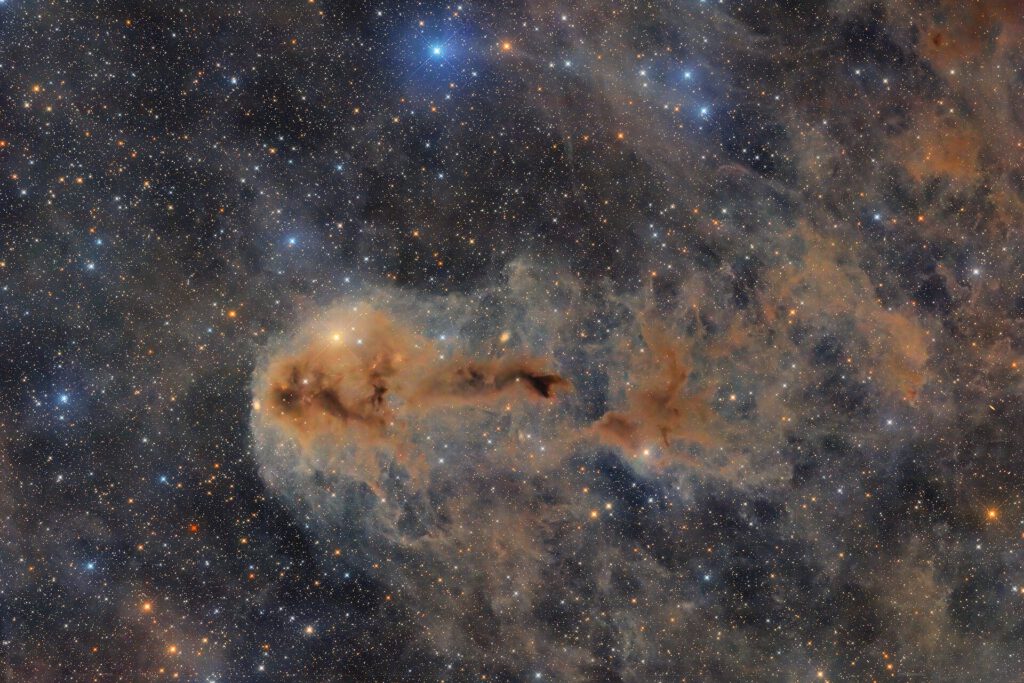
The entire scene covers an area equivalent to almost six full moons across the sky. This broad perspective allows viewers to see the scale of the fertile interstellar dust fields that make up the Cepheus Flare. The combination of the Ghost Nebula and the Iris Nebula provides a comprehensive look at the dynamic processes occurring in this region of space.
The image serves as a daily feature on NASA’s website, providing the public with a new look at the universe each day. The explanation for this particular image was written by a professional astronomer to help contextualize the visual data.
Source: NASA
