


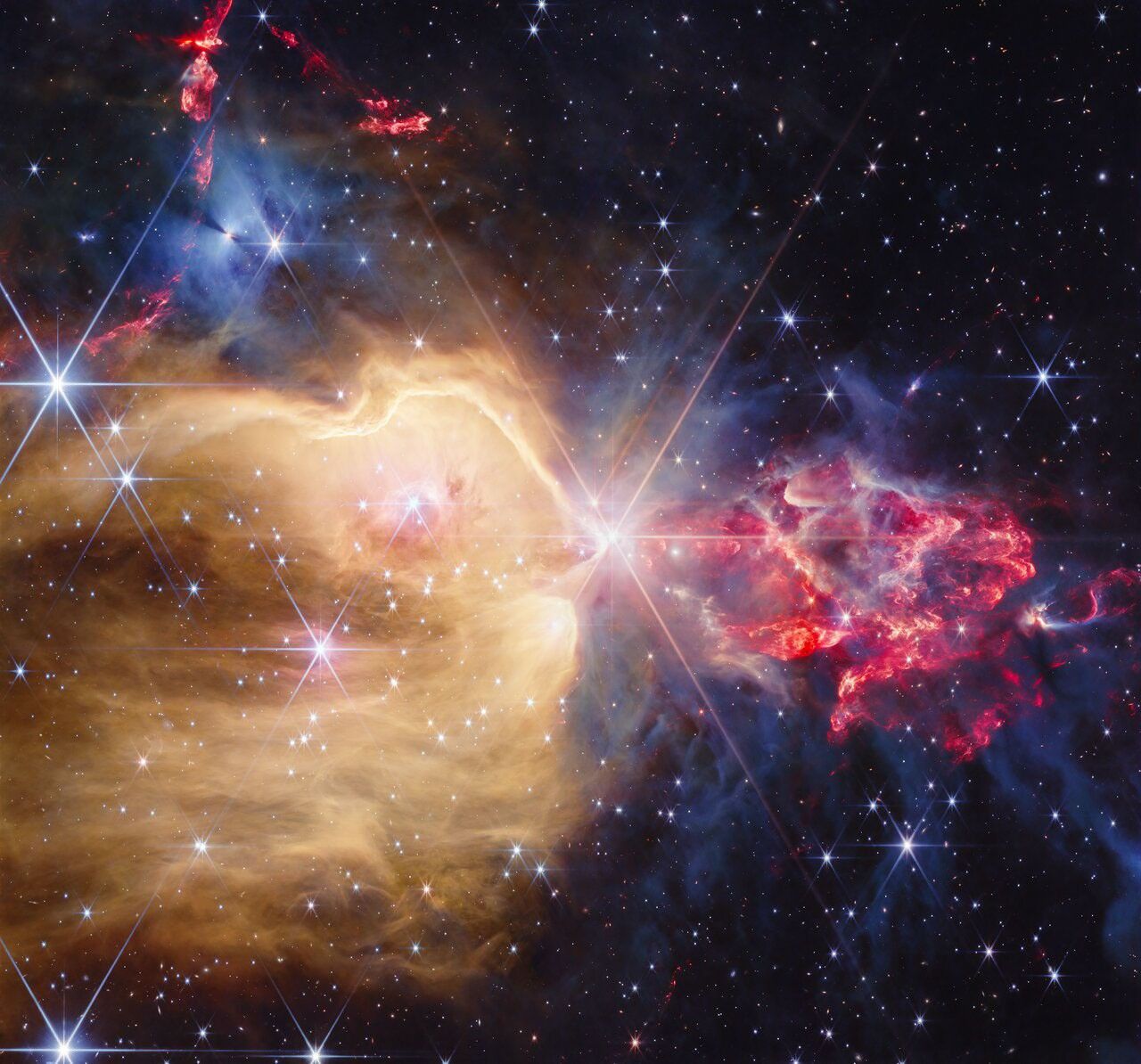
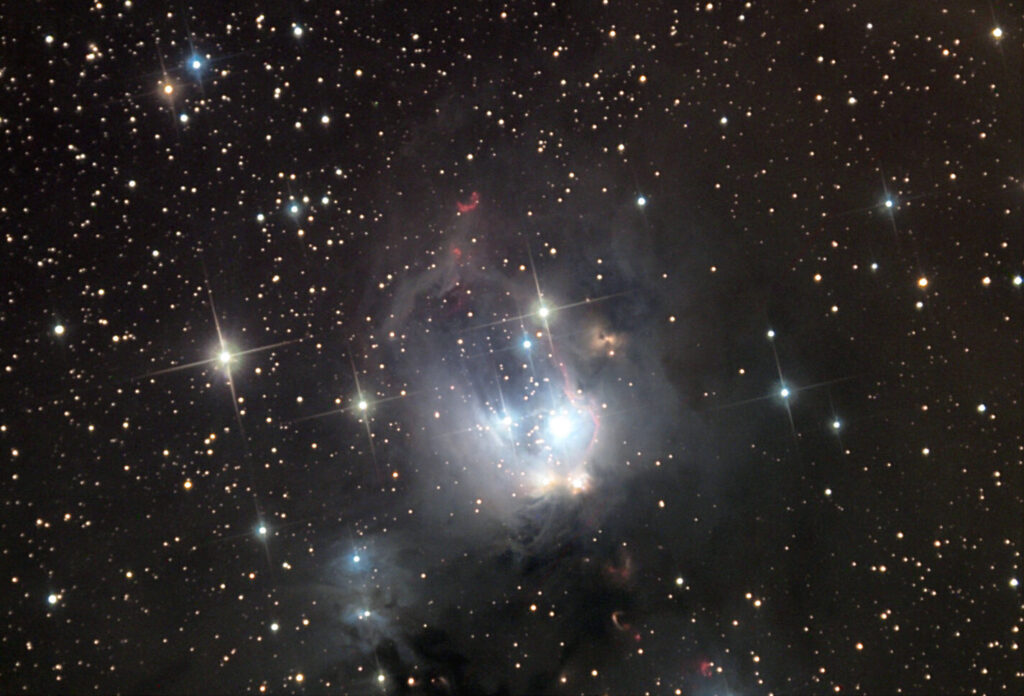
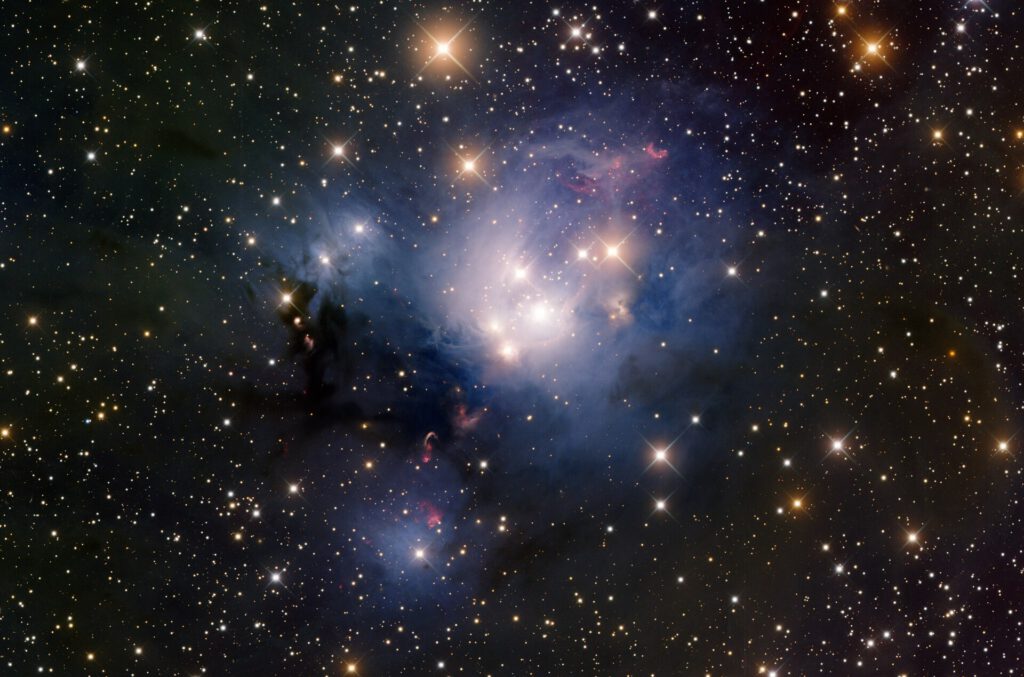
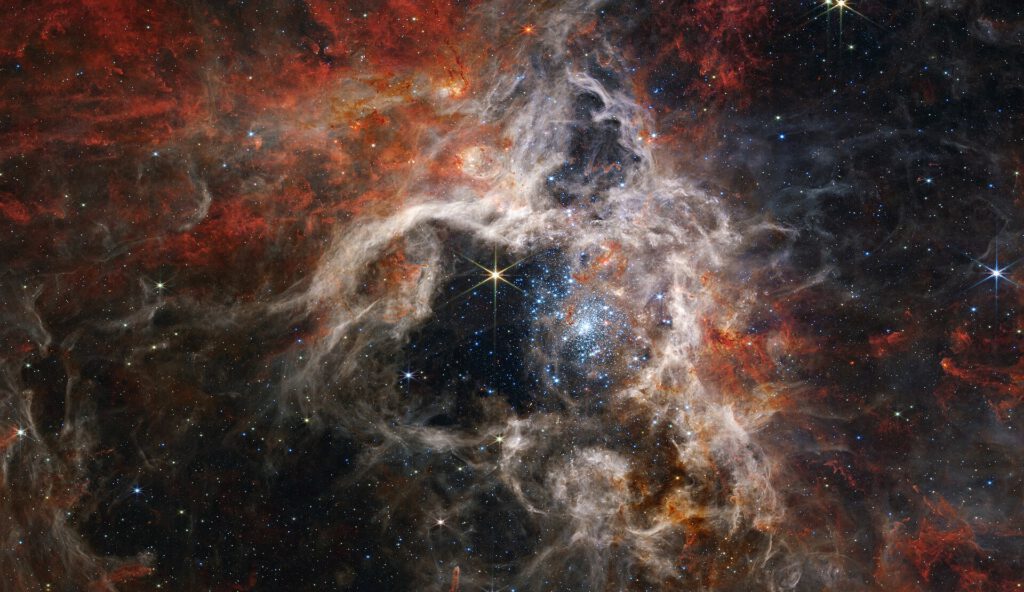
NASA has released a new detailed image of the star-forming region NGC 7129, captured using the James Webb Space Telescope in infrared light. The observation provides astronomers with a clearer view of the complex physical processes that occur as stars are born and mature within dense clouds of gas and dust.
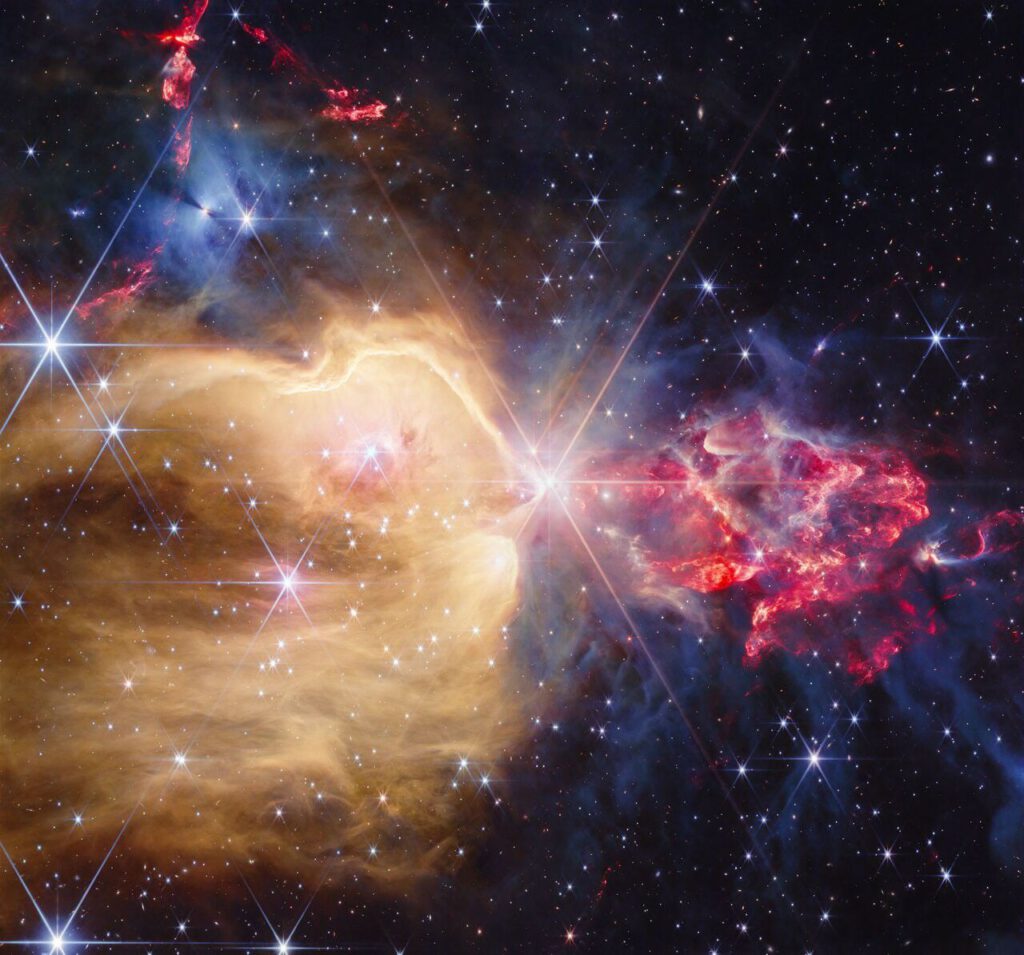
NGC 7129 star formation stages
Star formation begins when gravity pulls together massive amounts of gas. However, the process becomes complicated once previously formed stars begin to emit powerful jets and winds. Some of these stars eventually explode, further disrupting the surrounding environment. Opaque dust can also form in the cool atmospheres of stars and, when dispersed, can obstruct visible-light images, making infrared observations essential for seeing through the haze.
The featured image shows many stars in various stages of formation. The young stars on the left, located in the gold-colored gas, are typically more mature than the young stars on the right, which reside in the red region. This spatial distribution offers clues about the timeline of stellar development within the nebula.
Jets and winds shape the nebula
Jets and winds from these young stars likely cause the filamentary nature of the red-colored gas seen in the image. By studying stars at different stages of development, astronomers can better understand which physical processes are most important and when they occur. This data bolsters the broader understanding of how stars form and evolve in the universe.
The image is part of the Astronomy Picture of the Day (APOD) series, which features a different image or photograph of the universe each day, along with a brief explanation written by a professional astronomer. The next image in the series will feature a sky duel.
Source: NASA
