



Cloud provider Lambda is integrating NVIDIA Photonics co-packaged optics (CPO) switches into its data centers to address the growing complexity of training massive artificial intelligence models. The deployment connects NVIDIA GB300 NVL72 racks, which house more than 10,000 GPUs, aiming to deliver a network that is both more resilient and energy-efficient.
Reducing Latency in Large AI Clusters
Training modern AI models requires thousands of GPUs to operate in unison. This setup demands a network infrastructure capable of moving data rapidly without bottlenecks. Lambda’s tests with the new switches show a drop in network latency by approximately 4% at the rack level and up to 10% at the pod level. Despite these speed improvements, the network maintains the same throughput as conventional pluggable optics across various configurations.
Dave Ward, president of cloud services at Lambda, emphasized the necessity of this upgrade. “Networking has to keep pace with the demands of increasingly large AI clusters,” Ward said. “Bringing co-packaged optics into a deployment of this scale is an important step toward building the infrastructure needed to support the next generation of AI.”
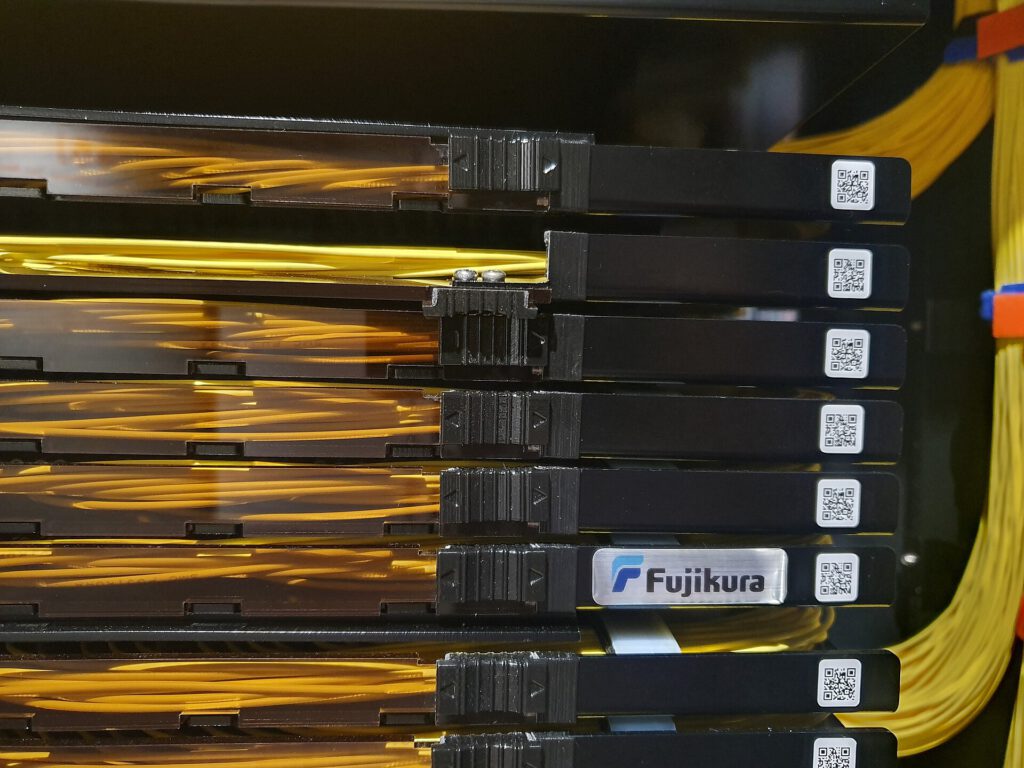
The shift to co-packaged optics addresses a critical vulnerability in large-scale computing. In a massive training job, a single interrupted link can stall thousands of GPUs. Similarly, disruptions in agentic inference can cause cascading latency issues across many agents. Every second of downtime costs time, and every watt consumed by networking hardware is a watt not available for actual computation.
Power Efficiency and Hardware Reliability
NVIDIA Photonics replaces traditional pluggable transceivers with optical engines integrated directly onto the switch package. This design change delivers up to five times better power efficiency and up to fifteen times higher reliability compared to conventional optics. The system also uses four times fewer lasers, which reduces the number of components that could potentially fail.

The specific switches deployed by Lambda feature 144 ports running at 800Gb/s. Liquid cooling systems manage the heat generated by the switch chips and optical engines. Lambda reports a median optics temperature of 36°C, a significant improvement over the 51°C typical of conventional pluggable optics. This cooler operating environment contributes to more stable signal integrity.
By moving the electrical-to-optical conversion closer to the switch chip, the system shortens the electrical path from inches to millimeters. This reduction minimizes signal loss and eliminates the need for retimer chips, further cutting power draw and simplifying the signal path. Each switch includes 18 removable external light sources that supply light to the optical engines. Technicians can replace these light-source modules in the field, whereas traditional pluggable optics require replacing the entire module if a laser fails.
Source: NVIDIA
