


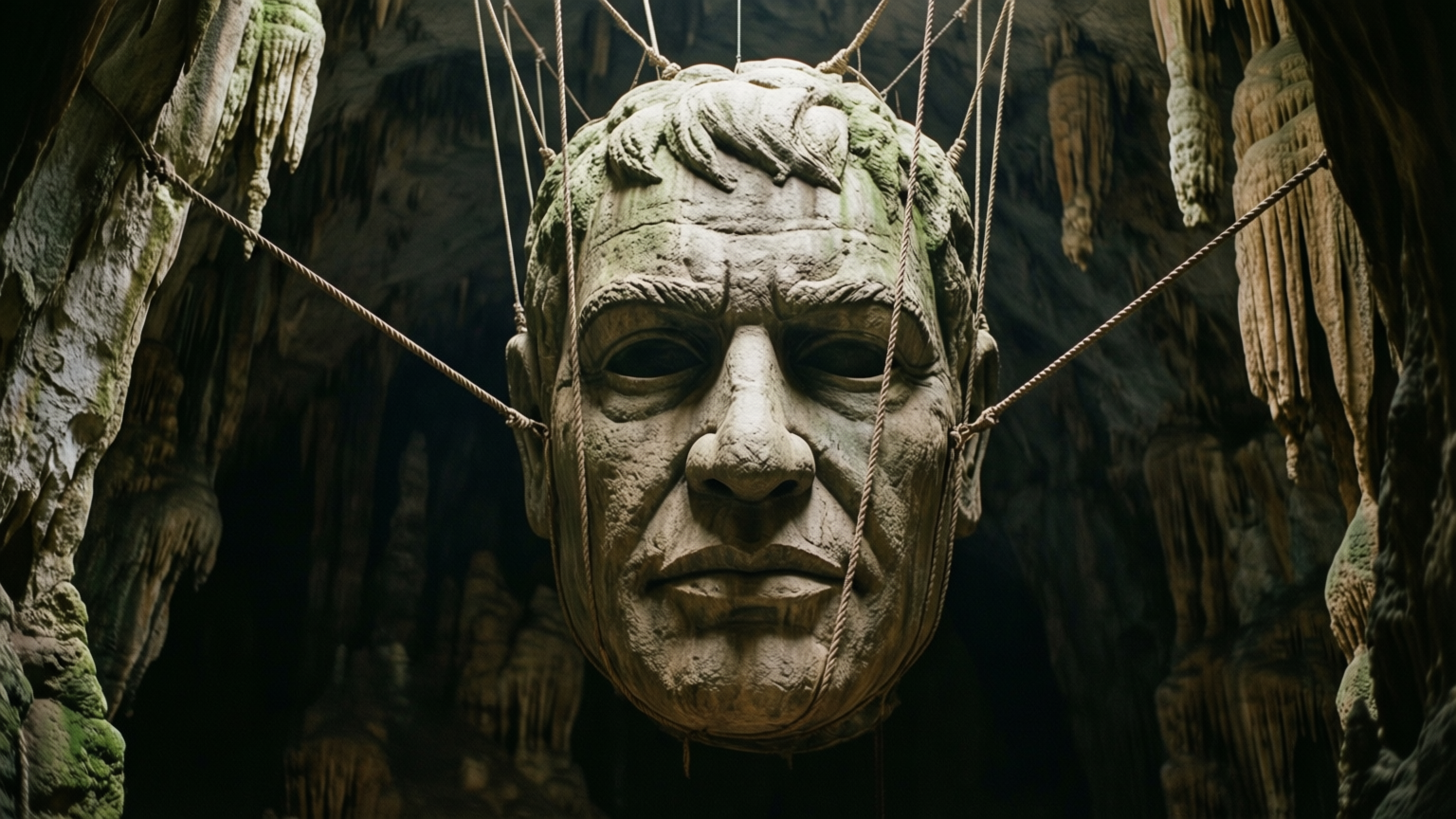
Christopher Nolan’s The Odyssey faced a significant logistical hurdle when a change in filming location forced the production to rethink its approach to one of the film’s most iconic creatures. The sequence involving Polyphemus, the one-eyed giant, was originally planned for a soundstage in Los Angeles. When the schedule shifted, the team had to transport a massive practical effect to a cave halfway up a mountain in Greece.
Building a 36-Foot Cyclops Puppet Under Pressure
Special effects supervisor Scott Fisher and visual effects supervisor Andrew Jackson detailed the creation of the The Odyssey Cyclops puppet to Polygon. The creature, known as Polyphemus in the film, traps Odysseus and his men in his dwelling. The production’s primary obstacle was not just the scale of the build, but the compressed timeline. The sequence was initially scheduled for the end of production, allowing the team to experiment with smaller prototypes.
Fisher noted that the team began with a full-size stick puppet and various animatronic concepts. However, the location change elevated the priority of the Cyclops sequence, leaving little time for complex engineering. The team had to design a creature that could be shipped overseas and operated in a rugged, unprepared environment. “We were limited to what we could do in that time frame,” Fisher explained. “So we kind of worked backwards into making it the simplest kind of form and movement that we could.”
This constraint led to a surprisingly effective design. Instead of an elaborate animatronic figure with independent limb control, the crew created a puppet that relied on natural physics. The design allowed operators to manipulate specific sections, causing the rest of the body to react organically. This approach eliminated the need to move the entire structure to create motion, giving the giant a more realistic and weighty presence on screen.
Logistics and Performance on a Greek Mountain
Constructing the 36-foot-high figure was only the first step. The team had to build, pack, and ship the puppet to Greece, where it was suspended inside a cave. Once on site, the crew installed a custom overhead truss grid to support the puppeteering lines. Fisher clarified that the physical puppet was not intended to handle every movement alone. The production utilized visual effects to assist with more complex actions that the practical build could not achieve, blending physical and digital techniques.
Actor Bill Irwin, who portrays Polyphemus, brought an additional layer of complexity to the set. Irwin arrived in full prosthetics, performing sounds and movements that synchronized with the marionette. Himesh Patel, who plays Eurylochus, described the experience as a major surprise. He noted that Irwin did not force the puppet to mimic his movements. Instead, Irwin studied the puppet’s mechanics and adjusted his own performance to match its physical limitations.
“He was observing how the marionette moved, because that would actually inform how he moved,” Patel said. “And so they would marry up.” This collaboration between the practical effects team, the visual effects department, and the actors resulted in a creature that felt grounded and tangible, despite the extreme conditions of its creation.
The film is set to arrive on digital, 4K Ultra HD, and Blu-ray on November 17.
Source: Polygon
