


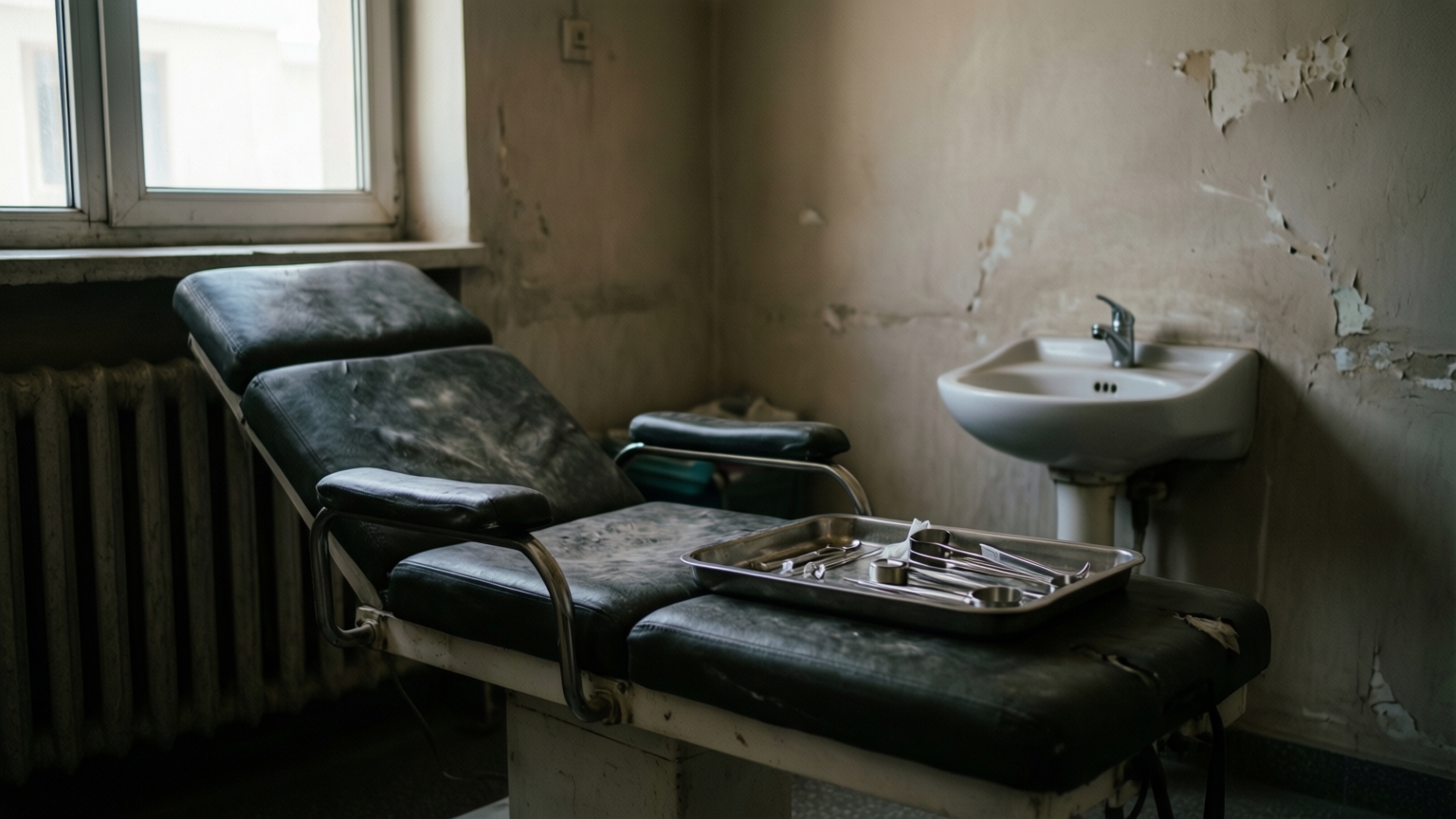
An unofficial but strictly enforced restriction in Afghanistan is preventing male doctors from treating female patients, forcing women to delay essential medical care or travel vast distances to find help. The ban, which has spread across most provinces, has created a severe barrier to healthcare access for women in the country.
Farida, a 37-year-old resident of Herat, experienced the impact of this policy firsthand. After returning from Iran earlier this year, she sought treatment for severe dental decay that left her in constant pain. A clinic in the Bakrabad area initially agreed to a treatment plan involving extractions and implants. However, during her third session, staff informed her that the procedure could not continue.
“An order has come from the Ministry for the Propagation of Virtue and the Prevention of Vice stating that male dentists are no longer allowed to treat female patients,” a clinic worker told her. Three months later, Farida’s treatment remains unfinished, and she continues to struggle with eating and sleeping due to her dental issues.
Enforcement and Medical Directives
While the Taliban de facto authorities have not issued a public, nationwide decree explicitly banning male doctors from treating women, the restriction is being enforced on the ground. Taliban security forces have conducted raids on clinics and warned male practitioners that they face imprisonment if they are found treating female patients.
Samim, a surgeon with 15 years of experience at a public hospital in northern Afghanistan, stated that doctors are prohibited from examining female patients unless a male guardian, known as a mahram, is present. He noted that the rule applies regardless of the urgency or simplicity of the medical procedure.
“We are not allowed to directly examine female patients because we are not their mahram,” Samim said. “It makes no difference how simple the procedure is or how critical the patient’s condition may be.”
The restrictions have extended to administrative practices as well. In Balkh province, officials ordered hospitals and clinics to address female patients as “Bibi” rather than by their actual names, a directive that must be followed even on medical prescriptions.
Healthcare Access and Female Staffing
The ban on male doctors treating women coincides with a broader crackdown on female participation in the medical field. Since December 2024, women have been barred from studying at medical institutes, and hospitals have been instructed not to hire female staff. This has left a critical shortage of female healthcare providers.
Rahima, a resident of Kunar province, reported that an elderly relative had to travel hundreds of miles to Kandahar city for dental treatment. The journey was necessary because the woman’s son operated a dental clinic there, and her husband feared the shame of visiting a male dentist in their local area where doctors were known to the community.
Female doctors who remain in practice are required to have a mahram present. Some patients have reported being turned away even when accompanied by their fathers, with staff citing a need for additional female guardians to mitigate potential legal risks for the doctors.
Nargis, an assistant at a dental clinic in Jalalabad, described the anxiety among medical staff. Some doctors hire individuals to stand outside and warn them of approaching Taliban officials. “Our male doctor sometimes jokes: ‘Let’s keep a chadari inside the office so that when they come, I can put it on so they won’t recognise that I am a male doctor,'” Nargis said.
These local realities contradict statements made by Taliban officials earlier this year. In February, Hamdullah Nomani, the Taliban’s communications minister, claimed that male doctors would be considered mahram when treating female patients, suggesting an exemption from the restrictions. The widespread enforcement of the ban suggests this interpretation is not being applied in practice.
Women in Afghanistan now face a difficult choice: risk the safety of themselves and their doctors by seeking treatment, rely on unqualified female health providers, or live with untreated ailments. The situation has left many patients feeling abandoned by the healthcare system.
One patient told reporters that the restrictions demonstrate a disregard for human life, asking how such rules can be imposed in a city with no female doctors. The ban on male doctors treating women continues to deepen the healthcare crisis for Afghan women.
Source: The Guardian
