



Alzheimer’s disease is widely recognized for its impact on memory and cognitive function, but new research indicates that symptoms may originate in a surprising location: the peripheral nervous system. Scientists at the University of Central Florida (UCF) have discovered that genetic mutations linked to the disease can interfere with nerves controlling muscle movement, even without involvement from the brain or spinal cord.
This finding offers a potential explanation for why some patients experience changes in walking, balance, or coordination years before noticeable memory problems emerge. The study, led by James Hickman and Research Professor Xiufang “Nadine” Guo, was funded by the National Institutes of Health’s National Institute on Aging and published in Alzheimer’s & Dementia: The Journal of the Alzheimer’s Association.
Peripheral Nervous System Impact
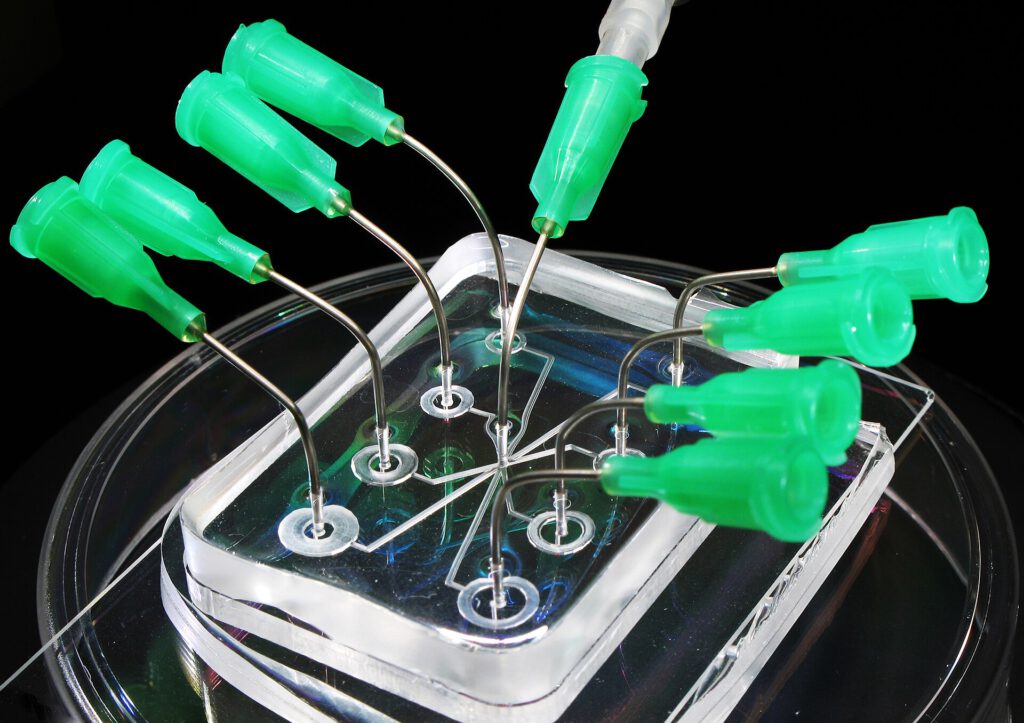
The research focused on familial Alzheimer’s, a rare inherited form of the disease that typically develops between ages 40 and 65. The team used a laboratory platform known as “human-on-a-chip” technology, developed by Hesperos, a healthcare technology company co-founded by Hickman. These miniature systems bring different types of human cells together under controlled conditions to recreate specific biological functions.
Unlike conventional experiments that examine isolated cells or rely on animal models, this approach allowed the researchers to observe interactions between tissues in a way that closely mirrors human physiology. The team created a miniature model of the neuromuscular junction, the connection where a motor neuron communicates with a muscle cell. Crucially, this model was designed without a brain or spinal cord.

By combining healthy muscle cells with motor neurons derived from stem cells carrying familial Alzheimer’s mutations, the scientists could test whether the disease affects movement independently of the central nervous system. The results showed that the mutations interfered with normal nerve-to-muscle function. Motor neurons carrying these mutations disrupted the connections responsible for controlling muscles, suggesting that at least some movement difficulties arise directly in the peripheral nervous system.
Implications for Early Detection and Treatment
Motor deficits may serve as an earlier indication of Alzheimer’s than cognitive decline. “If we can detect those changes and intervene earlier, that could help delay the onset of central nervous system symptoms,” Guo said. Preserving the ability to move could also benefit cognitive health, as regular physical activity is associated with better mental well-being.
The findings raise questions about current treatment strategies. Many Alzheimer’s therapies are designed to address processes occurring in the brain. However, if the disease also affects peripheral nerves, medications targeting the central nervous system may not correct abnormalities in the rest of the body. “This is the first time it’s been demonstrated that deficits in the peripheral nervous system can arise directly from these mutations,” Hickman said. “It means drugs that target the brain may not fix problems in the rest of the body.”
The study measured how consistently nerve signals produced muscle contractions and how long muscles could continue contracting before fatigue. These metrics resemble the functional testing physicians use when examining patients with movement disorders. “You can’t move unless the motor circuit works,” Hickman noted. “When a doctor taps your knee to check your reflex, they’re testing that exact connection.”
While the experiments demonstrate that Alzheimer’s-related changes can cause movement problems independently of the central nervous system, they do not yet establish that these changes necessarily occur before memory loss in patients. Further research is needed to determine how closely these laboratory findings reflect the progression of the disease in people, particularly those with the more common forms of Alzheimer’s.
If future studies confirm that motor function changes are detectable early in certain patients, tests of walking, coordination, or nerve-to-muscle activity might eventually help identify disease-related changes before more obvious neurological symptoms develop. This approach could help researchers investigate treatments that protect physical function alongside cognitive health.
Source: ScienceDaily
