


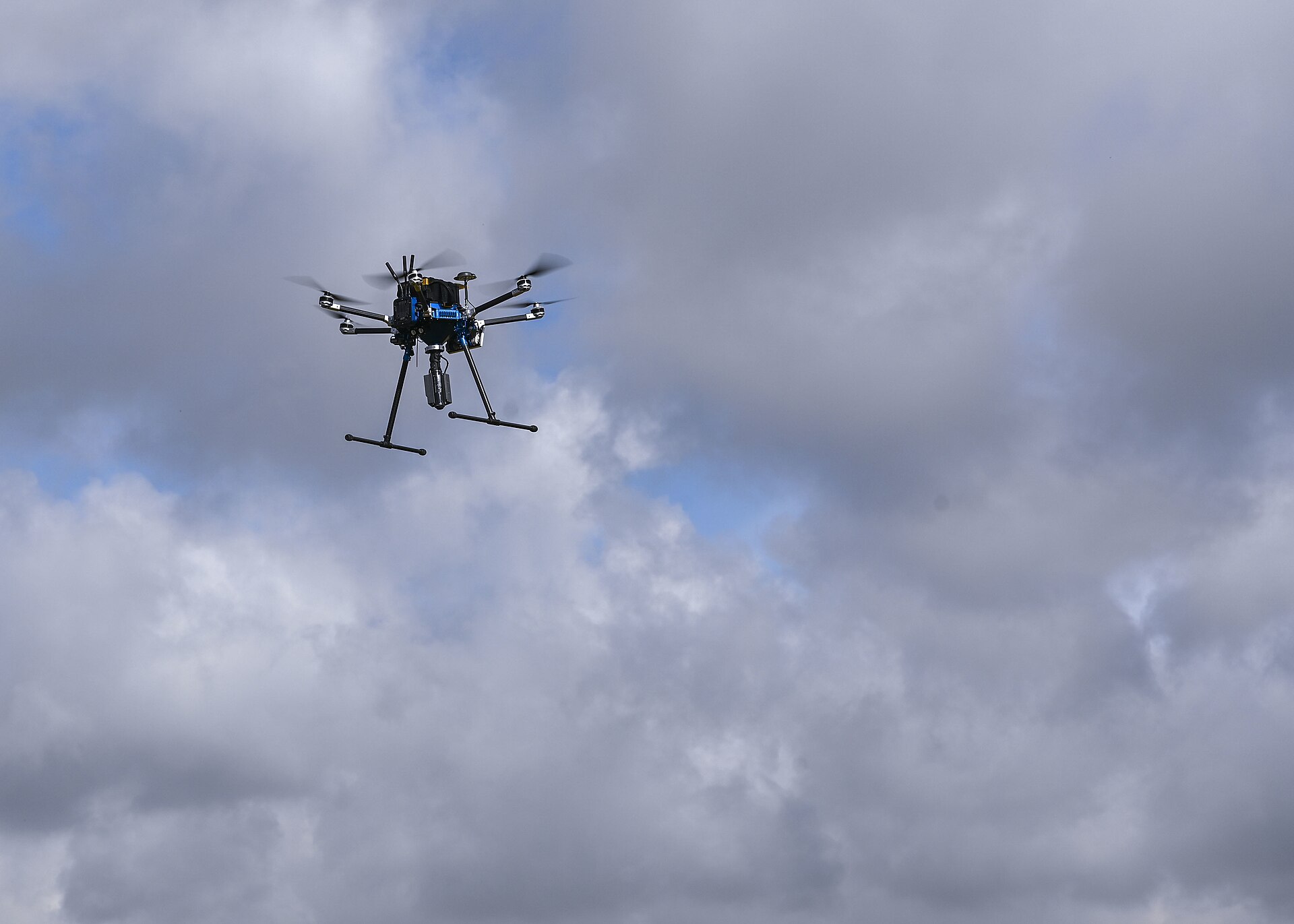
Amazon is expanding its Ring security ecosystem with two new autonomous devices, the Ring Drone Cam and the Ring Rover Cam. The company announced on November 10 that these AI-powered products will begin reaching customers in late 2026 and early 2027. The move signals a shift from fixed cameras to mobile, AI-driven surveillance for both residential and commercial spaces.
Ring Rover Cam targets businesses
The Ring Rover Cam is a wheeled security robot designed primarily for commercial use. Priced at $1,000, it is already available for preorder and is scheduled to start shipping on December 16, 2026. Amazon developed the Rover based on customer feedback from the Amazon Astro home monitoring robot, adapting its features for business environments.
The device features an automatically adjustable mast that allows it to peer over counters, shelving, and other obstacles. It can livestream and record video in up to 4K resolution while patrolling or performing 360-degree scans at designated points. Amazon states the Rover can cover up to 5,000 square feet (465 square meters) on a single floor. It lacks stair-climbing capability and is incompatible with curved edges, sunken areas, or flooring transitions greater than 1.375 inches (3.5 centimeters).
Security features include a siren, a light tower, and a microphone for two-way audio communication. The robot can respond automatically to alerts from connected Ring devices, such as doorbell rings or motion events. Videos triggered by these events are stored in the cloud for up to 180 days for sharing and replay.
Ring Drone Cam returns with limitations
The Ring Drone Cam serves as a successor to the Ring Always Home Cam, which was briefly available as an invitation-only product in September 2021. Like its predecessor, the new drone starts at $250. Amazon aims to make it available on January 27, 2027, pending authorization from the Federal Communications Commission. Customers can currently register for email updates on the product page.
The drone utilizes a system Amazon calls AI Pilot, which combines cameras, on-device sensors, and cloud processing to navigate autonomously. It can digitally map a floor plan after a customer guides it through the space or allows it to explore independently. The AI Pilot uses this map to identify specific rooms and suggest patrol points near side doors, windows, or sensitive areas like cash registers.
Onboard, the drone offers a 148-degree field of view with 360-degree rotation and 2K video resolution. Two LED lights activate in low-light conditions to illuminate the scene. However, the drone is limited to eight minutes of flight time on a fully charged battery. It relies on a docking station for charging and may experience degraded performance in environments with reflective surfaces, blank matte walls, or transparent surfaces like glass and mirrors.
Privacy and security debates
The introduction of flying and roving cameras has reignited privacy concerns. Amazon describes the devices as using “privacy and security without compromise,” citing LED indicators and screen notifications that inform users when recordings are active. Videos are protected by Throw Away the Key Encryption, a feature introduced in September 2026.
Despite these measures, Ring has faced scrutiny in the past. A 2023 Federal Trade Commission investigation found that Ring allowed employees and contractors to view private video recordings. The FTC also noted inadequate safeguards that led to hackers accessing 55,000 US customer accounts. The Electronic Frontier Foundation (EFF) has criticized Ring founder Jamie Siminoff for a “surveillance-first-privacy-last” approach. While the EFF views the new encryption as an improvement, it falls short of end-to-end encryption.
Researchers like Ryan Calo from the University of Washington have previously warned that flying security cameras provide new ways to surveil indoor spaces and give companies greater access to sensitive home details. Currently, the new Ring Robotics products do not include facial recognition. However, Ring has already introduced a “Familiar Faces” feature for fixed doorbell cameras, which is the subject of a class action lawsuit.
Source: Ars Technica
