


Close Menu
iM.NewsiM.News

    Subscribe to Updates

    Get the latest creative news from FooBar about art, design and business.

    What's Hot

    How a Melbourne bookseller found community in a digital age

    November 9, 2026

    Osteoporosis Drugs Linked to Lower Dementia Risk

    November 9, 2026

    Nvidia Overseas Cloud Quota and GPU Shortages Hit Chinese AI Labs

    November 9, 2026
    Facebook X (Twitter) Instagram
    iM.NewsiM.News
    Subscribe
    • Home
    • Lifestyle

      How a Melbourne bookseller found community in a digital age

      November 9, 2026

      Osteoporosis Drugs Linked to Lower Dementia Risk

      November 9, 2026

      Iceland Ice Bags Top Deliveroo Trends Amid UK Heatwave

      November 9, 2026

      CAR-T Therapy Reverses Stiff Person Syndrome in US Trial

      November 9, 2026

      How a Black Labrador Helped a PhD Student Overcome MS and Ehlers-Danlos

      November 9, 2026
    • Relations

      France Blames Iran for Supermarket Cyber-Attacks, Vows EU Sanctions

      November 9, 2026

      MPs Push for ‘Black English’ Census Options

      November 9, 2026

      Nvidia CEO Jensen Huang Under Investigation After Spy Allegations

      November 9, 2026

      Krakow Shooting Suspect Dies in Hospital After Killing Six

      November 9, 2026

      Trump Floats UFC Chief Dana White for Press Secretary, Then Retracts

      November 9, 2026
    • Technology

      Nvidia Overseas Cloud Quota and GPU Shortages Hit Chinese AI Labs

      November 9, 2026

      AMD Confirms GPU Driver Bug Is Wearing Out SSDs

      November 9, 2026

      SpaceX VP: Falcon 9 Retiring as AI Transforms Company

      November 9, 2026

      Huawei Launches Desktop PCs With Homegrown Kirin X90 Chip

      November 9, 2026

      Tesla Robotaxi Launches in San Antonio

      November 9, 2026
    • Travel & Tourism

      Singapore Airlines Adds First Class to World’s Longest Flight

      November 9, 2026

      United Airlines to Open New Concourse E at Washington Dulles

      November 9, 2026

      Qantas Launches Las Vegas and Cape Town Ultra-Long Routes

      November 9, 2026

      Lufthansa 747 Avoids Collision With American Airlines 787 at Miami Airport

      November 9, 2026

      British Airways 787 Stranded in Pittsburgh for 2 Months

      November 9, 2026
    • Get in Touch
    iM.NewsiM.News
    Home»Lifestyle»Health»Mayo Clinic Unveils New Tools to Target Aging Zombie Cells
    Health

    Mayo Clinic Unveils New Tools to Target Aging Zombie Cells

    im.newsBy im.newsOctober 27, 2026No Comments5 Mins Read14 Views
    Facebook Twitter Pinterest LinkedIn Tumblr Email
    Microscopic view of senescent cells in a laboratory setting
    Photo: Ns takes photos / Wikimedia Commons, CC BY 4.0
    Share
    Facebook Twitter LinkedIn Pinterest WhatsApp Email

    Seven new studies from Mayo Clinic are providing detailed insights into senescent cells, often referred to as zombie cells because they stop dividing but remain active in the body. These aging cells release inflammatory substances that contribute to diseases associated with growing older. The research, published in Nature journals, was conducted by scientists at the Robert and Arlene Kogod Center on Aging.

    Rather than simply confirming that senescent cells play a role in aging, the studies investigate how to recognize different types of these cells, why they produce harmful inflammation, and how their effects might be reduced. The findings also contribute to a nationwide effort to create detailed maps of senescent cells throughout the human body. This initiative is known as the Cellular Senescence Network, or SenNet Consortium. The project brings together researchers across the United States and receives funding from the National Institutes of Health Common Fund.

    Identifying Senescent Cells with SenMayo

    Identifying senescent cells reliably has long been a major obstacle for scientists studying aging. The new research shows that these cells are much more varied than previously understood. Their characteristics differ depending on where they are located in the body and which biological processes caused them to become senescent.

    To address this challenge, researchers developed a tool called the SenMayo gene set. It uses patterns of gene activity to identify senescent cells more consistently across tissues and experimental systems. Scientists tested the approach using bone biopsies from older adults. They also found that the gene signature became less prominent after senescent cells were removed in preclinical experiments. Since its development, SenMayo has become a widely used resource for researchers investigating aging and related diseases.

    Sundeep Khosla, M.D., a Mayo Clinic endocrinologist, served as senior author of the study titled “A new gene set identifies senescent cells and predicts senescence-associated pathways across tissues.” Other Mayo Clinic researchers who contributed to the paper include Nathan LeBrasseur, Ph.D., Diana Jurk, Ph.D., Joao Passos, Ph.D., and LaTonya Hickson, M.D.

    Understanding Mitochondrial Inflammation

    Other studies explored one of the most damaging features of zombie cells: their tendency to generate ongoing inflammation. The researchers discovered additional biological processes that explain why senescent cells continue producing inflammatory signals. Several of these processes involve malfunctioning mitochondria, the tiny structures responsible for producing much of a cell’s energy.

    In one pathway, DNA and RNA originating from mitochondria activate immune responses that contribute to inflammation. Another involves changes in mitochondrial metabolism that influence inflammatory gene activity through epigenetic mechanisms. These mechanisms affect how genes are switched on or off without changing the underlying DNA sequence.
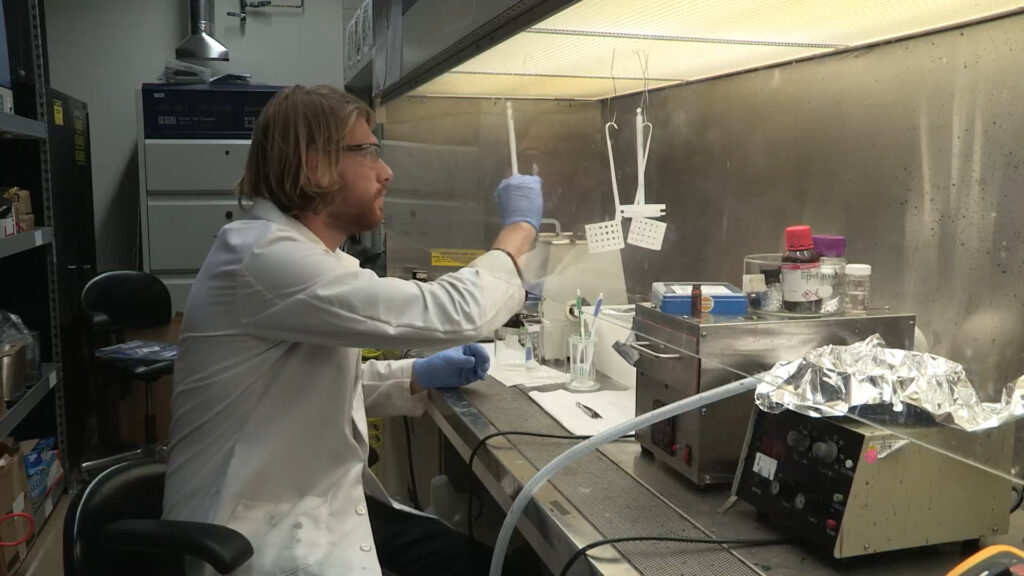
    A scientist in a lab
    Photo: Stanford ENERGY, Video by Mark Shwartz / Wikimedia Commons, CC BY 2.5

    Dr. Passos served as senior author of three papers examining these mechanisms and the diversity of senescent cells. The discoveries suggest that researchers may eventually be able to interfere with the processes responsible for chronic inflammation while leaving the senescent cells themselves intact. This would offer another approach to treatment beyond attempting to destroy every harmful aging cell.

    Mayo Clinic researcher Darren Baker, Ph.D., served as senior author of the paper “Senotypes define the diverse landscape of senescent cells,” which examines the varied characteristics of these aging cell populations. Marissa Schafer, Ph.D., a Mayo Clinic scientist whose laboratory directed several of the investigations, noted that this body of work is moving the aging field forward to precisely identify, understand, and target the specific senescent cells that contribute to age-related dysfunction.

    Potential Interventions and Biomarkers

    The Mayo Clinic team also investigated possible ways to reduce the number of senescent cells or limit the damage they cause. The approaches included senolytic medications, which are designed to eliminate senescent cells, a natural compound present in tomatoes, and genetic techniques intended to target particular populations of aging cells. When tested in older mice, these interventions produced encouraging results. Depending on the approach, researchers observed reductions in inflammatory measures and improvements in several aging-related outcomes, including physical frailty, inflammation in the brain, and performance on cognitive tasks.

    Another investigation uncovered a possible way to measure aspects of biological aging through blood testing. Researchers identified IL-23R as a potential biomarker that might eventually help scientists evaluate aging-related changes and determine whether future treatments are working. These results remain preliminary in terms of medical applications. More research will be necessary to establish whether the approaches are safe and effective in people.

    Together, the seven studies represent an important shift in how researchers approach cellular aging. Scientists are moving beyond the broad observation that senescent cells contribute to age-related decline and toward identifying which populations cause the greatest problems, what makes them harmful, and how those specific effects could be controlled. The work also supports Mayo Clinic’s broader Precure Research initiative, which aims to equip physicians with better ways to identify and intervene in harmful biological changes before they develop into disease.

    Source: ScienceDaily

    aging Health health research inflammation Mayo Clinic senescent cells SenMayo
    Share. Facebook Twitter Pinterest LinkedIn Tumblr Email
    Previous ArticleAI Models Challenge Core Computer Science Theory
    Next Article The Rat Infestation That Defined a Nigerian Boarding School
    im.news

    Related Posts

    How a Melbourne bookseller found community in a digital age

    November 9, 2026

    Osteoporosis Drugs Linked to Lower Dementia Risk

    November 9, 2026

    Nvidia Overseas Cloud Quota and GPU Shortages Hit Chinese AI Labs

    November 9, 2026
    Leave A Reply Cancel Reply

    Latest Posts

    How a Melbourne bookseller found community in a digital age

    November 9, 20261 Views

    Osteoporosis Drugs Linked to Lower Dementia Risk

    November 9, 20262 Views

    Nvidia Overseas Cloud Quota and GPU Shortages Hit Chinese AI Labs

    November 9, 20262 Views

    AMD Confirms GPU Driver Bug Is Wearing Out SSDs

    November 9, 20260 Views
    Stay In Touch
    • Facebook
    • Twitter
    • Pinterest
    • Instagram
    • YouTube
    • Vimeo
    Don't Miss

    Epstein List Phase 1: Full Flight Logs, Client List Released

    February 28, 2025 News Focus 244 Views

    In a stunning development that has sent shockwaves through political and entertainment circles, Attorney General…

    Microsoft Stock Joins Exclusive $4 Trillion Club After Blockbuster Cloud + AI Earnings

    July 31, 2025

    DOJ & FBI Find No Epstein Client List, Suicide Confirmed

    July 7, 2025

    Subscribe to Updates

    Get the latest creative news from SmartMag about art & design.

    About Us
    About Us

    We provide the daily life news. You find latest trendy news at our portal, from entertainment to economy or politics.

    We're accepting new partnerships right now.

    Email Us: info@im.news

    Facebook X (Twitter) RSS
    Our Picks

    How a Melbourne bookseller found community in a digital age

    November 9, 2026

    Osteoporosis Drugs Linked to Lower Dementia Risk

    November 9, 2026

    Nvidia Overseas Cloud Quota and GPU Shortages Hit Chinese AI Labs

    November 9, 2026
    Most Popular

    Epstein List Phase 1: Full Flight Logs, Client List Released

    February 28, 2025244 Views

    Microsoft Stock Joins Exclusive $4 Trillion Club After Blockbuster Cloud + AI Earnings

    July 31, 2025193 Views

    DOJ & FBI Find No Epstein Client List, Suicide Confirmed

    July 7, 2025153 Views
    © 2026 I'm News. Designed by I'm News.
    • Home
    • Lifestyle
    • Relations
    • Travel & Tourism
    • Technology

    Type above and press Enter to search. Press Esc to cancel.