



NVIDIA is introducing the DGX Spark Developer Kit at the SC26 supercomputing conference in Chicago. The system allows researchers, academics, and developers to run multi-node scientific workloads and AI models locally, removing the need to wait for time on shared institutional GPU clusters.
Four-Node Cluster Architecture
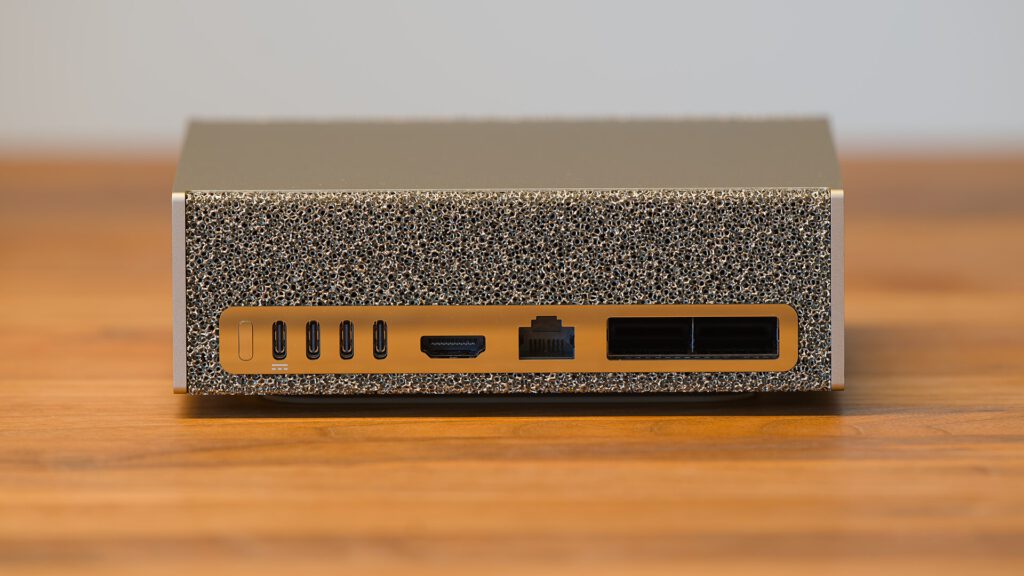
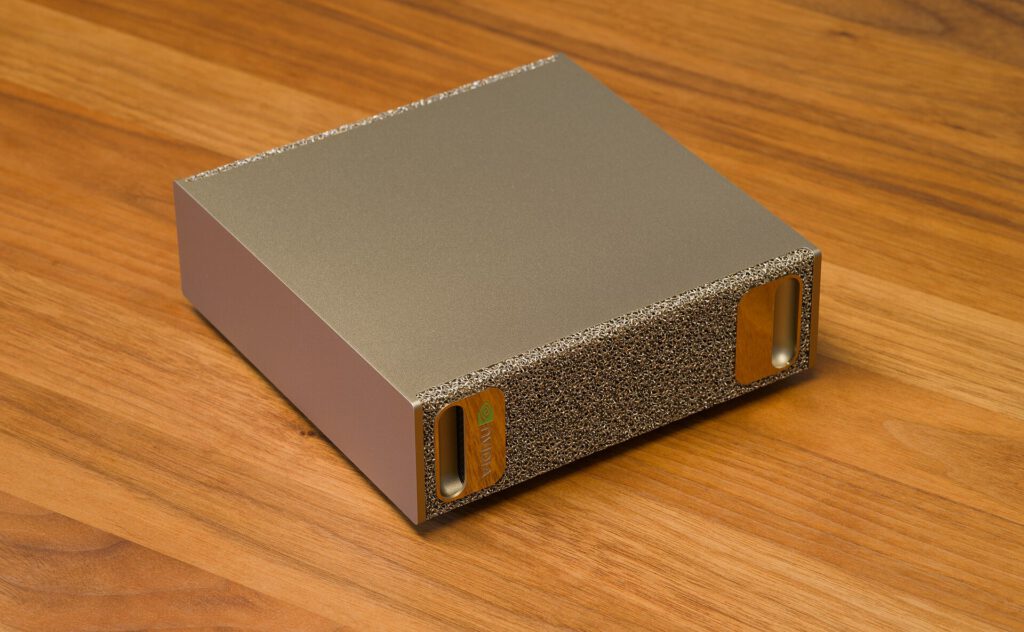
The kit consists of four DGX Spark systems linked in a ring topology. Each node connects directly to its two neighbors using NVIDIA ConnectX-7 networking, eliminating the need for external network switches. This configuration scales from a single node up to four, providing a total of 512GB of combined memory and 20TB of NVMe storage.
At the core of each unit is the GB10 Grace Blackwell Superchip. This hardware enables researchers to deploy large language models with up to 700 billion parameters locally. Examples include DeepSeek V4.1, which can be tested and refined on premises without relying on external cloud infrastructure.
Local HPC and AI Workflows
The primary goal of the DGX Spark Developer Kit is to keep proprietary datasets and unpublished results within an organization’s control. Teams can develop, debug, and test applications across four nodes before scaling to larger data center systems. This approach saves server hours for production runs and reduces queue times for fixed compute allocations.
NVIDIA is preparing an installation playbook for the NVIDIA HPC SDK. This software development kit includes GPU-accelerated compilers for C, C++, and Fortran, along with libraries and message passing interface tools. These are the same development environments used on NVIDIA-powered supercomputers, allowing teams to build and test scientific applications locally.
Validated workloads on the DGX Spark platform include LAMMPS with Kokkos for materials simulation and NAMD for molecular dynamics. The broader community has also tested GROMACS for molecular dynamics, OpenFOAM for fluid dynamics, and WRF for weather modeling. Additionally, NVIDIA NIM microservices such as OpenFold3 and Boltz-2 are used for predicting biomolecular structures.
Scientific and AI Integration
The system supports agent-assisted workflows that prepare simulation inputs, launch runs, and summarize results. Scientists can validate these setups and conclusions while AI models approximate slow simulations to refine designs, such as minimizing drag in wing structures. Researchers can also narrow down massive simulations, reducing a 10-million-cell model to the 50 to 500 dimensions that matter before committing supercomputer time.
New open datasets and post-training recipes for Nemotron 3.5 Super VL help researchers adapt models for life sciences and chemistry. This enables secure scientific workflows on infrastructure that organizations fully control.
The DGX Spark Developer Kit is available for sale at SC26. DGX Spark products and cables can be purchased through top OEM partners including Acer, ASUS, Dell Technologies, GIGABYTE, H3C, HP, Lenovo, MSI, and xFusion. The kit is also available through the NVIDIA Marketplace.
Source: NVIDIA
