


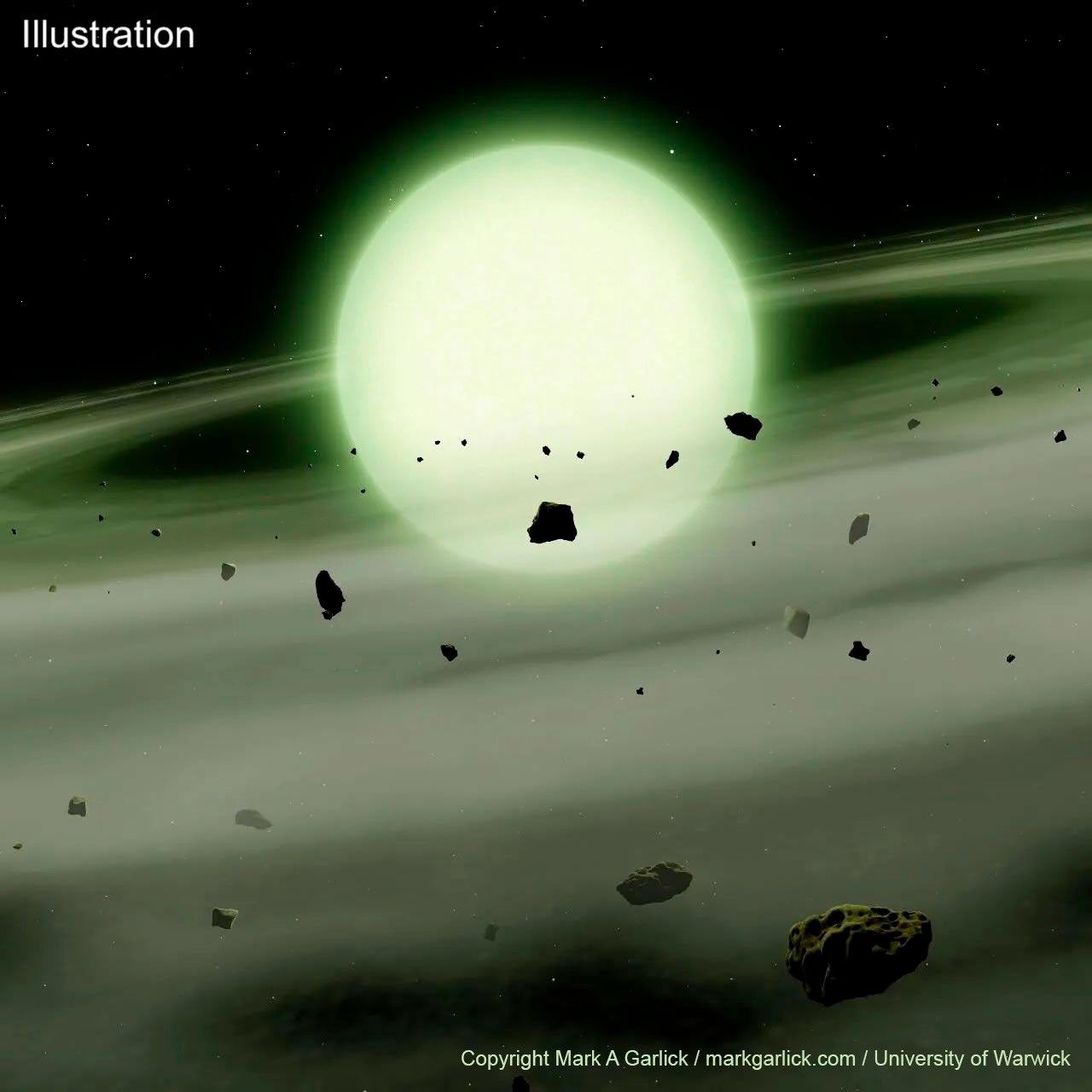
Astronomers have identified WD J1330+6435, a white dwarf star that exhibits a green tint in its atmosphere. This finding adds to a growing list of white dwarfs that display colors beyond the traditional white, red, or blue spectrum. The star is surrounded by an accretion disk containing gas and rocks that orbit the stellar remnant.
Accretion Alters Stellar Color
White dwarfs are the small, faint remnants left behind when a star like the Sun exhausts its nuclear fuel. Typically, these stars appear white to observers on Earth. However, recent observations suggest that some white dwarfs can appear yellow, green, cyan, pink, or purple. The green hue of WD J1330+6435 is not inherent to the star’s core temperature but is instead caused by external factors.
Trace elements accreted onto the star interact with the stellar atmosphere. This interaction shifts the normally white color of the white dwarf, resulting in the observed green tint. The presence of an accretion disk, filled with orbiting gas and rocks, provides the material necessary for this chemical alteration.
Stellar Colors and Temperature
Star color is generally linked to temperature. Blue stars are hotter than red stars. Most stars appear white, with some showing noticeable red or blue hues. Because stars are so far from Earth, they appear as points of light in the sky. The Sun is the only star close enough to show its true color without atmospheric distortion, but even it appears white from space.
The discovery of WD J1330+6435 highlights the complexity of stellar atmospheres. While the star’s name includes “white dwarf,” its visual appearance can be significantly altered by the material it consumes. This phenomenon is not unique to WD J1330+6435 but is part of a broader class of white dwarfs that exhibit unusual colors due to accretion.
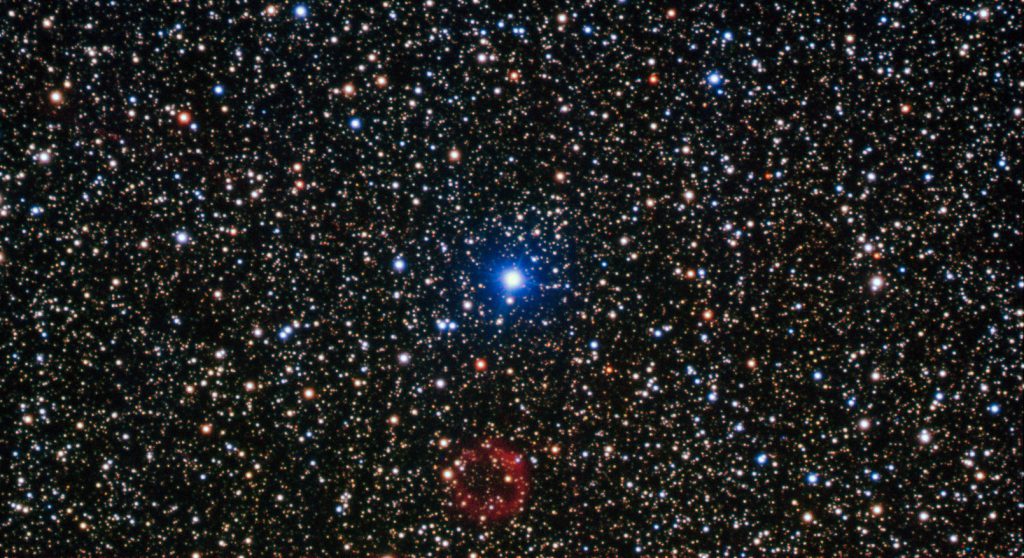
Despite the striking green color, WD J1330+6435 is too faint to be seen with the naked eye. The featured image is an illustration of the star and its accretion disk, providing a visual representation of the system. Astronomers continue to study these objects to better understand the processes that shape stellar evolution and atmospheric composition.
Source: NASA
