


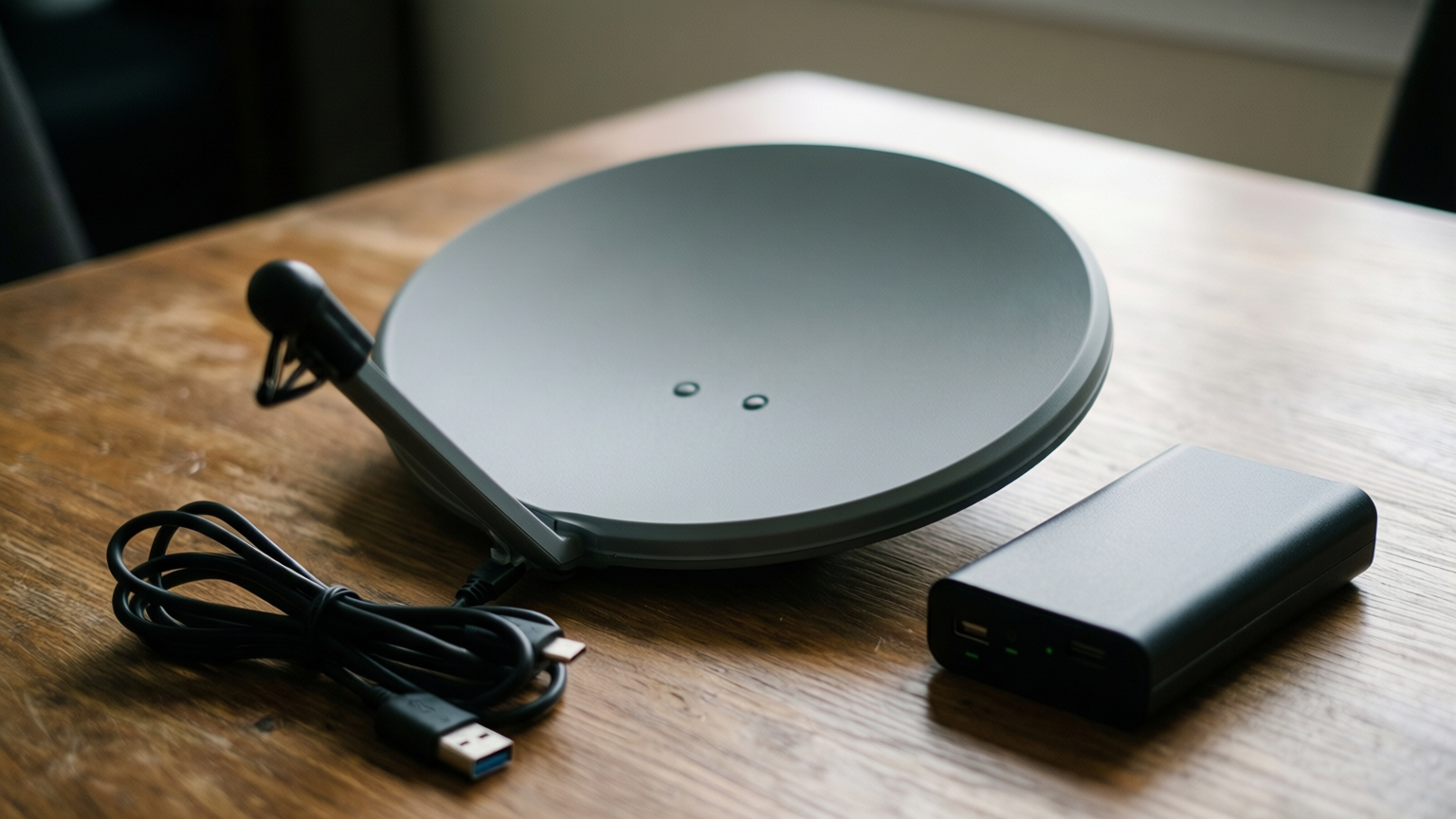
SpaceX has introduced a new version of its portable satellite internet terminal, the Starlink Mini 2. The updated device integrates a dish, Wi-Fi router, and a rechargeable battery into a single unit roughly the size of a laptop. This addition allows the terminal to operate independently of an external power source for extended periods.
Extended Battery Life and Hot-Swappable Design
The primary upgrade in the Starlink Mini 2 is its power system. SpaceX states the device can run for up to 4.5 hours on a full internal charge. Users who need longer uptime can swap out the battery while the device is running, a feature known as hot-swapping. Additional batteries will be sold separately.
For users who prefer a continuous power supply, the terminal supports connection to a 60W power source via USB-C. This flexibility targets travelers and professionals who need reliable internet access in remote locations or areas with unstable grid power.
Thinner Profile and Rugged Build
Despite adding a battery, the new terminal is physically smaller than its predecessor. The Starlink Mini 2 measures 23.1mm in thickness, a significant reduction from the original Mini, which was 38.5mm thick. The inclusion of the battery does add some weight, bringing the total to approximately 3.5 pounds.
The device retains an IP67 rating, meaning it is dust-tight and can withstand immersion in water up to one meter for 30 minutes. This durability ensures the terminal remains suitable for outdoor use in various weather conditions.
Pricing and Availability
According to screenshots shared by users on the social media platform X, the Starlink Mini 2 is priced at $999. This cost includes a full year of Roam Unlimited service, which SpaceX values at $2,100. The package represents a bundled offer for users seeking both hardware and long-term connectivity.
Preorders are currently available by invitation for select customers in the United States. SpaceX has indicated that availability will expand to more customers and countries in the near future. The company has not yet provided a specific date for the global rollout.
Source: The Verge
