


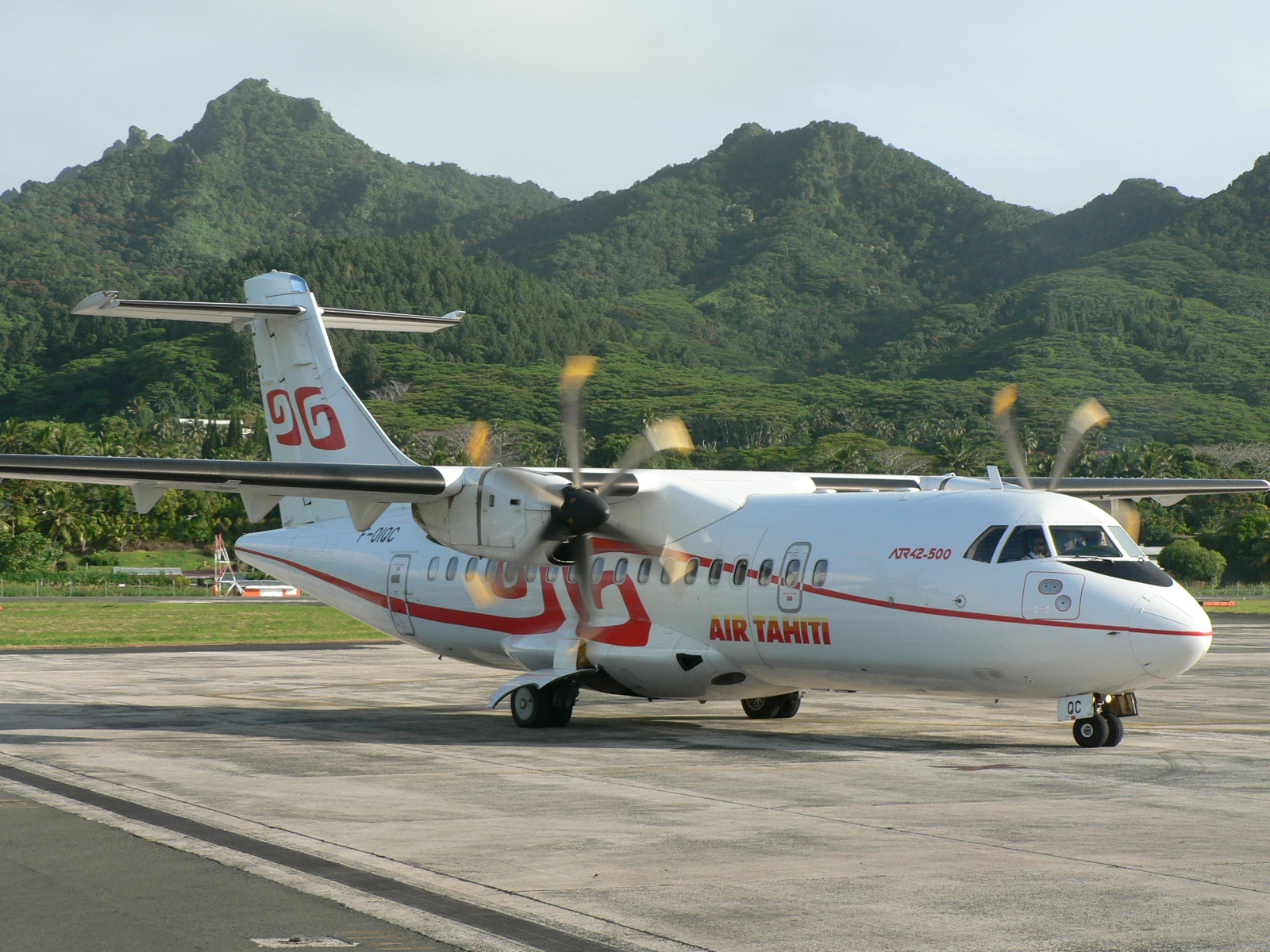
The newest ATR 72-600 for Air Tahiti is embarking on a six-day journey from France to French Polynesia. The aircraft, registered as F-OPFO, will cover approximately 14,455 miles and visit nine airports before reaching its new home at Faa’a International Airport in Papeete. This delivery flight marks the arrival of a unique aircraft designed exclusively for premium passengers.
Unlike standard regional turboprops, this aircraft features a 26-seat, all-business-class cabin. The configuration is intended for wealthy travelers visiting South Pacific destinations. Once it arrives in Tahiti, the plane will operate short services to Bora Bora and Raiatea, with flights lasting as little as 20 minutes.
Unprecedented Ferry Itinerary
The delivery journey begins at Toulouse-Blagnac Airport in southern France, the home of manufacturer ATR. The ferry itinerary includes seven intermediate stops across the Middle East, Asia, and Australia. The route starts with Cairo International Airport and continues through Muscat, Hyderabad, Subang, Lombok, Cairns, and Nadi.
The trip spans eight separate flights, a significant undertaking for an aircraft built for short regional hops. The first five sectors carry the plane through the Middle East and Southeast Asia to the Indonesian island of Lombok. From there, the journey involves three long flights over open water.
The leg from Lombok to Cairns Airport covers about 2,063 miles. The next sector, Cairns to Nadi Airport, spans 2,092 miles. The final flight between Fiji and French Polynesia is the longest at approximately 2,170 miles. These distances represent great-circle routes, meaning actual flight paths may be longer due to weather and routing constraints.
This journey is remarkable because the ATR 72-600 has a published range of just 851 miles with a full passenger load. However, ATR technical documentation shows that a lightly loaded HighLine aircraft can reach about 2,094 miles. The delivery flight relies on reduced payload to extend endurance, requiring careful planning for fuel reserves and weather.
Premium Cabin Configuration
The interior of F-OPFO differs sharply from Air Tahiti’s conventional ATR 72-600s, which accommodate 68 passengers. The new aircraft has only 26 business-class seats arranged in 13 rows of 1-1 seating. This layout ensures every passenger has window access and direct aisle entry.
The cabin features ETEREA seats by Italy’s Geven. Each seat measures 21.6 inches wide with 39 inches of pitch and 7 inches of recline. Passengers receive a personal side console, dedicated storage, and USB-A and USB-C charging ports. An executive-style ceiling without overhead bins creates a more open atmosphere.
The aircraft sports a Polynesian-inspired livery named Ānapanapa, which celebrates local navigation and craftsmanship traditions. Entertainment is accessed through personal devices. Air Tahiti Signature will also provide dedicated lounges in Tahiti and Bora Bora, priority ground handling, and personalized onboard hospitality.
Air Tahiti is only the second airline to use ATR’s HighLine All-Business Class configuration, following Malaysia’s Berjaya Air. The HighLine concept, introduced in 2023, allows operators to configure ATR aircraft for premium services. Air Tahiti selected this layout for one of four ATR 72-600s ordered in 2024, extending a partnership with the Franco-Italian manufacturer that spans nearly four decades.
Commercial Strategy for Luxury Tourism
After the ferry flight, F-OPFO will replace its long-haul sectors with short journeys linking Papeete with Bora Bora and Raiatea-Taha’a. Reservations for services starting November 11 are now open, ahead of the original December 8 schedule. The initial plan includes five weekly morning triangular services operating Papeete, Bora Bora, Raiatea, Papeete.
The airline’s decision reflects the importance of luxury tourism to French Polynesia. Exclusive resorts and overwater villas in Bora Bora attract affluent international visitors. Passengers arriving on long-haul business-class flights have traditionally transferred to conventional regional aircraft for the final leg. Air Tahiti Signature offers a continuous premium experience.
The commercial model is distinct. With 26 seats instead of 68, Air Tahiti must generate higher revenue per passenger to match the income of a conventional aircraft. Premium fares, exclusive charters, and partnerships with luxury travelers will be essential to offset the reduced capacity. The airline will test whether a luxury cabin can succeed on flights as short as 20 minutes.
Source: Simple Flying
