


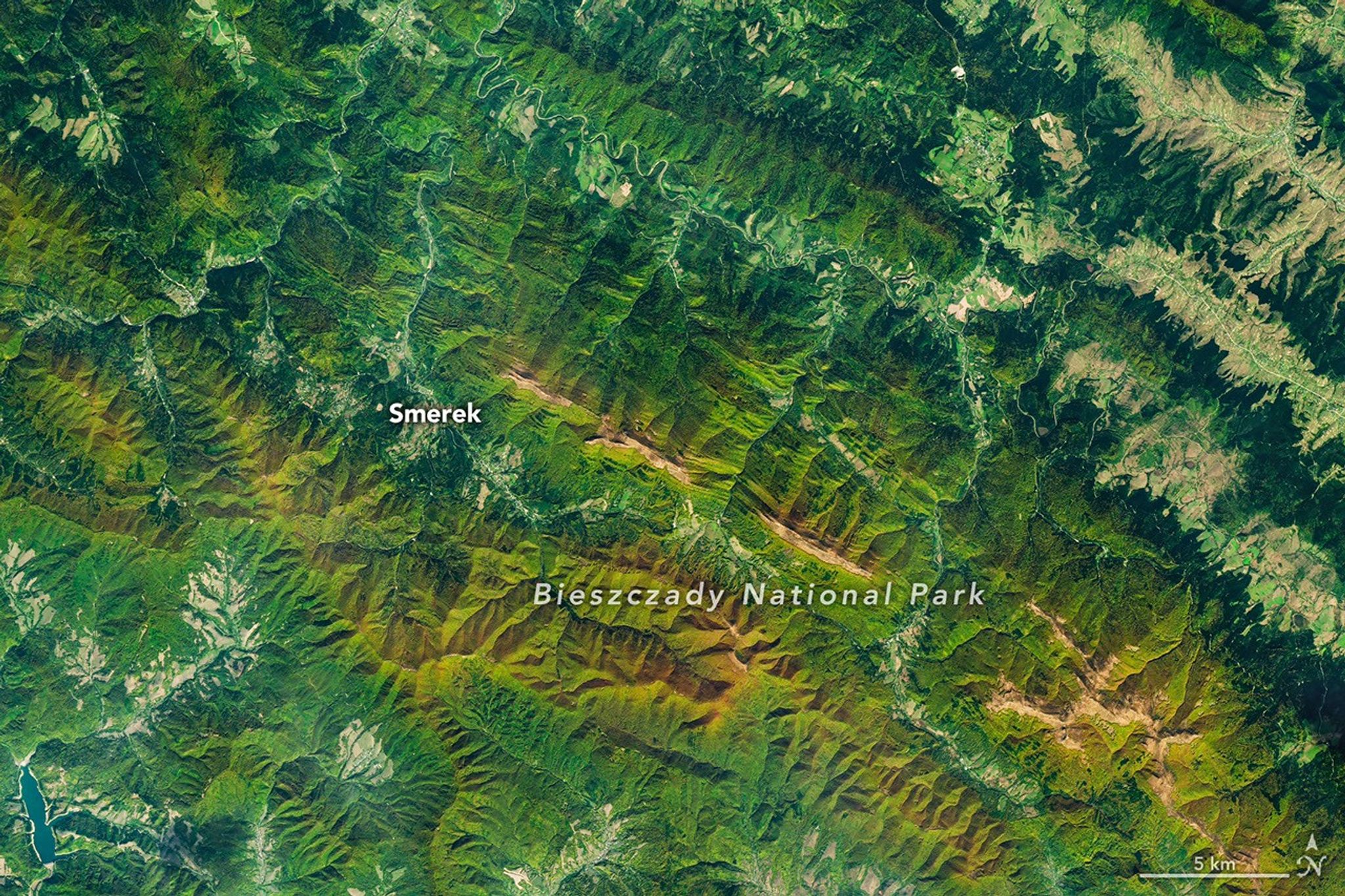
NASA’s Landsat 9 satellite captured a striking seasonal transformation in southeast Poland on October 8, 2026. The Operational Land Imager (OLI) recorded the Bieszczady Mountains autumn landscape, where forested slopes display a mix of reds, golds, and tans as temperatures drop and daylight hours shorten.
Satellite View of Changing Forests
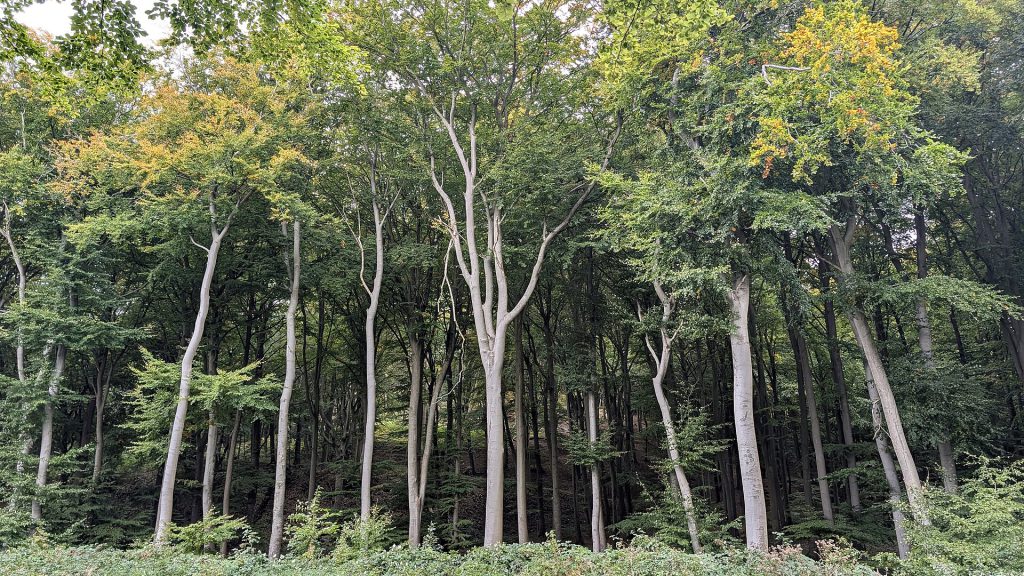
The image highlights the distinct layers of vegetation in Bieszczady National Park. European beech trees, which dominate the region’s forests, are shedding their green chlorophyll. This biological process allows underlying yellow and red pigments to become visible, creating the vibrant canopy seen from space. Other species, including sycamore maple, contribute to the colorful display.
Above the tree line, which sits at approximately 1,000 to 1,260 meters in this area, the landscape shifts to polonina. These subalpine meadows consist of open grasslands and shrubby thickets of rowan, willows, and green alder. In the satellite imagery, these ridge tops appear tan, having lost their summer greenness as the season progresses.
Historical and Ecological Context
The European beech forests in this region have a deep history. Descended from ice-age survivors, these trees spread northward across Europe from refugia in the Carpathians and Alps after the glaciers retreated. They played a key role in reforesting land previously covered by ice. Portions of Bieszczady National Park are part of UNESCO’s network of ancient and primeval beech forests, which spans 18 countries.
The area is also known for its wildlife. European bison, once extinct in the wild, were reintroduced in the 1960s and now roam the hills in large numbers. Brown bears and Eurasian lynx also find refuge in the forests. As autumn sets in, brown bears are actively foraging to build fat reserves for winter hibernation.
The image was created by Michala Garrison using data from the U.S. Geological Survey. The story was written by Lindsey Doermann for the NASA Earth Observatory.
Source: NASA
