


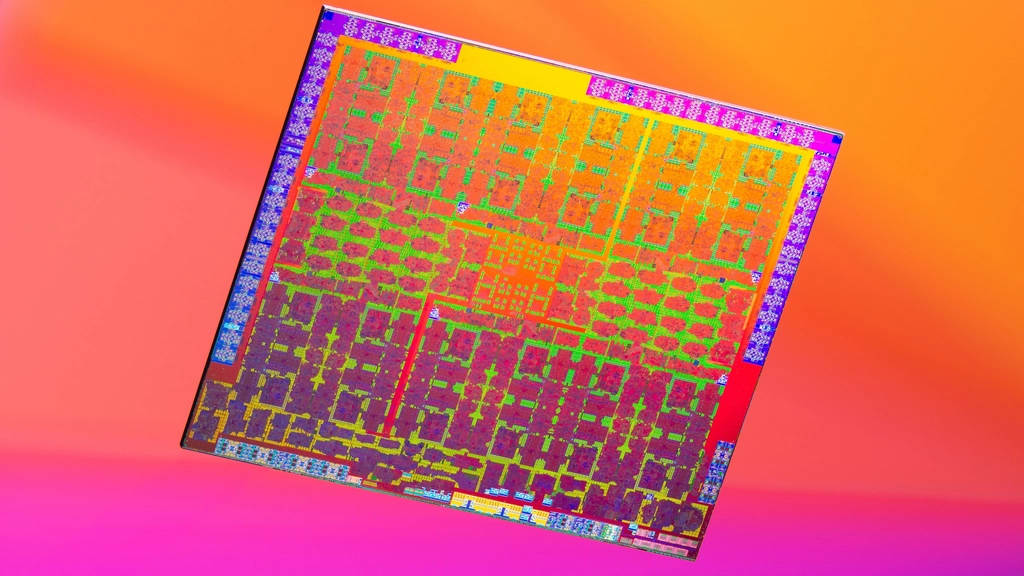
Google announced the release of TorchTPU on Tuesday, marking a significant step in its effort to diversify the hardware ecosystem for artificial intelligence applications. This new open-source project allows developers to run PyTorch models on Google’s custom Tensor Processing Units (TPUs) without rewriting their code.
The move places Google in direct competition with Amazon, which released a similar tool called TorchNeuron on Monday. Both companies are attempting to break Nvidia’s long-standing dominance in the AI industry, where most applications are currently optimized to run on Nvidia’s graphics processing units (GPUs).
Breaking Nvidia’s Hardware Stranglehold
PyTorch has become the standard toolkit for building and training AI models, with estimates suggesting it is used by 85% of AI applications. Originally developed by Meta in 2016, the framework was designed with Nvidia’s GPUs in mind, as those chips were already the industry standard for AI research at the time.
In 2022, Meta transferred ownership of PyTorch to the Linux Foundation to ensure its long-term stability as an open-source project. Despite this transition, the deep integration with Nvidia hardware has made it difficult for developers to switch to alternative chips without significant engineering effort.
Google’s TorchTPU aims to remove that barrier. The project enables AI applications to run on Google Cloud infrastructure with a simple configuration change. Developers can migrate existing PyTorch apps to TPUs without rewriting their code, potentially lowering the cost and complexity of scaling AI workloads.
Collaboration with Key AI Developers
Google stated that it worked directly with several major players in the AI development space to ensure TorchTPU functions seamlessly with popular tools. These partners include Meta, Hugging Face, Inferact, which is the maker of vLLM, and RadixArk, which is the maker of SGLang.
This collaboration is intended to ensure that TorchTPU’s features and code libraries work as reliably as the original PyTorch framework. Google also launched a dedicated TPU agent suite to help developers move their applications to Google’s chips and troubleshoot errors during the transition.
Additionally, Google updated its LiteRT tool, which runs AI models on phones, laptops, and embedded devices, to improve compatibility with PyTorch applications. These updates are designed to make the switch to Google’s hardware more attractive for a wider range of use cases.
Amazon’s Parallel Effort
Amazon’s TorchNeuron, released on Monday, serves a similar purpose by allowing AI apps to be ported to Amazon’s Trainium chips and AWS infrastructure without rewriting. Amazon is also taking a broader approach by submitting code to the main PyTorch project that decouples various features from Nvidia’s chips.
This effort aims to make PyTorch more open to any hardware by default, rather than just providing a specific bridge to Amazon’s own chips. Both Google and Amazon are clearly working to end Nvidia’s advantage in the market, though it remains unclear how quickly developers will adopt these new tools.
The release of TorchTPU does not guarantee that AI app developers will automatically abandon Nvidia’s hardware. However, it provides a viable alternative for those looking to reduce their reliance on a single supplier. As cloud providers continue to invest in their own AI chips, the landscape for AI infrastructure is likely to become more competitive.
Source: TechCrunch
