


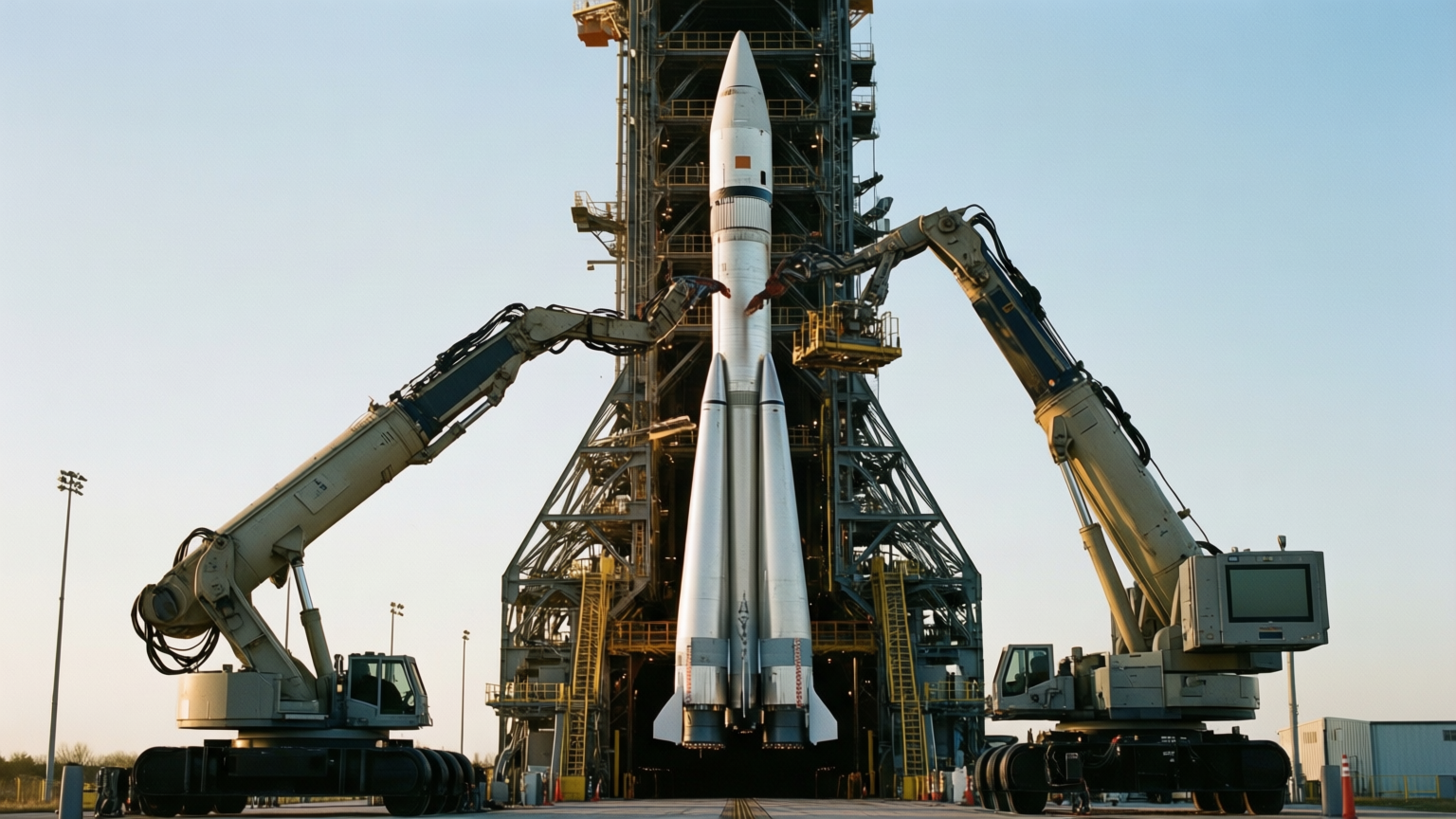
SpaceX has achieved a major milestone in aerospace engineering with the successful mid-air capture of its Starship vehicle. The massive rocket, which had completed a full orbital flight, was caught by giant mechanical arms known as chopsticks at the launch site. This event marks the first time such a complex recovery operation has been executed successfully.
Historic Mid-Air Capture
The Starship vehicle, a fully reusable super heavy-lift launch vehicle developed by SpaceX, returned to Earth after completing its mission. As it descended toward the launch tower, two large mechanical arms positioned at the top of the structure moved into position. These arms, often referred to as chopsticks, clamped onto the sides of the rocket just before it touched down. This method of recovery eliminates the need for landing legs, reducing the weight of the vehicle and allowing for more payload capacity.
The operation required precise timing and coordination. The rocket had to be slowed down significantly by its engines before the arms could secure it. This technique is critical for SpaceX’s goal of rapid reusability, as it allows the vehicle to be prepared for its next flight much faster than traditional landing methods.
Implications for Future Missions
This successful catch demonstrates the viability of SpaceX’s plan to make space travel more affordable and frequent. By reusing the entire rocket, including the super heavy booster, SpaceX aims to drastically reduce the cost of launching payloads into orbit. This technology is essential for the company’s long-term goals, including the colonization of Mars and the establishment of a permanent presence in space.
The ability to catch the rocket mid-air also simplifies the infrastructure required at launch sites. Traditional landing pads require significant space and maintenance. In contrast, the tower-based catch system is more compact and can be integrated directly into the launch structure. This efficiency is a key factor in SpaceX’s strategy to increase the frequency of launches.
Industry experts have noted that this achievement brings SpaceX closer to its ambitious timeline for regular interplanetary missions. The successful recovery of the Starship vehicle is a critical step in validating the technology needed for deep space exploration. It also sets a new standard for other companies developing reusable rocket systems.
The next phase for SpaceX involves refining the process and increasing the rate of flights. The company plans to conduct more tests to ensure the reliability of the catch mechanism and the overall flight profile. These tests will be crucial for certifying the vehicle for commercial and government payloads.
SpaceX continues to push the boundaries of what is possible in aerospace. The successful return and capture of Starship is a testament to the company’s engineering capabilities and its commitment to innovation. This milestone is a significant step toward a future where space is accessible to a wider range of users.
Source: Al Jazeera
