


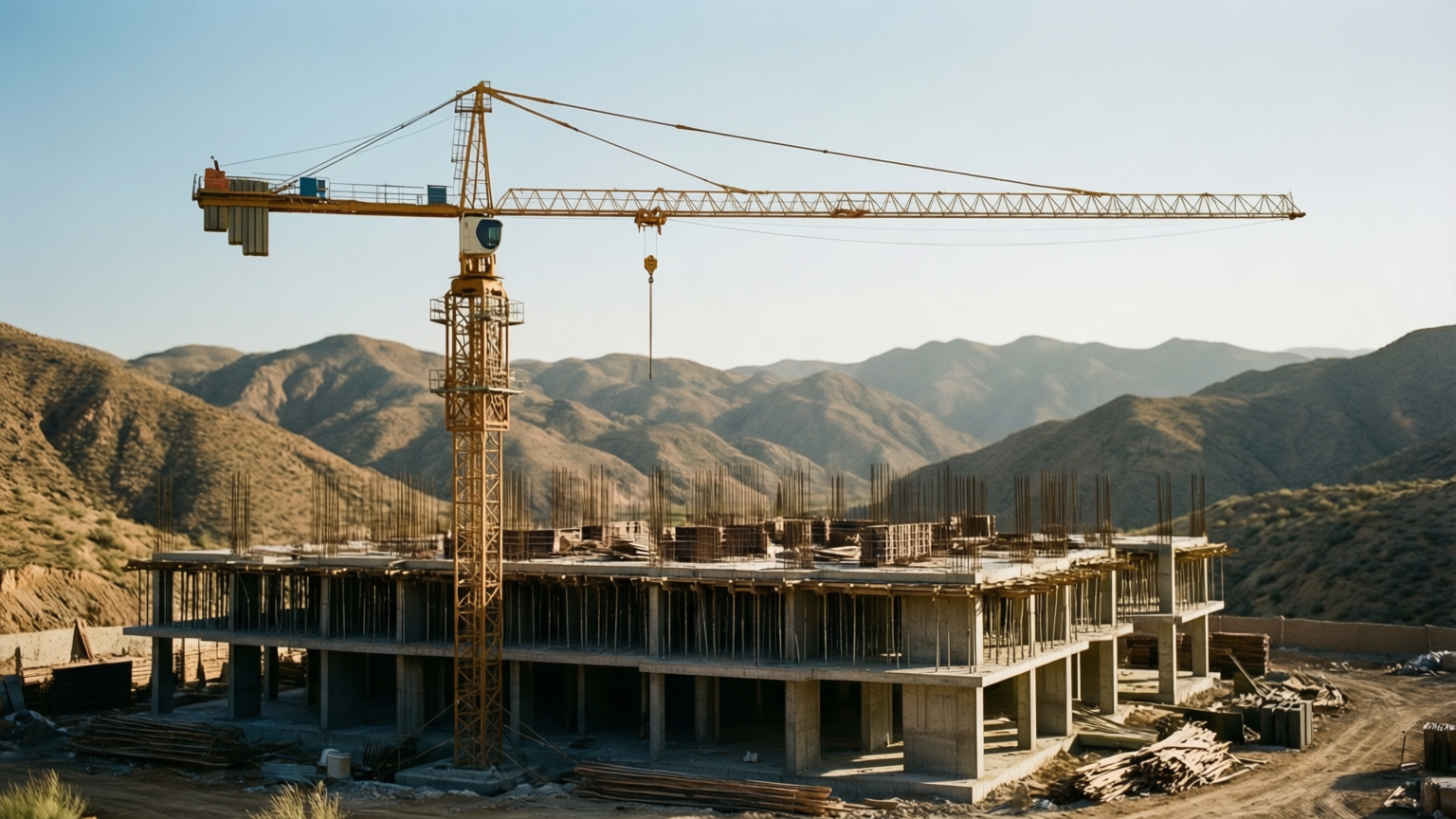
The United Kingdom has imposed sanctions on eight construction and property development firms, marking the first package of measures under a new, tougher government stance on Israeli actions in the occupied West Bank. The move targets entities involved in building settlements, which are considered illegal under international law, and aims to disrupt their financial flows and capacity to support construction.
Targeting the E1 Area
The sanctions arrive just two days before the deadline for bids on construction tenders in the E1 area, a strategically significant zone east of Jerusalem. The UK government states that these measures are designed to prevent companies from profiting from the expansion of settlements. Foreign Secretary Ed Miliband issued a direct warning to potential bidders, stating they should not bid, build, or profit from developments that he argued would render a two-state solution unviable.
Miliband described the protection of the two-state solution as the “North Star” of the government’s approach. He emphasized that the E1 development plans would effectively cut the West Bank in two, severing it from East Jerusalem. The government is also developing separate legislation to ban the import of goods from Israeli settlements and to prohibit the provision of advertising services for settlement properties within the UK.
Israeli and Palestinian Reactions
Israeli Foreign Minister Gideon Saar condemned the sanctions as a “hostile act” targeting private, law-abiding companies. Writing on X, Saar stated that Israel would respond with countermeasures and announced that decisions regarding these responses would be made in due course. He asserted that Israel would not bow to external pressure or alter its policies, adding that the government would consider new ways to strengthen Jewish communities in the West Bank and protect those involved in development.
Israel previously accused the Labour government of systematically acting against the State of Israel. In September, the UK announced plans to ban the import of settlement goods, a move that prompted Israel to threaten the closure of the British consulate in East Jerusalem. While most diplomats have since left the facility, the UK maintains that the building will continue to operate as a UK mission.
The Palestinian foreign ministry welcomed the sanctions and urged other nations to follow suit. This diplomatic shift comes amid a surge in settler attacks on Palestinians and their property in the West Bank since the start of the Gaza war in October 2023. Israel has established approximately 160 settlements in the occupied territories since 1967, housing around 700,000 Jewish residents alongside an estimated 3.3 million Palestinians.
Broader Sanctions Regime
Beyond the construction firms, the sanctions package includes Tzav 9, an Israeli activist movement. The UK government alleges that the group has organized and carried out blockades to prevent aid from entering Gaza. Tzav 9 responded by describing itself as a movement of citizens from all political spectra who have always protested peacefully.
This action follows the expansion of the UK’s human rights sanctions regime last month, which allows the government to sanction individuals and companies involved in violations of international humanitarian law anywhere in the world. The government stated in September that this marked the beginning of a new approach that not only calls out injustice but takes action. Miliband reiterated the commitment to working with a new Israeli government and the Palestinian Authority to advance lasting peace and security for both Israelis and Palestinians.
Source: BBC
