


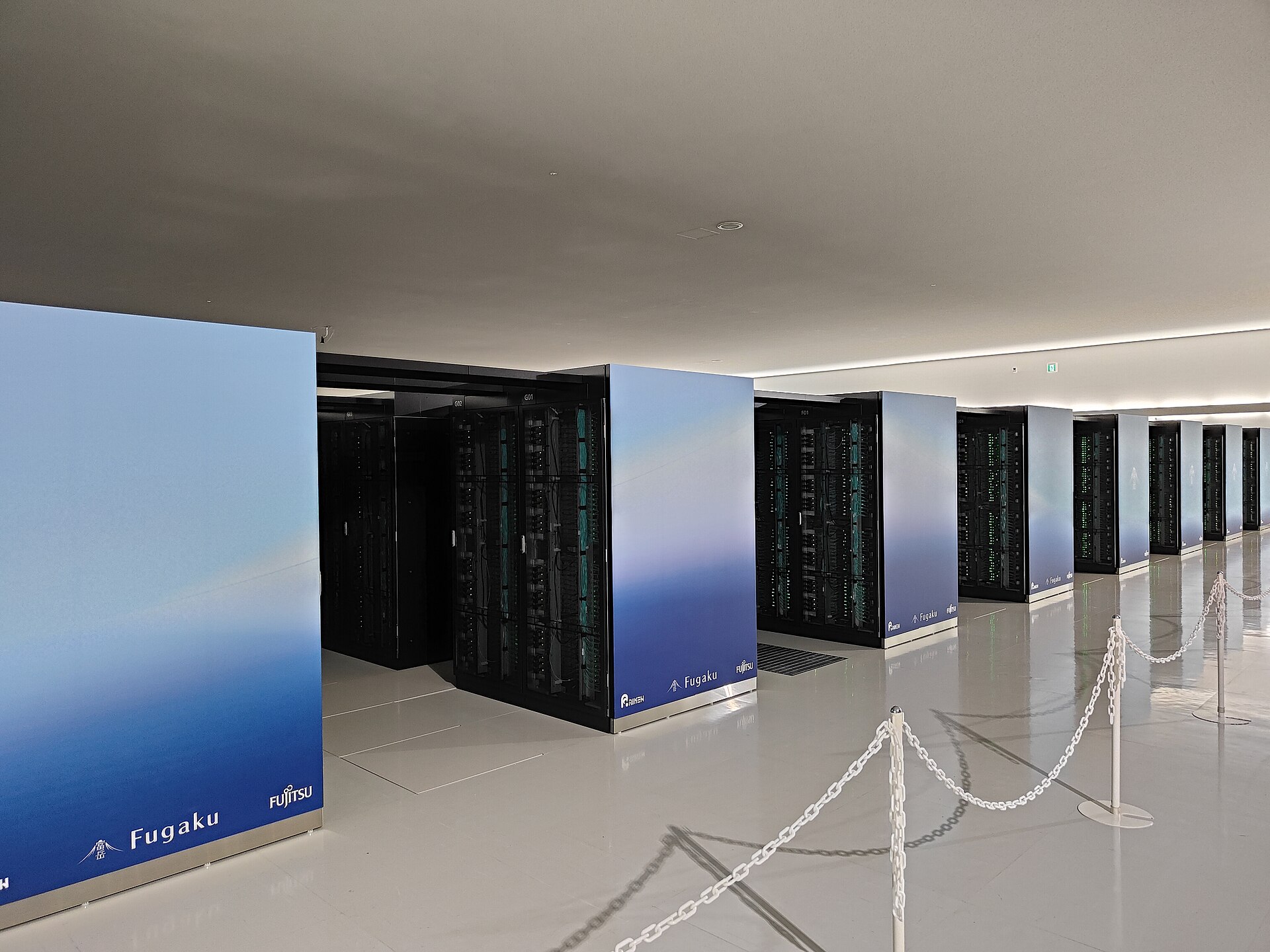
Japan’s most powerful supercomputer, Fugaku, has been the target of a suspected cyberattack that compromised the personal information of more than 4,000 users. The operator, the national research institute Riken, confirmed the breach on November 14, stating that unauthorized access was detected and subsequently blocked.
The incident involves the theft of sensitive data, including names, email addresses, research files, and authentication credentials used to access the supercomputer and related services. Additionally, data belonging to 375 users of Riken’s Rikyu AI supercomputer was also potentially stolen.
Unauthorized Access via External Dashboard
According to reports from The Japan Times, operators first noticed suspicious communications on November 12. This triggered an internal investigation that identified the entry point for the attackers. Hackers exploited an externally accessible operational status dashboard between November 10 and November 13.
This dashboard served as the springboard for the intrusion, allowing the attackers to gain access to the system’s internal network. While the dashboard has now been taken offline to address security concerns, Riken has not disclosed the full extent of how the hackers moved laterally within the Fugaku infrastructure. The institute confirmed that some servers had unauthorized software installed, but details regarding the specific methods used to bypass further security measures remain scarce.
Government Response and Investigation
Riken reported the incident to Japan’s Ministry of Education, Culture, Sports, Science and Technology (MEXT). Chief Cabinet Secretary Minoru Kihara confirmed that the ministry is working closely with Riken to investigate the scope of the breach. Kihara emphasized the importance of maintaining security for the system, which plays a vital role in the country’s research and development infrastructure.
The breach highlights the vulnerabilities inherent in high-performance computing systems that require external monitoring tools. Fugaku, developed in collaboration with Fujitsu, officially came online in March 2021 at a cost of approximately ¥130 billion. Located at Riken’s Center for Computational Science in Kobe, it held the title of the world’s fastest supercomputer before being overtaken by the Frontier system in Tennessee.
As investigations continue, the focus remains on determining the full extent of the data exposure and ensuring that no further unauthorized access occurs. The incident underscores the growing risks facing critical digital infrastructure as computational power becomes increasingly central to scientific advancement.
Source: Tom’s Hardware
