


Creative Assembly has released a detailed look at the upcoming Total War: Warhammer 40,000, providing over an hour of new campaign footage during an alpha strike livestream. The demonstration focused on the Ultramarines faction, illustrating how the game handles large-scale strategy, planetary liberation, and the unique logistical challenges of commanding elite transhuman warriors.
The footage began 23 turns into an Ultramarines campaign, placing players in the middle of the Praevoss system conflict. This system features three conquerable planets, a gas giant, and a dead world that cannot be contested. Each system in the game operates as a separate narrative mini-campaign. This structure allows players to carry some progress forward while resetting the strategic board, ensuring that the grand strategy does not become repetitive as the map fills with controlled territories.
Ultramarines Campaign Mechanics
In the Praevoss system, the primary objective for the Ultramarines is to liberate Imperial worlds from an ork scourge. The gameplay highlights a tension between military efficiency and political stability. When marines secure a region, they can choose to scour the battlefield for a significant payout in Requisition. However, this aggressive action raises Suspicion among the local population.
Similarly, calling down fleet bombardments to soften up enemy positions before ground engagement also increases Suspicion, as these attacks occur in areas with civilian presence. This mechanic reflects the lore of the setting, where Imperial planets have their own governments and may resent the heavy-handed approach of the space marines. Historical events in the 40,000 universe, such as the Tyrant of Badab or the Horus Heresy, demonstrate that these warriors are not always trusted.
Players can mitigate rising Suspicion by playing diplomatically. Maintaining good relations rewards the marines with Influence points, which are essential for gaining reinforcements from local Imperial troopers. This system adds a layer of resource management beyond simple combat, requiring players to balance military dominance with political capital.
Fleet Support and Limited Reinforcements
A key distinction for the Ultramarines is the difficulty of replacing casualties. Unlike other factions that replenish losses after battles, space marines are rare and take a decade to train. The game emulates this by limiting reinforcements. While some marines survive fatal injuries due to their transhuman physiology, and fallen characters can be converted into dreadnoughts, fresh troops must be called from orbit.
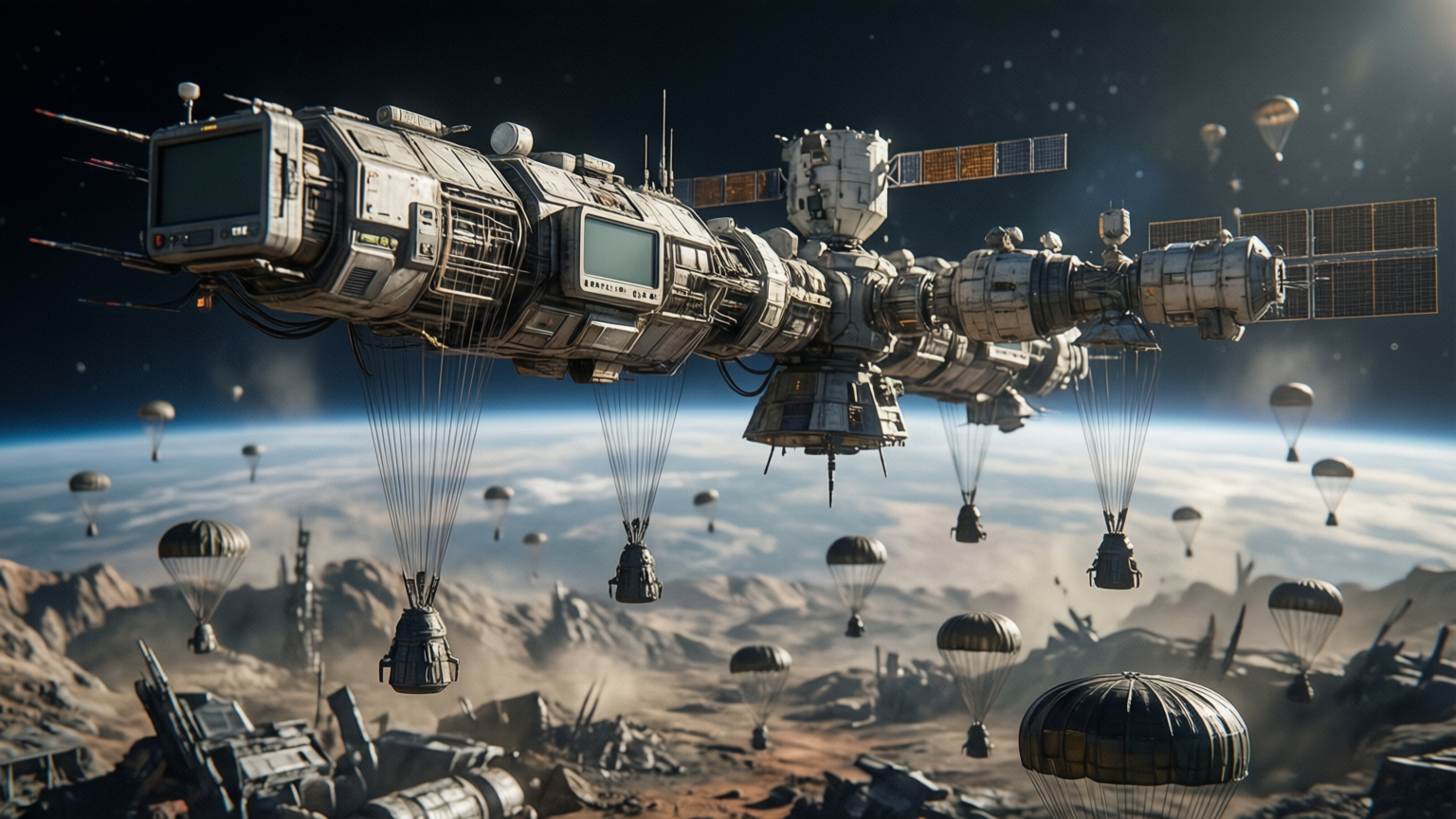
The livestream showed that reinforcements arrive via drop pods that slam into the battlefield, sometimes even mid-combat. These orbital assets also provide bombardment support and serve as the primary method for moving armies between planets. While the footage did not show direct fleet-to-fleet combat, the ships in orbit play a critical role in campaign logistics and tactical support.
The game also introduces extensive customization options for the Ultramarines. Players can outfit their units with bespoke wargear loadouts, allowing for tailored strategies that reflect the dedication to detail found in the broader Total War series. This customization ensures that even vanilla factions offer a distinct playstyle compared to others in the Warhammer 40,000 universe.
The alpha strike provides a clear view of how Creative Assembly is addressing the longevity of grand strategy campaigns. By breaking the war into system-based chapters and introducing political mechanics, the game aims to keep the experience fresh throughout its duration. The focus on the high value of space marines adds a permanent weight to every decision, making every loss feel significant.
Source: PC Gamer
