



United States lawmakers are calling for tighter regulations on artificial intelligence chip exports, arguing that current measures are insufficient to prevent advanced technology from reaching China. This push comes as the Department of Commerce implements new restrictions on remote access to US-made chips, a move designed to close a loophole that allowed foreign entities to bypass existing trade barriers.
Commerce Department closes remote access loophole
The Bureau of Industry and Security (BIS) announced a new rule this week requiring data center operators in Thailand, Indonesia, Malaysia, Singapore, and Brazil to obtain special licenses before purchasing advanced chips from US companies like Nvidia. Officials stated that these nations present a higher-than-normal risk of chip diversion to restricted countries.
The regulation addresses concerns raised after the former Nvidia CEO was linked to a suspected spy for Beijing. The new rules aim to stop Chinese companies from accessing US computing power through data centers in third countries, a method previously used to circumvent export controls.
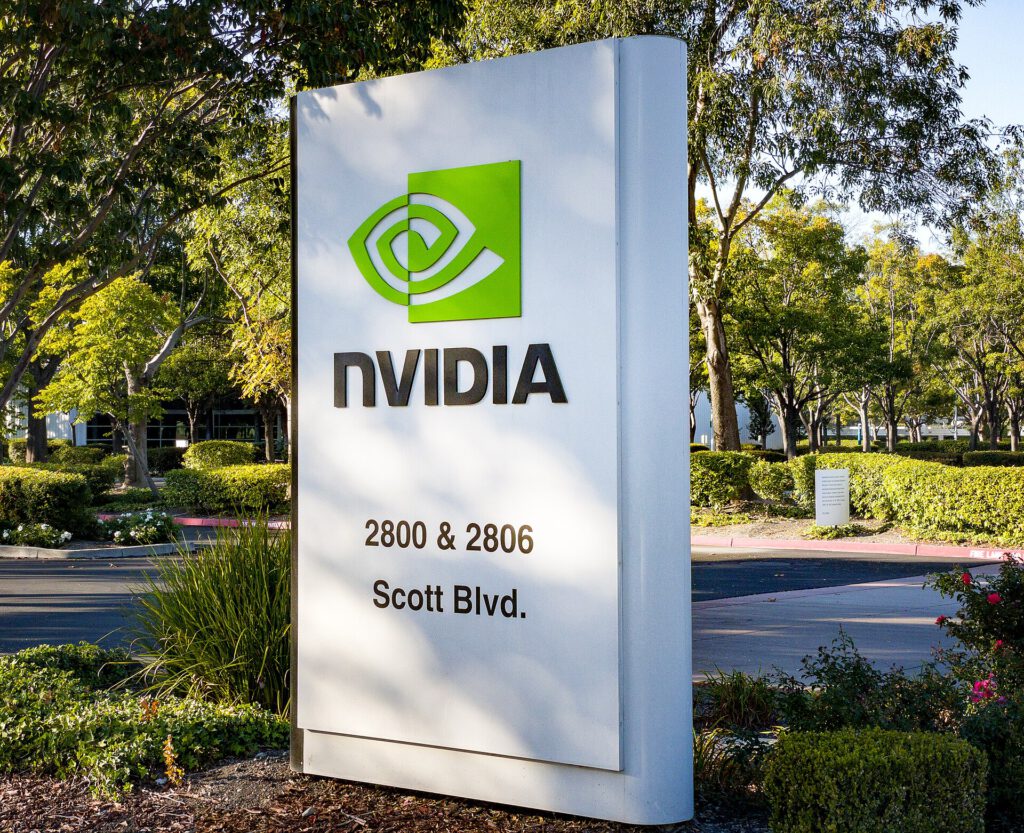
Stephen Ezell, vice president for global innovation policy at the Information Technology and Innovation Foundation, noted that Washington would face significant challenges enforcing these new BIS rules. He emphasized that while the controls might slow China slightly, they have not altered Beijing’s goal of becoming a global leader in semiconductor manufacturing.
Political pressure and legislative probes
Democratic Representative Pramila Jayapal, a member of the House Judiciary Committee, told Al Jazeera that the current export controls were overdue. She argued that the consolidation of AI knowledge in a few companies poses a threat to national security and called for a broader conversation about market dominance.
In October, Jayapal introduced a policy framework requiring every AI company operating in the US to obtain a federal charter. This proposal, modeled after banking regulations and nuclear safety protocols, would impose strict safety mandates and structural separation on tech firms. The framework also bans companies from building monopolies, releasing unsafe models, or exploiting workers.
Lawmakers are also investigating Commerce Secretary Howard Lutnick for allegedly blocking efforts to stop the smuggling of advanced Nvidia chips to China. Lutnick faces criticism from within President Donald Trump’s cabinet for refusing to restrict companies accused of diversion, including Megaspeed.

Additionally, the House Foreign Affairs Committee revealed that the Trump administration approved the export of 879,000 Nvidia and AMD chips to Chinese companies between December 2025 and May 2026. Democrats, who will control both chambers of Congress in January, have expressed a desire to rein in these exports and regulate the AI industry more closely.
Trump’s conflicting signals on data centers
President Donald Trump recently returned from a trilateral meeting in Shenzhen, China, where he met with Chinese and Russian leaders. Upon his return to the White House, Trump promised to prohibit US companies from developing data centers in other countries, threatening “tremendous penalties” for violations.
The statement left analysts unclear on how such a ban would be enforced. Simultaneously, Trump urged Americans to embrace data centers in their neighborhoods, despite growing local concerns about their impact on energy demands and quality of life.

US tech giants, including Amazon, Microsoft, and Google, operate nearly 90 major AI computing hubs globally. An Oxford University study found that US companies were building 63 such hubs outside the country as of 2025. The US accounts for nearly 75 percent of the world’s AI spending and computing power, followed by China.
China has rejected the new US restrictions, labeling them as economic coercion. Meanwhile, Representative Everton Blair stated that the AI industry itself is asking for congressional regulation, signaling a potential shift in how the sector is governed as Democrats prepare to take control of Congress.
Source: Al Jazeera
