


Physicists have long struggled to reconcile two pillars of modern science: quantum mechanics and Einstein’s theory of relativity. While relativity describes how gravity and speed warp the passage of time, quantum mechanics governs the behavior of particles at the smallest scales. A new theoretical framework suggests that quantum superposition of time is not just a mathematical curiosity but a measurable physical reality that could soon be tested in laboratories.
The concept arises from the intersection of these two theories. According to relativity, time passes at different rates depending on an object’s velocity and the gravitational field it experiences. Quantum mechanics allows particles to exist in multiple states simultaneously, a condition known as superposition. When applied to time, this implies that a single clock could theoretically experience different rates of time flow at once.
Until now, this phenomenon remained purely theoretical. The effects are so subtle that they have eluded direct observation. However, an international team of researchers has developed a method to make this elusive effect detectable using existing technology.
Atomic Clocks Reach New Sensitivity Levels
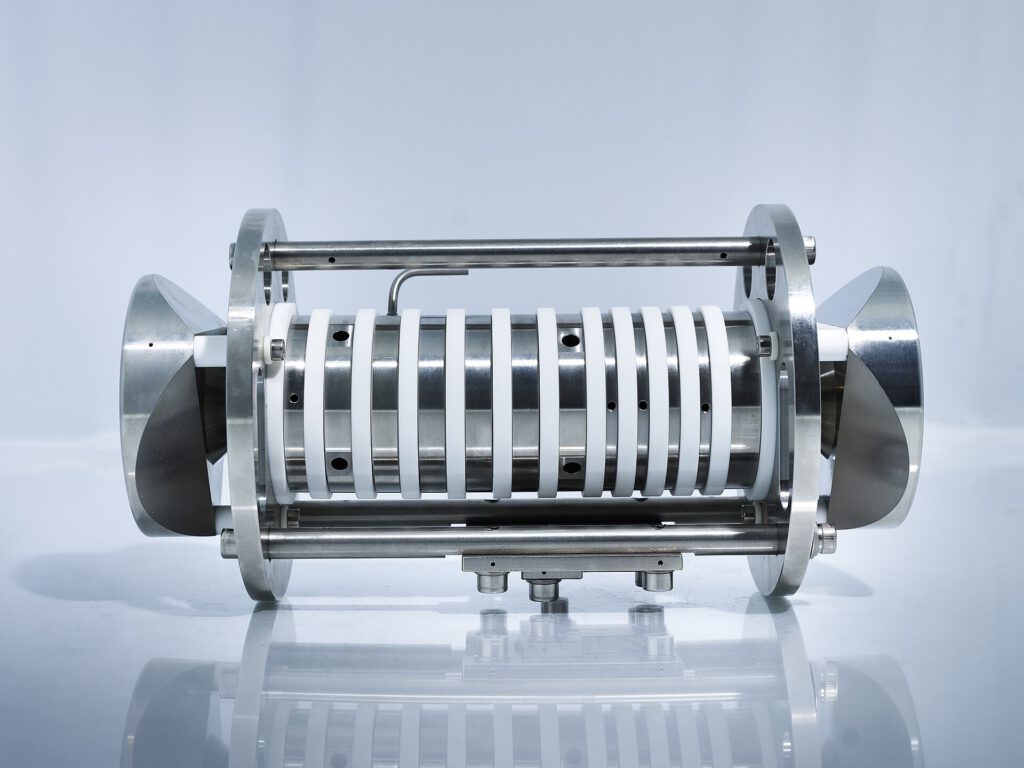
The study, published in Physical Review Letters, was led by researchers at Kyushu University in collaboration with institutions including the Stevens Institute of Technology, the University of Waterloo, and the National Institute of Standards and Technology. The team focused on trapped-ion atomic clocks, which are among the most precise timekeeping devices ever created.
These clocks do not rely on mechanical parts. Instead, they measure time by tracking the extremely consistent frequencies of atoms. Their accuracy is so high that they can detect minute differences in time passage caused by gravity, even when clocks are separated by just a few millimeters in height. This sensitivity makes them ideal candidates for testing fundamental physics.
The researchers identified a specific quantum interaction that could serve as evidence for the superposition of time. They found that a clock’s quantum motion can become entangled with its internal energy. Entanglement is a quantum phenomenon where two systems become linked such that the state of one cannot be described independently of the other. In this case, the entanglement causes the clock to lose some of its quantum properties, creating a signature that modern detection techniques can identify.
Associate Professor Joshua Foo of Kyushu University’s Institute for Advanced Studies explained that the precision of atomic clocks was the key to this discovery. “It’s the precision that led us to develop our theoretical model. We found that the atomic clock’s motion becomes entangled with its internal energy,” Foo said. “The signature of this entanglement is that the clock itself loses some of its quantum properties, which can be detected using modern techniques.”
Improving Detection by 1000 Times
To make this effect observable, the team introduced a new technique for controlling the motion of the atomic clock. This control mechanism significantly enhances the clock’s sensitivity to the entanglement effect. According to the researchers, this improvement could increase detection sensitivity by a factor of 100 to 1000.
This leap in sensitivity is critical. The quantum effects involved are exceptionally subtle. Without such precise control, the signal would be lost in the noise of experimental conditions. By refining how the clock moves, the proposed method brings the phenomenon within the reach of current advanced atomic clock technology.
The findings suggest that atomic clocks could evolve from mere timekeeping tools into powerful instruments for investigating the quantum properties of time. This development opens new avenues for fundamental physics experiments. It may also contribute to the creation of even more accurate clocks in the future, which are essential for technologies like GPS that rely on precise timing.
While the theoretical model is complete, the next challenge is experimental implementation. Researchers must now translate the theory into a working experiment. This process involves accounting for real-world disturbances and uncertainties that arise in laboratory settings. Foo noted that bringing the model to reality is the immediate priority. “Naturally, bringing our theoretical model to reality is the big next step, and developing a detailed experiment that accounts for real-world unpredictability will give us further insight into our model,” he said.
Looking further ahead, the team is interested in exploring whether atomic clocks can probe the quantum realm of gravity. This area of study, known as quantum gravity, seeks to explain how gravity behaves at the smallest scales of nature. Successfully detecting the quantum superposition of time could provide valuable clues about how quantum mechanics and relativity fit together, potentially solving one of the biggest mysteries in physics.
Source: ScienceDaily
