


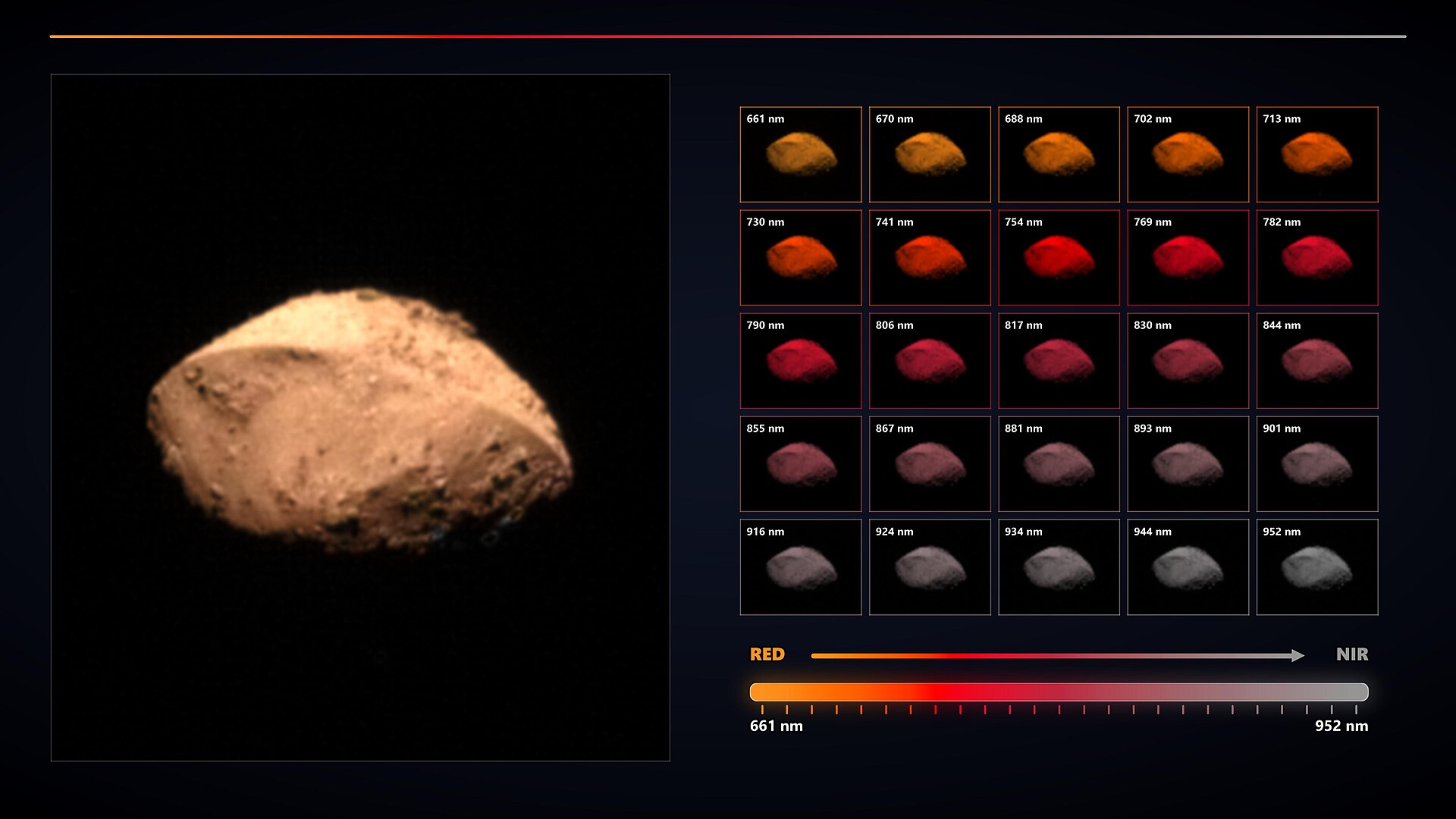
Space agencies are moving from predicting near-Earth objects to actively testing how to deflect them. The European Space Agency (ESA) Hera probe has arrived at the vicinity of the Didymos and Dimorphos asteroid system. This location is significant because it is the site where NASA conducted the Double Asteroid Redirection Test (DART) four years ago.
The arrival marks a critical phase in understanding planetary defense. While astronomers have become highly skilled at tracking potentially hazardous asteroids, the ability to alter their paths remains a developing technology. The Hera mission will provide the first detailed close-up examination of a binary asteroid system and the specific results of a kinetic impactor test.
Arrival at the DART Impact Site
According to the source, the Hera probe was sent off in October 2024. After a flyby of Mars, the probe began its arrival phase this past October. It captured its first image from approximately 800 miles away. The first detailed image of the larger asteroid, Didymos, was published in early November.
The primary objective of the Hera mission is to investigate the consequences of the DART mission. In late 2021, NASA launched the DART probe, which crashed into the smaller asteroid, Dimorphos, nearly a year later. The probe struck the target at over 13,000 miles per hour. Scientists had hoped to shorten the moonlet’s orbit by a minute or more. Instead, the orbital period was slowed by 33 minutes.
This significant deviation was caused by the ejection of debris, which created a greater recoil than the impact itself. The event also slowed the orbital speed of both asteroids around the sun. In a sense, Dimorphos briefly became a comet, with the released debris forming a long tail behind it.
Scientific Goals and CubeSat Deployment
Beyond assessing the DART test, Hera will conduct traditional astronomical research. Didymos is notable for its rapid rotation, completing one turn every 2.3 hours. This places the asteroid on the very edge of stability. The mission aims to determine how such binary asteroid pairs form and to study crater formation mechanics. Scientists want to know whether material strength or gravity plays a more decisive role in shaping craters.
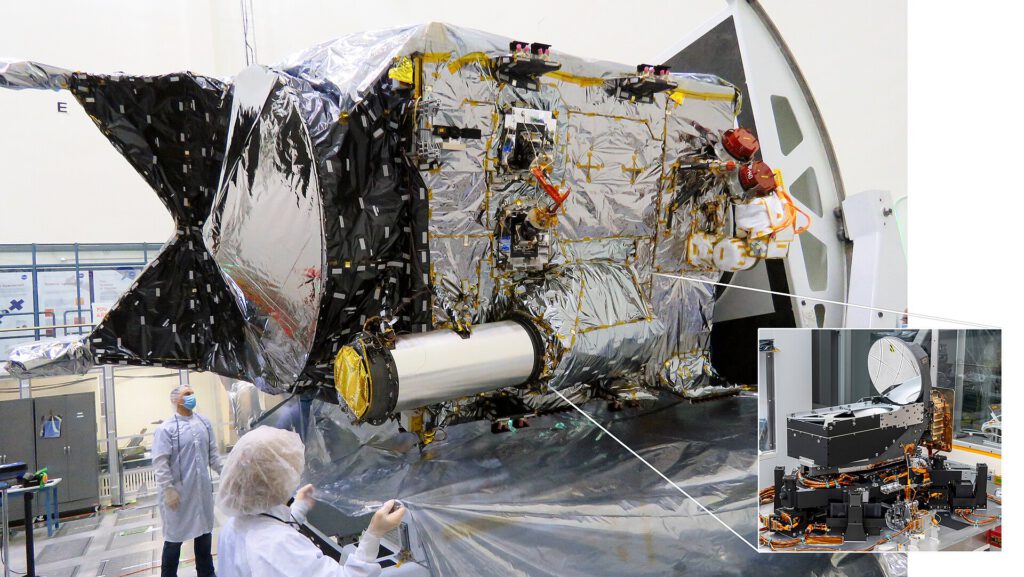
The probe will determine the exact mass of Dimorphos, a key metric for evaluating the effectiveness of the DART mission. Hera is equipped with a lidar instrument to map the topography and other instruments to investigate surface chemical composition. The probe will capture detailed images with a resolution of 1 meter per pixel.
In January 2027, Hera will deploy two miniature satellites known as CubeSats. These are named Juventas and Milani. Juventas will use radar capable of probing up to 100 meters deep to explore the geophysics of Dimorphos. It will also carry a gravimeter to measure changes in gravity during the orbit. Milani will investigate surface composition and search for traces of dust and volatile substances.
The main phase of the Hera mission is expected to last until the summer of next year. The data collected will become increasingly relevant as the asteroid Apophis approaches Earth. Astronomers predict that Apophis, a 450-meter-wide body, will fly by Earth in mid-April 2029. It will pass at a distance of only 19,000 miles, which is about 12 times closer than the moon. The asteroid will be visible to the naked eye.
The number of known near-Earth asteroids has grown from 300 in the year 2000 to over 43,000 today. The findings from Hera will help refine the models used to predict and potentially deflect such objects in the future.
Source: Wired
