



The reinstatement of Jensen Huang as chief executive of Nvidia has triggered intense analysis in Beijing, where the event is being interpreted as a significant diplomatic signal. The story topped trending lists on Weibo, China’s largest social media platform, with many users viewing the outcome as a vindication of China’s stance against allegations that a woman involved in a scandal with Huang was a spy for the Ministry of State Security.
Chinese state media has characterized the initial allegations as a smear campaign orchestrated by Washington hawks. The Global Times, a Communist Party newspaper, described the investigation as a witch hunt. This narrative has gained traction as the White House and President Donald Trump have stated that Huang poses no national security threat, despite ongoing investigations.
Direct Engagement and Trump’s Pressure Points
For President Xi Jinping, the timing of Huang’s return offers critical insights into the current US administration’s decision-making processes. The reinstatement occurred shortly after Xi met with Trump in Shenzhen last week. While Trump confirmed they discussed the matter, he provided no further details, and Beijing has remained silent on the specifics of those conversations.
Beijing appears to interpret this sequence of events as proof that direct engagement with Trump is an effective method to influence Washington. The episode has reinforced a view among Chinese officials that Washington is divided between those seeking to restrict Chinese access to advanced technology and those, like Huang, who argue that such controls are counterproductive.
Huang has consistently argued that export controls force Chinese firms like Huawei to develop independent alternatives while simultaneously shutting American companies out of the world’s second-largest economy. His return to the helm of Nvidia is seen by some in China as a victory for this pragmatic approach over hardline restrictions.
Escalating Chip Export Controls
Despite the political maneuvering, the sale of advanced semiconductors remains a primary point of contention. The US Bureau of Industry and Security is tightening rules to close loopholes that allow Chinese firms to access Nvidia and AMD chips through cloud providers in third countries such as Singapore, Malaysia, and Thailand. These measures target not only direct exports but also the use of overseas computing power.
China has not yet responded with retaliatory measures, but investors are monitoring the situation for signs of escalation. The conflict has shifted from traditional tariff disputes to a struggle over control of critical technology and minerals. This shift has profound implications for the stock market, as American companies across various sectors rely on rare earth metals, a sector where China holds significant leverage.
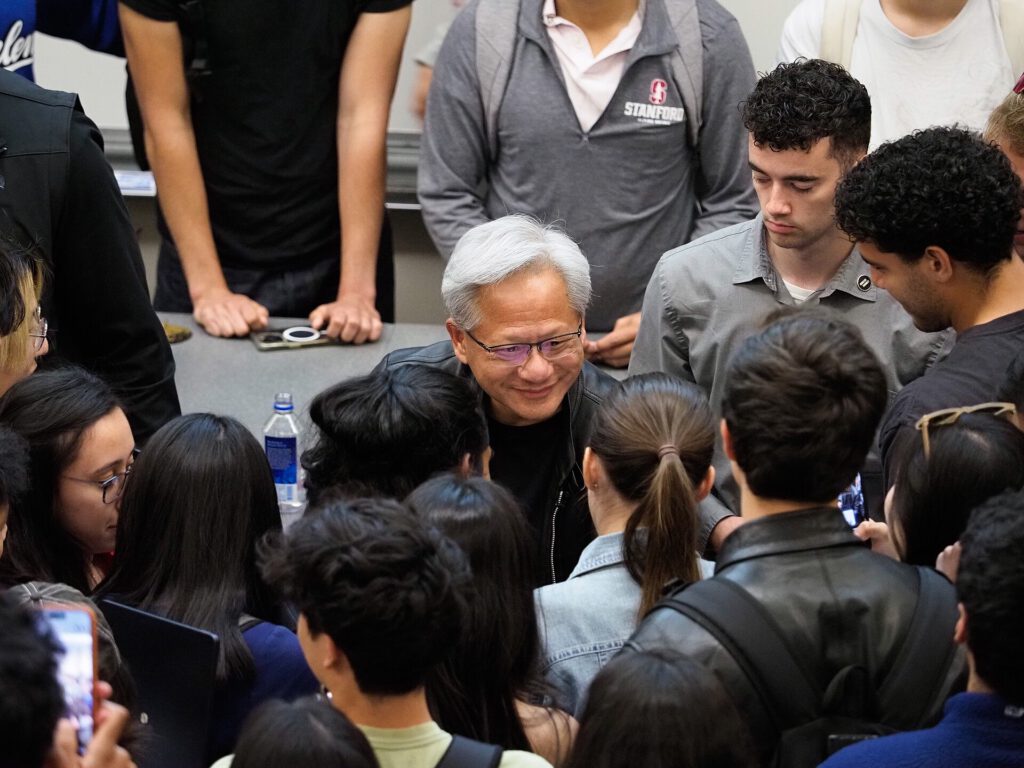
Xi may view Trump’s eagerness to stabilize the stock market as a point of leverage. The president’s personal financial interest in Nvidia, managed through a trust, suggests a willingness to intervene in corporate matters to protect market stability. This dynamic could influence future trade negotiations, particularly as both sides prepare for another meeting expected in December.
The situation remains fluid. Huang is scheduled to testify before Congress next month, where he will face scrutiny from both Democratic and Republican lawmakers. Senator Tom Cotton stated that the controversy is merely the tip of the iceberg and remains unresolved. The outcome of these hearings will likely determine the future trajectory of US-China tech relations.
Source: BBC
