

Close Menu
iM.NewsiM.News

    Subscribe to Updates

    Get the latest creative news from FooBar about art, design and business.

    What's Hot

    New Data and AI Tools Aim to Predict Airplane Turbulence

    November 25, 2026

    China Investigates Shanghai Party Chief Chen Jining

    November 25, 2026

    Stanford Study Identifies 3 Brain Biotypes in ADHD and Anxiety

    November 25, 2026
    Facebook X (Twitter) Instagram
    iM.NewsiM.News
    Subscribe
    • Home
    • Lifestyle

      Stanford Study Identifies 3 Brain Biotypes in ADHD and Anxiety

      November 25, 2026

      Luton’s Hidden Health Crisis: Asian Women’s Wellbeing at Risk

      November 25, 2026

      One Third of Young Brits Have Never Had Sex

      November 25, 2026

      Iowa Poison Control Issues Lead Exposure Guidance Ahead of Army Detonation

      November 25, 2026

      Congo Residents Sue Chinese Mine Over Health Crisis

      November 24, 2026
    • Relations

      China Investigates Shanghai Party Chief Chen Jining

      November 25, 2026

      China Investigates Shanghai Party Chief Chen Jining

      November 25, 2026

      UK Warns Firms Supporting Ukraine of Russian Sabotage

      November 25, 2026

      Asian Markets Plunge on AI Doubts as Tech Stocks Tumble

      November 25, 2026

      China Launches Shenzhou-24 With First Pakistani Astronaut

      November 25, 2026
    • Technology

      New Data and AI Tools Aim to Predict Airplane Turbulence

      November 25, 2026

      Mexican Doctor Uses Galaxy Watch to Detect Mother’s Respiratory Crisis

      November 25, 2026

      EA Brings Late Commentator John Motson Back to FC 27 With AI

      November 25, 2026

      Phone Makers Slash 2027 Shipment Targets Amid Memory Shortage

      November 25, 2026

      US Attorney General Defends Nvidia Amid Investigation Questions

      November 25, 2026
    • Travel & Tourism

      FAA New Runway Rules Add Delays to Thanksgiving Travel

      November 25, 2026

      Breeze Airways Expands Network to 95 Destinations With New Routes

      November 24, 2026

      Storms Threaten Thanksgiving Travel on Both U.S. Coasts

      November 24, 2026

      TSA Thanksgiving Carry-On Rules for Food

      November 24, 2026

      Alaska Airlines Flight Canceled After Jet Collides With Catering Truck at JFK

      November 24, 2026
    • Get in Touch
    iM.NewsiM.News
    Home»Technology»New Data and AI Tools Aim to Predict Airplane Turbulence
    Technology

    New Data and AI Tools Aim to Predict Airplane Turbulence

    im.newsBy im.newsNovember 25, 2026No Comments4 Mins Read1 Views
    Facebook Twitter Pinterest LinkedIn Tumblr Email
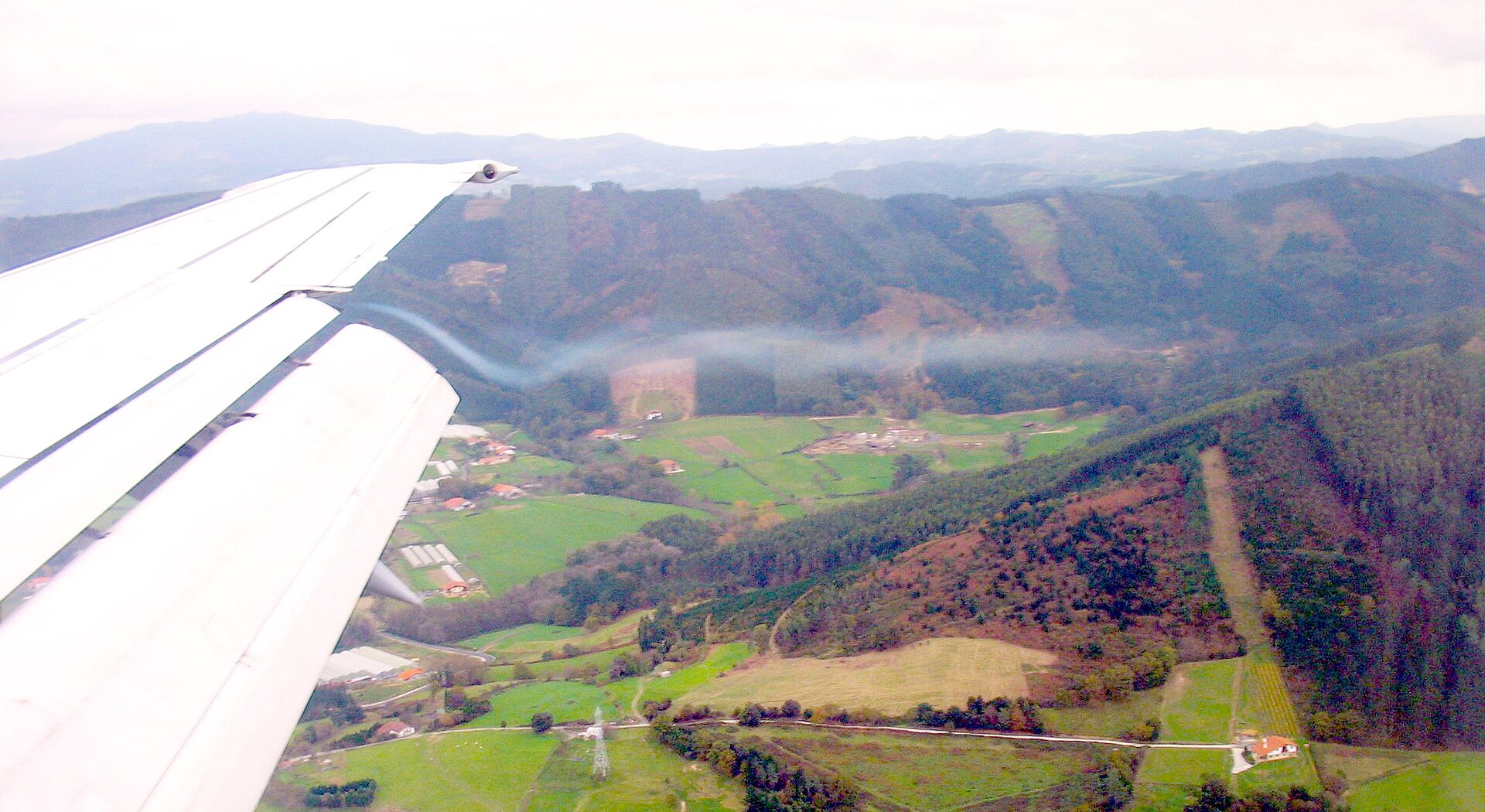
    Commercial airplane flying through cloudy sky with turbulence
    Photo: No machine-readable author provided. Miguel Andrade assumed / Wikimedia Commons, Public domain
    Share
    Facebook Twitter LinkedIn Pinterest WhatsApp Email

    Aviation researchers and the airline industry are turning to advanced data analytics and artificial intelligence to solve a problem that has long plagued pilots and passengers: turbulence. While the phenomenon has been studied for centuries, new technological capabilities are finally allowing experts to model and predict chaotic air movements with greater precision.

    The challenge is rooted in the fundamental complexity of fluid dynamics. In the early 1500s, Leonardo da Vinci attempted to understand the swirling, chaotic eddies of water and air, creating hundreds of drawings to map their behavior. Despite centuries of observation and the advent of modern computing, the underlying physics remains elusive.

    “It’s the hardest remaining problem in classical physics, and it’s one we need to fly through,” said Michael Murillo, a professor of theoretical and computational physics at Michigan State University. The difficulty lies in the fact that turbulence occurs at many different, small scales simultaneously. Air swirling around an aircraft breaks into eddies, which then break into smaller eddies, creating too many variables for traditional mathematical models to account for in real time.

    Using Flight Data to Spot Turbulence

    The landscape of turbulence research has shifted dramatically due to the sheer volume of data now available from commercial flights. According to the International Air Transport Association, an airplane’s engine generates 20 terabytes of data in just one hour of commercial flying. This data includes GPS position, altitude, and speed, which are broadcast mid-flight.
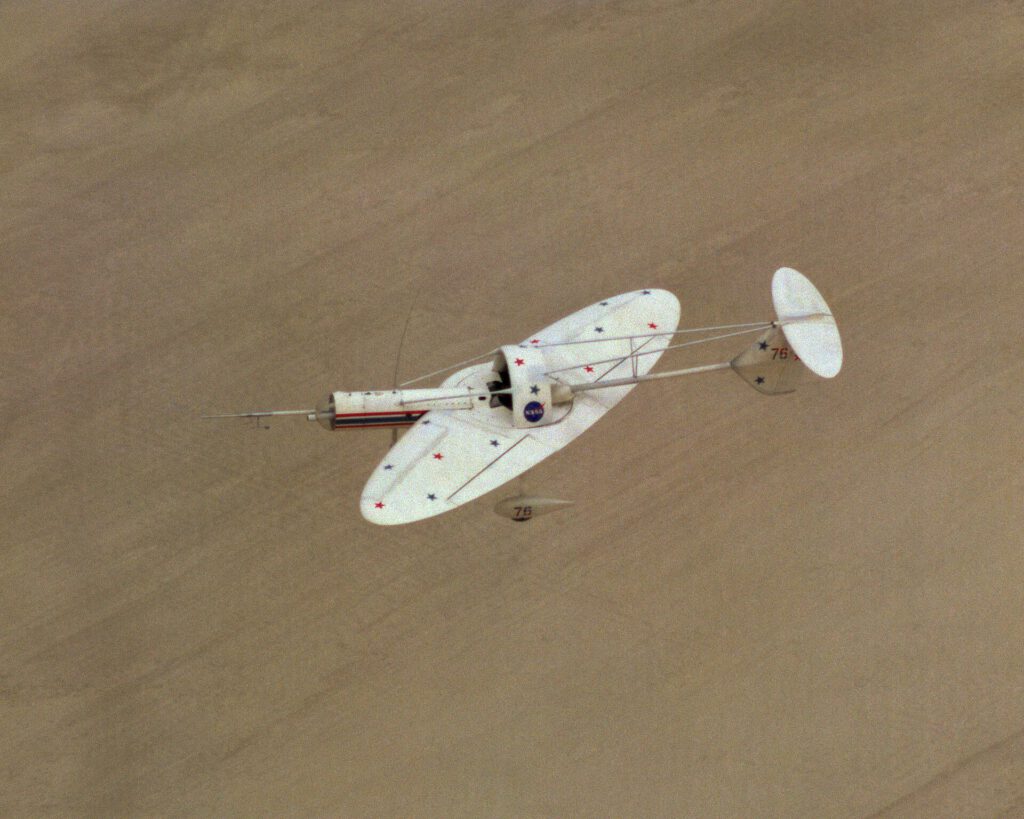
    Oblique Wing Research Aircraft in flight (EC76
    Photo: NASA Armstrong Flight Research Center / NASA / Wikimedia Commons, Public domain

    Larry Cornman, a physicist with the National Science Foundation’s National Center for Atmospheric Research, noted that the convergence of increased air traffic and lower communication costs has created a unique opportunity. “The time is now to work on these things because we can do them,” Cornman said.

    One significant breakthrough involves using existing aircraft broadcasts to identify unexpected turbulence without requiring new hardware. Cornman and an FAA air traffic controller determined that the federally required position and speed data could be used to spot turbulence patterns. This crowdsourced, public data allows researchers to make predictions about when and where turbulence will occur, moving beyond the historical method of relying on pilot reports from previous flights.

    AI and Machine Learning Applications

    Machine learning is playing a central role in these new predictive models. The National Science Foundation recently announced a $30 million award to nine universities to establish a new center dedicated to predicting turbulence. The center, called Transformative Explorations in Multi-Physics and Engineering of Scientific Turbulence, or Tempest, will also study turbulence in fusion reactors and space gas clouds.

    Plane Landing
    Photo: Mike Moloney / Stocksnap, CC0

    Murillo, who heads the Tempest center, highlighted the potential of large language models to assist in solving the Navier-Stokes equations, which are the foundation of turbulence modeling. He suggested that AI agents could provide a significant boost to computational efforts that brute force alone cannot achieve. “Turbulence has been a problem only human minds could work on; as of this year, that is no longer true,” Murillo said.

    In the commercial aviation sector, companies like SkyPath are already applying these technologies. Based in Tel Aviv, SkyPath uses accelerometers in specialized tablets, often referred to as electronic flight bags, to collect and share crowdsourced data between different aircraft. The company claims that more than 40,000 devices have its software installed, with several major airlines, including American Airlines, utilizing the technology.

    SkyPath combines this in-flight data with weather forecasts to predict turbulent conditions 10 to 15 minutes in advance. This allows pilots to warn passengers and crew members before the aircraft encounters choppy air. The company ensures that data is anonymized before sharing to address privacy concerns among competing airlines.

    Improving Safety and Comfort

    The push for better prediction is driven by safety concerns and the changing climate. FAA data indicates that more than 200 people were seriously injured on US airplanes in turbulence-related incidents between 2009 and 2023. Furthermore, climate change is altering atmospheric conditions around jet streams, creating destabilizing wind shear that leads to sudden clear-air turbulence.

    Airplane flying sky
    Photo: Unknown / Rawpixel, CC0

    While these new tools offer hope for smoother flights, experts caution that perfect prediction is unlikely in the near future. Cornman emphasized that the problem is too complex to achieve high percentages of predictive accuracy soon. “No matter what people say, we’re not getting close to 100 percent, 90 percent, 80 percent [predictive accuracy] anytime soon,” he said.

    Nevertheless, the industry does not need to solve the physics of turbulence entirely to improve the passenger experience. By better understanding the conditions that create it, airlines can avoid sending aircraft into turbulent zones. As these data-driven tools become more widespread, the goal is to provide smoother skies, even if they are not perfectly calm.

    Source: Wired

    AI Aviation flight safety machine learning Technology Turbulence
    Share. Facebook Twitter Pinterest LinkedIn Tumblr Email
    Previous ArticleChina Investigates Shanghai Party Chief Chen Jining
    im.news

    Related Posts

    China Investigates Shanghai Party Chief Chen Jining

    November 25, 2026

    Stanford Study Identifies 3 Brain Biotypes in ADHD and Anxiety

    November 25, 2026

    Mexican Doctor Uses Galaxy Watch to Detect Mother’s Respiratory Crisis

    November 25, 2026
    Leave A Reply Cancel Reply

    Latest Posts

    New Data and AI Tools Aim to Predict Airplane Turbulence

    November 25, 20261 Views

    China Investigates Shanghai Party Chief Chen Jining

    November 25, 20262 Views

    Stanford Study Identifies 3 Brain Biotypes in ADHD and Anxiety

    November 25, 20261 Views

    Mexican Doctor Uses Galaxy Watch to Detect Mother’s Respiratory Crisis

    November 25, 20262 Views
    Stay In Touch
    • Facebook
    • Twitter
    • Pinterest
    • Instagram
    • YouTube
    • Vimeo
    Don't Miss

    Epstein List Phase 1: Full Flight Logs, Client List Released

    February 28, 2025 News Focus 247 Views

    In a stunning development that has sent shockwaves through political and entertainment circles, Attorney General…

    Microsoft Stock Joins Exclusive $4 Trillion Club After Blockbuster Cloud + AI Earnings

    July 31, 2025

    DOJ & FBI Find No Epstein Client List, Suicide Confirmed

    July 7, 2025

    Subscribe to Updates

    Get the latest creative news from SmartMag about art & design.

    About Us
    About Us

    We provide the daily life news. You find latest trendy news at our portal, from entertainment to economy or politics.

    We're accepting new partnerships right now.

    Email Us: info@im.news

    Facebook X (Twitter) RSS
    Our Picks

    New Data and AI Tools Aim to Predict Airplane Turbulence

    November 25, 2026

    China Investigates Shanghai Party Chief Chen Jining

    November 25, 2026

    Stanford Study Identifies 3 Brain Biotypes in ADHD and Anxiety

    November 25, 2026
    Most Popular

    Epstein List Phase 1: Full Flight Logs, Client List Released

    February 28, 2025247 Views

    Microsoft Stock Joins Exclusive $4 Trillion Club After Blockbuster Cloud + AI Earnings

    July 31, 2025208 Views

    DOJ & FBI Find No Epstein Client List, Suicide Confirmed

    July 7, 2025166 Views
    © 2026 I'm News. Designed by I'm News.
    • Home
    • Lifestyle
    • Relations
    • Travel & Tourism
    • Technology

    Type above and press Enter to search. Press Esc to cancel.