


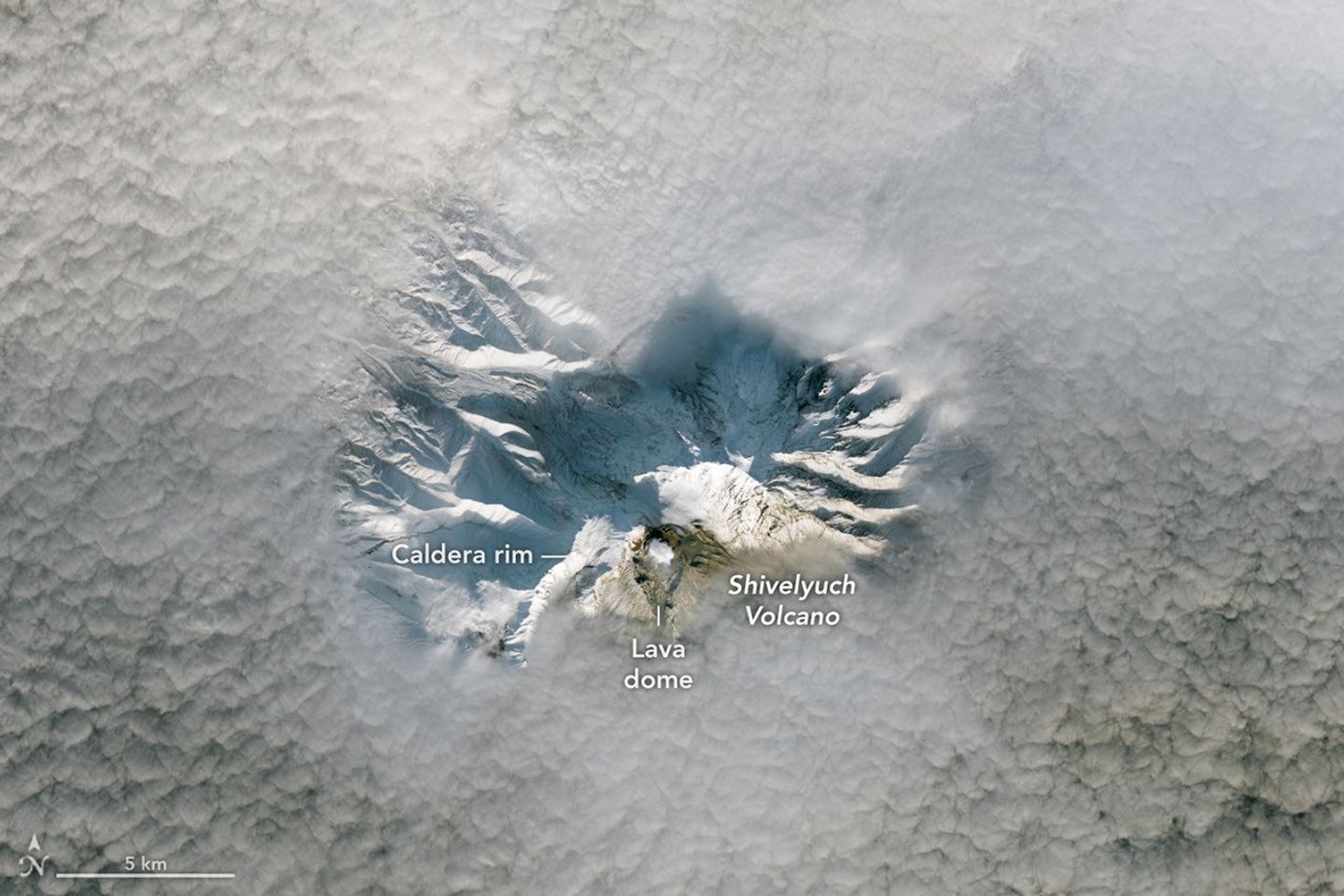
Satellite imagery captured on November 8, 2026, provides a clear view of the Shiveluch volcano on Russia’s Kamchatka Peninsula, despite persistent cloud cover. The Operational Land Imager on the Landsat 9 satellite recorded the scene, showing a layer of clouds that encircled the mountain’s flanks but left the summit caldera exposed.
Shiveluch volcano summit remains visible
The 3,283-meter (10,771-foot) peak of Shiveluch, also known as Shivelyuch, stands above the cloud layer in the image. The upper reaches of the volcano feature a caldera that is 9 kilometers (5.6 miles) wide and open to the south. Within this caldera, a dark area indicates the presence of a lava dome formed by vents extruding viscous magma.

Lava domes at Shiveluch undergo cycles of growth and collapse. These collapses can trigger fast-moving avalanches of hot ash and rock known as pyroclastic flows. The current image shows the dome in place, but the dynamic nature of the volcano means conditions can change rapidly.
Ongoing volcanic activity and ash plumes
According to the Kamchatka Volcanic Eruption Response Team (KVERT), effusive eruptions of lava and explosive activity at Shiveluch had been ongoing for months as of November 2026. Satellites regularly detect thermal anomalies from the volcano, confirming its restless state despite the frequent cloudiness that often obscures it.
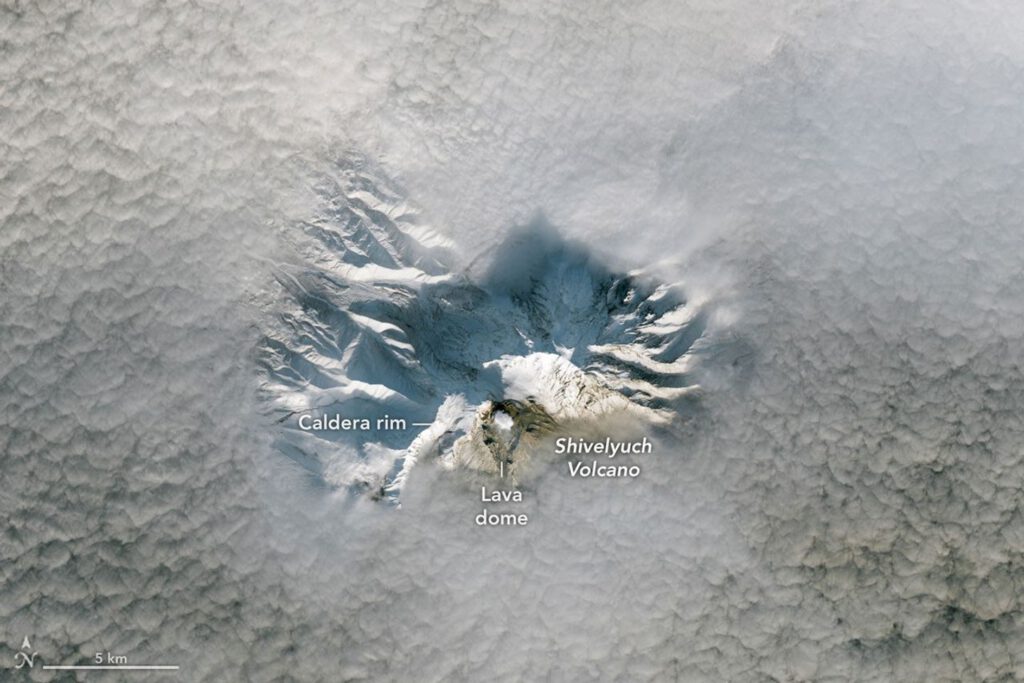
On the day the image was taken, KVERT reported that a plume of resuspended ash drifted 120 kilometers (75 miles) to the east. While this activity is notable, it is considered relatively tame for the mountain. Explosions from Shiveluch have periodically sent ash several kilometers into the atmosphere, where it can travel great distances and pose risks to aircraft.
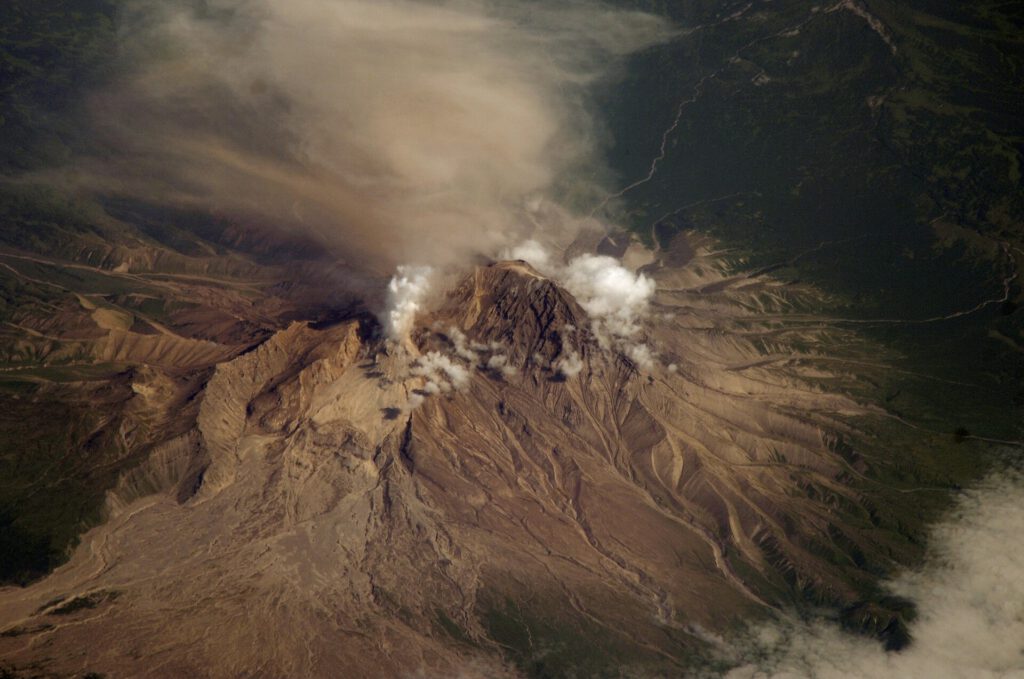
In July 2026, an ash plume from Shiveluch rode the jet stream over the Bering Sea into Alaskan airspace. This event prompted the cancellation of multiple flights, highlighting the potential impact of the volcano’s activity on regional air travel. The November 2026 image offers a snapshot of the volcano’s current state, with the active caldera clearly visible against the backdrop of the surrounding clouds.
Source: NASA
