


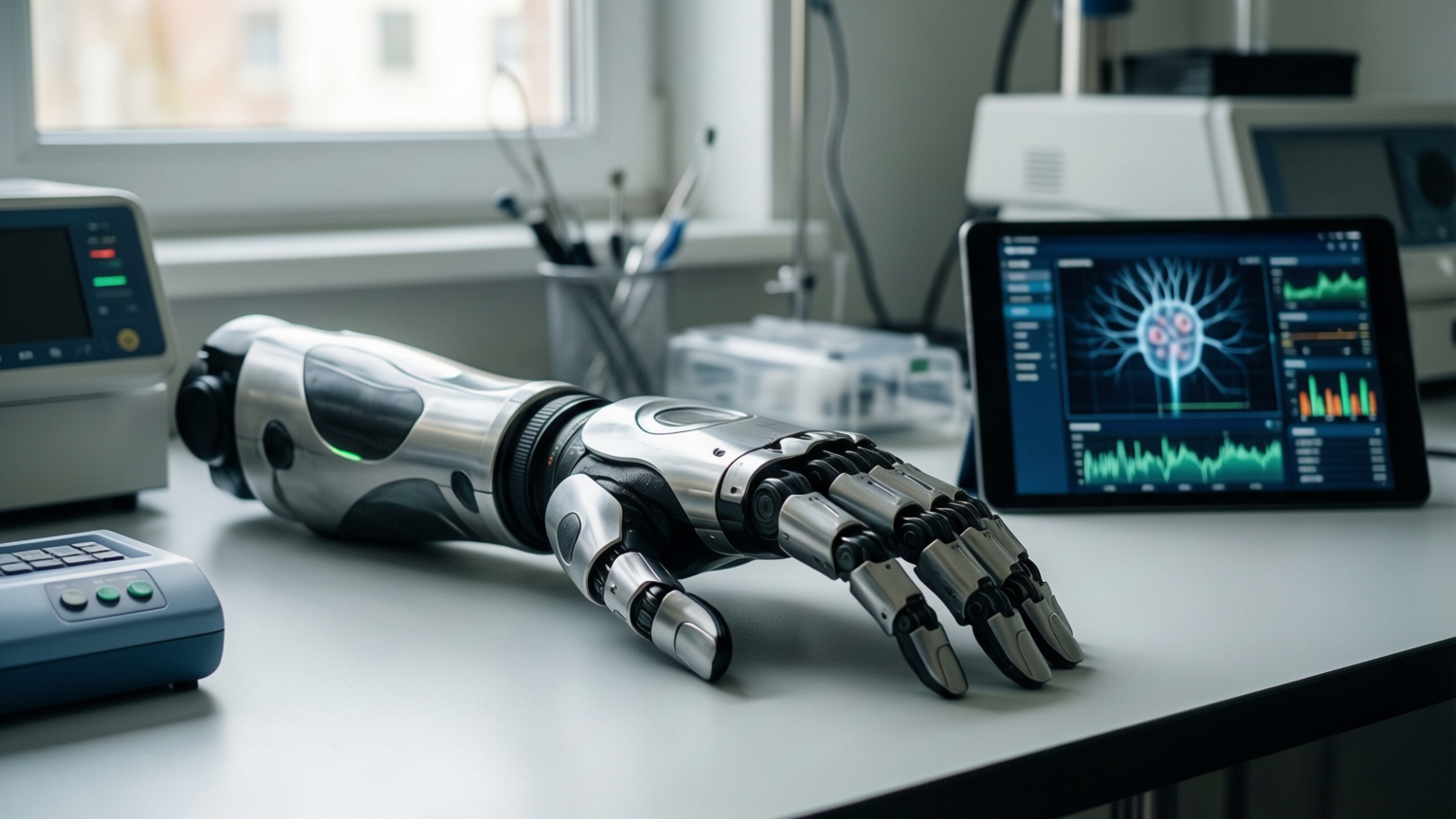
Avi Davidson is participating in a clinical trial for a new type of prosthetic limb that connects directly to the nervous system. As the ninth person to test the device, he is also the first to use it independently outside of a laboratory setting. The trial, run by researchers at the University of Utah, aims to understand how this technology functions in daily life and how it interacts with the human brain.
Davidson lost his left hand as a teenager and has since worked as a trauma therapist. He has used various prosthetic devices over the past 17 years. For this trial, he underwent surgery to implant electrodes in his arm. These electrodes allow the prosthetic to send and receive signals from his nerves. The device includes wires that exit his arm to connect to the external hand unit.
Real-World Testing Challenges
Most participants in previous trials used these devices only in controlled lab environments. Davidson is using his prosthetic for everyday tasks such as drinking from a cup and writing. He noted that these activities require significant effort and precision. The device requires hundreds of hours of training and physical therapy, which he has balanced with his full-time job.
Davidson stated that he does not regret his injury or his participation in the study. He views his role as a way to advance the technology for future users. He will not keep the device long-term, as it is part of a research program. The trial will continue until at least late January 2027, with the possibility of extension based on funding and progress.
Unexpected Physical and Neural Responses
Researchers are observing surprising physical responses from the user. Davidson reported that his prosthetic wrist can feel stiff and sore after heavy use, similar to a natural joint. Stretching the prosthetic limb relieves this sensation. Scientists do not yet understand the mechanism behind this feeling, as the device lacks biological tissue.
The study also investigates how the brain adapts to the bionic hand. Before the trial began, researchers scanned Davidson’s brain to map how his missing hand was represented in his neural structure. They are now tracking whether this map changes as he uses the prosthetic. These findings could help explain how bionic limbs affect people who were born without limbs.
The University of Utah team hopes the trial will answer long-standing questions about the technology. They want to know how users interact with the device in real-world settings and where improvements are needed. The results may reveal new insights into the connection between the nervous system and artificial limbs.
Davidson’s experience highlights the complexity of integrating technology with the human body. His willingness to undergo multiple surgeries and extensive training underscores the potential of this field. The trial will continue to monitor his progress and the device’s performance over the coming months.
Source: MIT Technology Review
