


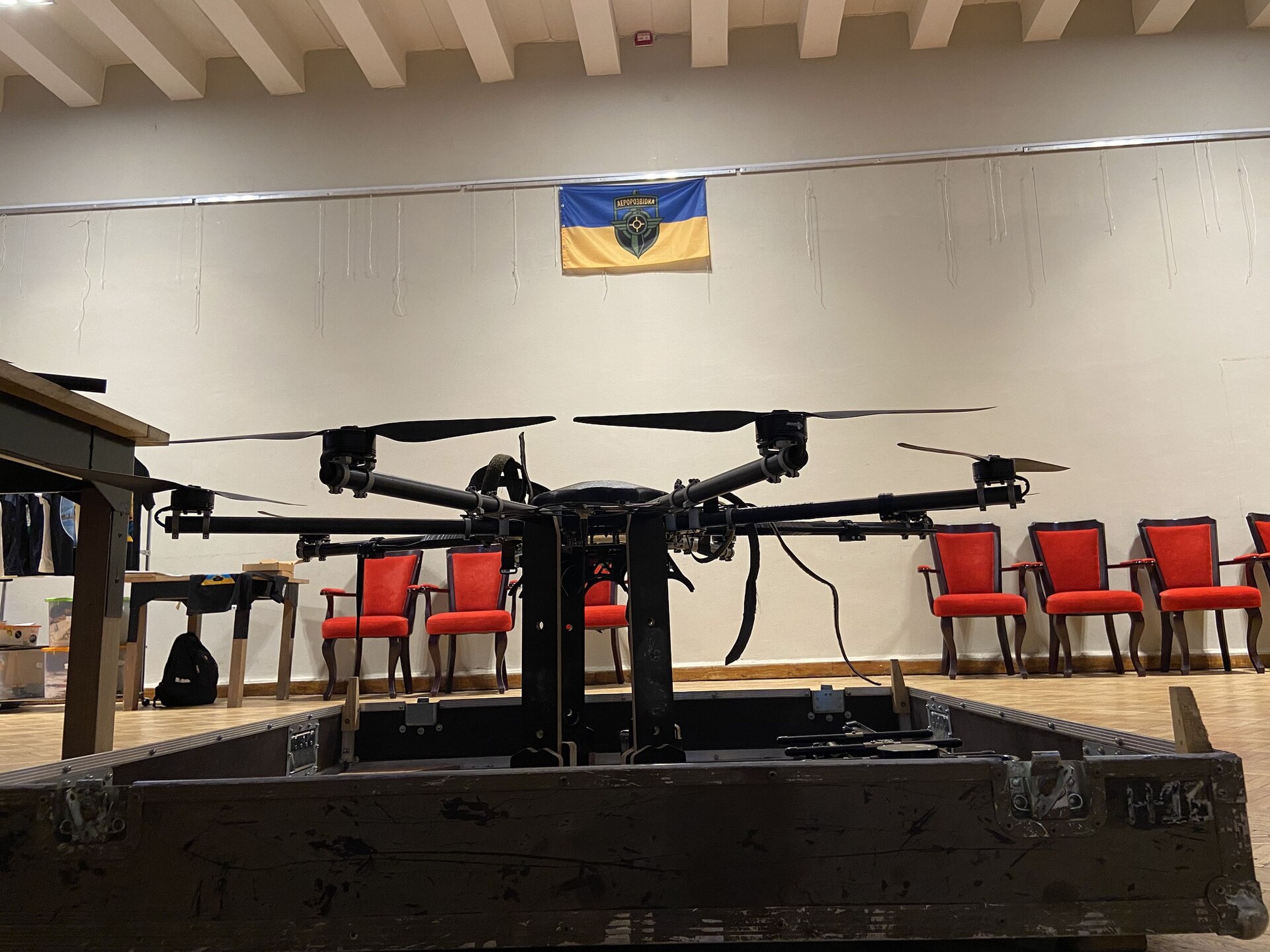
An 11th-grade student from Poltava, Ukraine, has received The Future of Ukraine award from President Volodymyr Zelenskyy for developing an AI-powered drone autopilot system. Yaroslav Sheiko created the technology to allow uncrewed aerial vehicles to reach their destinations without relying on GPS signals, a critical capability in an environment where electronic warfare and signal jamming are common.
Sheiko also developed an optical-electronic stabilization system alongside the autopilot. The award recognizes his technical achievements in a conflict where reliable navigation is often compromised by Russian electronic warfare tactics. According to Poltava Wave, Sheiko is from Poltava, a city located approximately 190 miles to the west of Kyiv.
Academic and Technical Achievements
This presidential award is the latest in a series of recognitions for Sheiko. He has previously received two presidential scholarships for his academic performance and contributions to science. He has also won the top award twice in nationwide competitions organized by Ukraine’s Junior Academy of Sciences.
His work has gained international attention as well. Sheiko earned a gold medal at the INOVA 2025 International Inventions Show and a silver medal at the 2025 Hackathon. These accolades highlight his ability to solve complex engineering problems at a young age.
Ukraine has been actively developing homegrown technologies to supplement military assistance from allies. The country has equipped its fleet of U.S.-made Puma reconnaissance drones with domestic anti-jamming systems. It has also utilized a network of flying modems to extend the range of attack drones, reducing reliance on Starlink connections which can be unreliable in contested areas.
Broader Context of Drone Warfare
The widespread use of drones in Ukraine has spurred innovation across multiple domains. The country has used heavy-lift UAVs to evacuate wounded soldiers from minefields and conducted long-range strategic strikes on Russian targets. It is also developing anti-drone systems, including using old Android phones as acoustic sensors for early warning and employing high-powered laser systems to shoot down Russian jet drones.
Other nations are similarly advancing their drone capabilities. China has demonstrated a 200-strong AI drone swarm controlled by a single soldier. Japan is developing ultra-cheap cardboard drones that cost $2,000 per unit. The UK plans to deploy the DragonFire anti-drone laser on Royal Navy destroyers by 2027. The U.S. is training military units to 3D-print and maintain combat-ready drones in-house.
Ukraine has not released detailed technical specifications for Sheiko’s inventions. However, the ability to navigate without GPS is vital for the survival and effectiveness of unmanned systems on the front lines. Sheiko’s skills represent a potential asset for Ukraine’s defense industry as the conflict continues.
Source: Tom’s Hardware
