


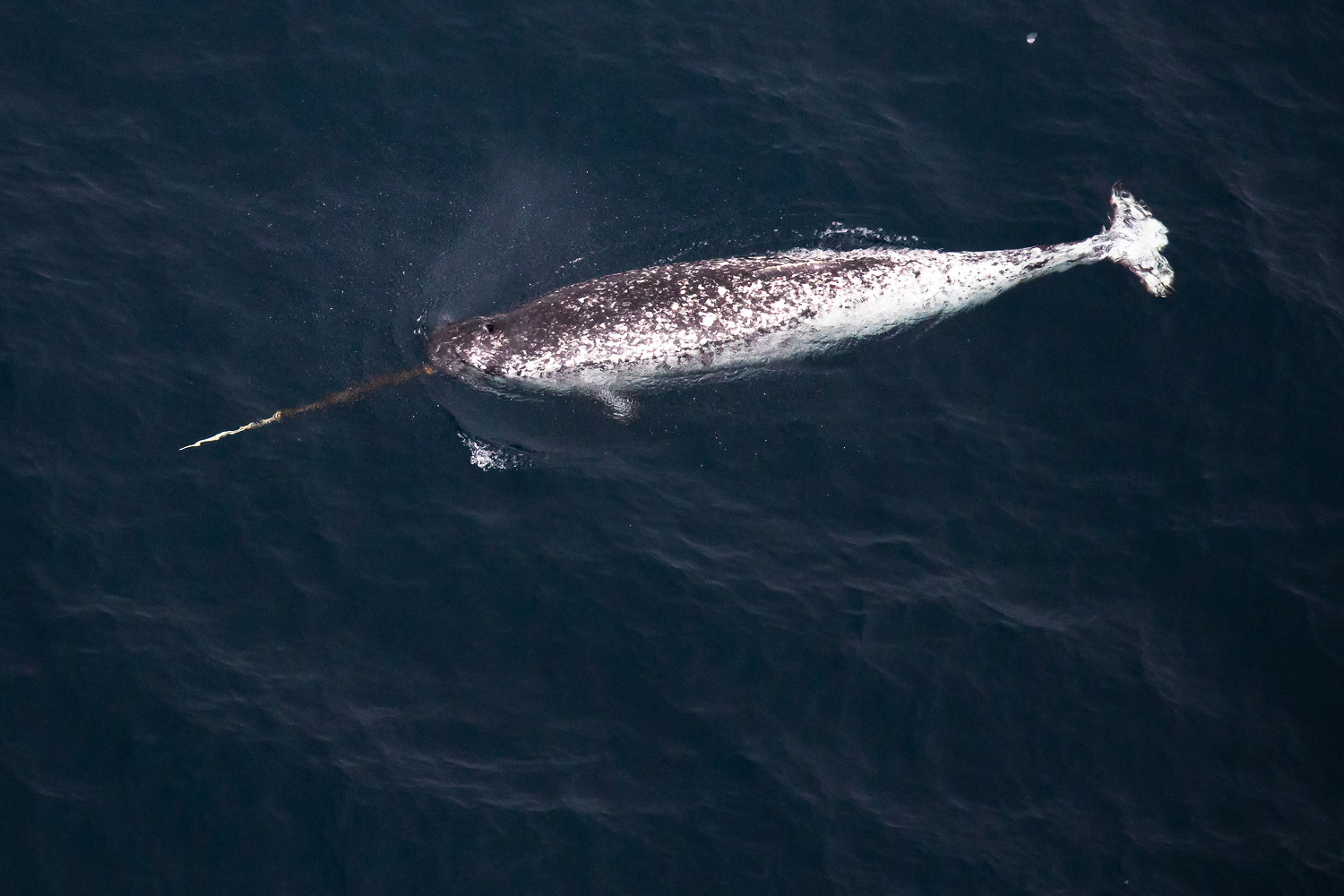
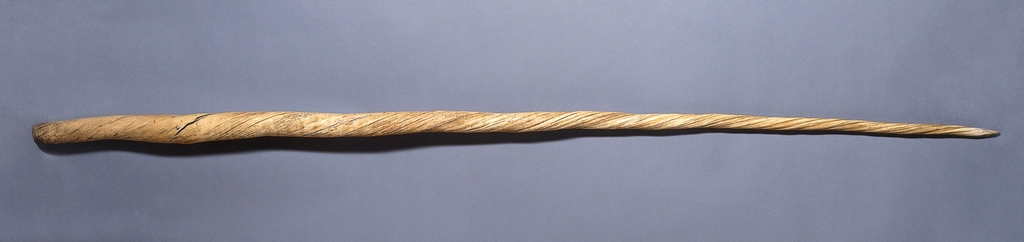
For centuries, the narwhal’s tusk was mistaken for the horn of a mythical unicorn. In the 17th century, Danish King Frederik III ordered an expedition to Greenland to uncover the source of these prized objects, which were used to craft a throne that enhanced his prestige across Europe. The truth was far more biological than legendary. The object was not a horn but a tooth, specifically an elongated upper left canine that grows through the male narwhal’s upper lip in a counterclockwise corkscrew pattern.
Modern science has now peeled back the layers of this biological curiosity. An international team of researchers has determined that the tusk’s distinctive spiral shape is not the result of a single twisting mechanism. Instead, the narwhal tusk structure relies on two intertwined helices that twist in opposite directions. This complex arrangement creates a composite material that is both hard and flexible, allowing the tooth to withstand the strong hydrodynamic forces generated by swimming.
Dual Helix Architecture
The study, published in Nature Communications, utilized advanced X-ray imaging at three major European synchrotron facilities: the Swiss Light Source in Villigen, the MAX IV Laboratory in Lund, and the European Synchrotron Radiation Facility in Grenoble. The goal was to understand how microscopic building blocks contribute to the tusk’s visible form, which can reach two meters in length.
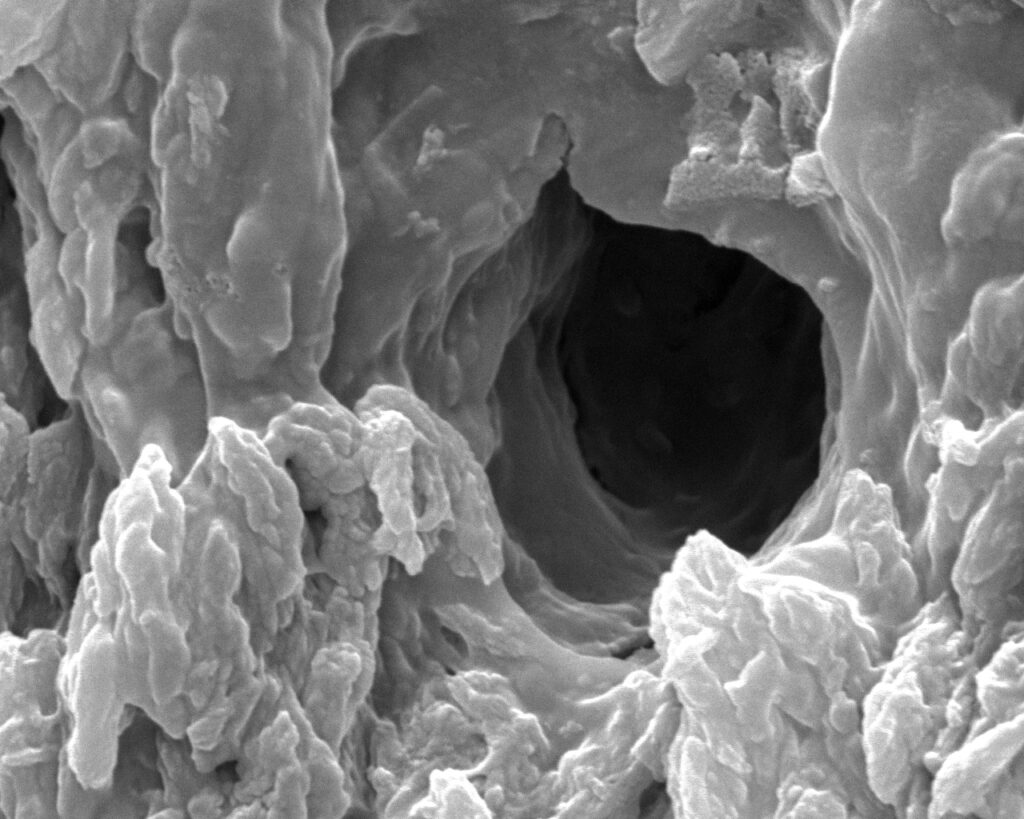
Most of the tusk consists of dentin, the same hard tissue found in human teeth, covered by a thinner layer of cementum. Both materials contain fine collagen fibers strengthened by tiny mineral crystals. The collagen provides internal reinforcement similar to steel in reinforced concrete, while the mineral crystals supply hardness. Researchers used a technique called tensor tomography to rotate the tooth within an X-ray beam, collecting millions of measurements to reconstruct a three-dimensional map of the internal organization.
Initial analysis did not reveal the expected spiral pattern. The breakthrough came when scientists shifted their focus from individual points to the orientation of those points relative to their neighbors. By connecting these directional trends, the team identified two distinct spirals. The outer cementum layer forms a left-handed helix, while the mineralized collagen structures within the dentin spiral in the opposite direction. This opposing arrangement works like the strands of a rope, resisting twisting forces and mechanical stress.
Environmental Archive and Lifespan
The purpose of the tusk remains a subject of scientific inquiry, though evidence points to its role in mate selection and social interaction. Narwhals have been observed engaging in playful “duels” by crossing their tusks, suggesting the structures are vital for reproduction. The tusk continues to grow throughout the animal’s life, developing successive layers that function like tree rings.
These growth layers allow scientists to reconstruct past Arctic environmental conditions, including changes in climate and food availability. A male narwhal can live for nearly a century, effectively building an environmental archive within its spiral tooth. The research was led by Henrik Birkedal of Aarhus University and supported by NordForsk and the European Union’s Horizon 2020 program. The findings provide a clearer picture of how nanoscale components combine to create one of nature’s most remarkable engineering feats.
Source: ScienceDaily
