


President Donald Trump has announced a new round of tariffs targeting China, intensifying economic tensions between the world’s two largest economies just weeks before the leaders are scheduled to meet at the G20 summit in Miami. The move comes shortly after Trump traveled to Shenzhen, China, where he was greeted by President Xi Jinping on the tarmac, marking a brief period of diplomatic warmth that has now given way to renewed trade hostilities.
The new tariff regime imposes a 20 percent levy on Chinese goods, a rate that remains within the bounds of a temporary trade truce set to expire in January. However, Washington has threatened to raise this rate to 40 percent if trade negotiations fail. This escalation follows a complex history of trade disputes, including the Supreme Court’s recent decision to strike down earlier “Liberation Day” tariffs imposed in April 2025.
Legal Strategy and Section 301
Unlike previous measures that relied on emergency powers, the Trump administration is utilizing Section 301 of the Trade Act of 1974. This legal framework allows for broader punitive actions against countries accused of unfair trade practices. The administration alleges that targeted nations, including China, the European Union, and India, are flooding global markets with cheap goods through government subsidies and suppressed wages.
China is identified as the primary offender, particularly in industries such as steel, aluminum, electric vehicles, household appliances, and solar panels. The investigation, launched in March by US Trade Representative Jamieson Greer, focused on “structural excess capacity” across 14 major trading partners. Experts suggest this approach is an attempt to rebuild tariff leverage that was stripped away by the courts.
“The practical purpose is simple: rebuild [the] tariff leverage the Supreme Court stripped away and force Beijing to the table before the next summit,” said Alicia Garcia-Herrero, chief economist for Asia Pacific at Natixis. She described the move as a familiar negotiating ploy designed to keep pressure on Beijing after a friendly photo opportunity.
Beijing’s Response and Global Impact
Chinese officials have strongly condemned the new measures. A spokesperson for China’s Ministry of Commerce stated that Beijing “reserves the right” to retaliate with steeper tariffs. The ministry called the US investigation a “typical act of unilateralism” that disrupts the international economic order and violates World Trade Organization rules.
“China urges the US to correct its wrong practices and return to the right track of resolving issues through dialogue and consultation,” the spokesperson said. Beijing has also emphasized its role as a stable trade partner, contrasting its approach with the volatility introduced by US tariff policies.
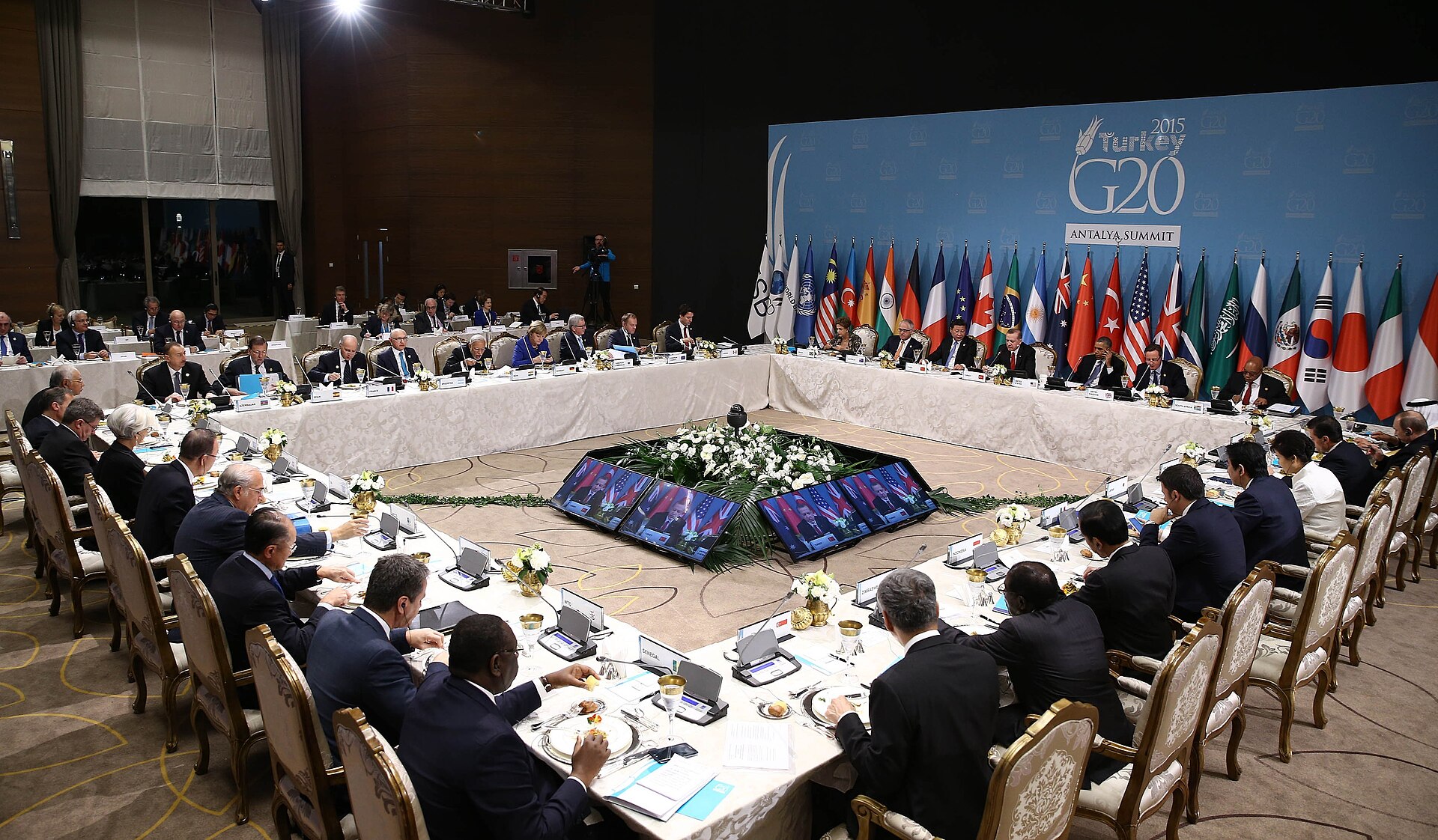
The timing of the announcement adds complexity to the upcoming G20 summit in Miami. Deborah Elms, head of trade policy at the Hinrich Foundation, noted that the White House appears to be using Section 301 to apply broader pressure and set the stage for future negotiations. “This announcement adds another layer of possible tensions,” Elms said, highlighting the challenge for both leaders as they prepare to discuss broader geopolitical issues.
Despite nearly a decade of trade tensions, China’s global goods trade surplus reached a record $1.19 trillion last year, while the US ran a $1.24 trillion deficit. Chen Bo, a senior research fellow at the National University of Singapore, argued that no new tariff will significantly reduce Chinese overcapacity or change the fundamental trade dynamics. He suggested that both nations are working to de-escalate tensions before the Miami summit, where discussions will likely cover AI, nuclear weapons, and conflicts in Iran and Ukraine.
The risk for the Trump administration remains that higher prices will land on American consumers, further straining the global trade system. Whether this outcome is viewed as a strategic feature or a significant bug depends on how much economic pain Washington is willing to absorb in its pursuit of trade concessions.
Source: Al Jazeera
