


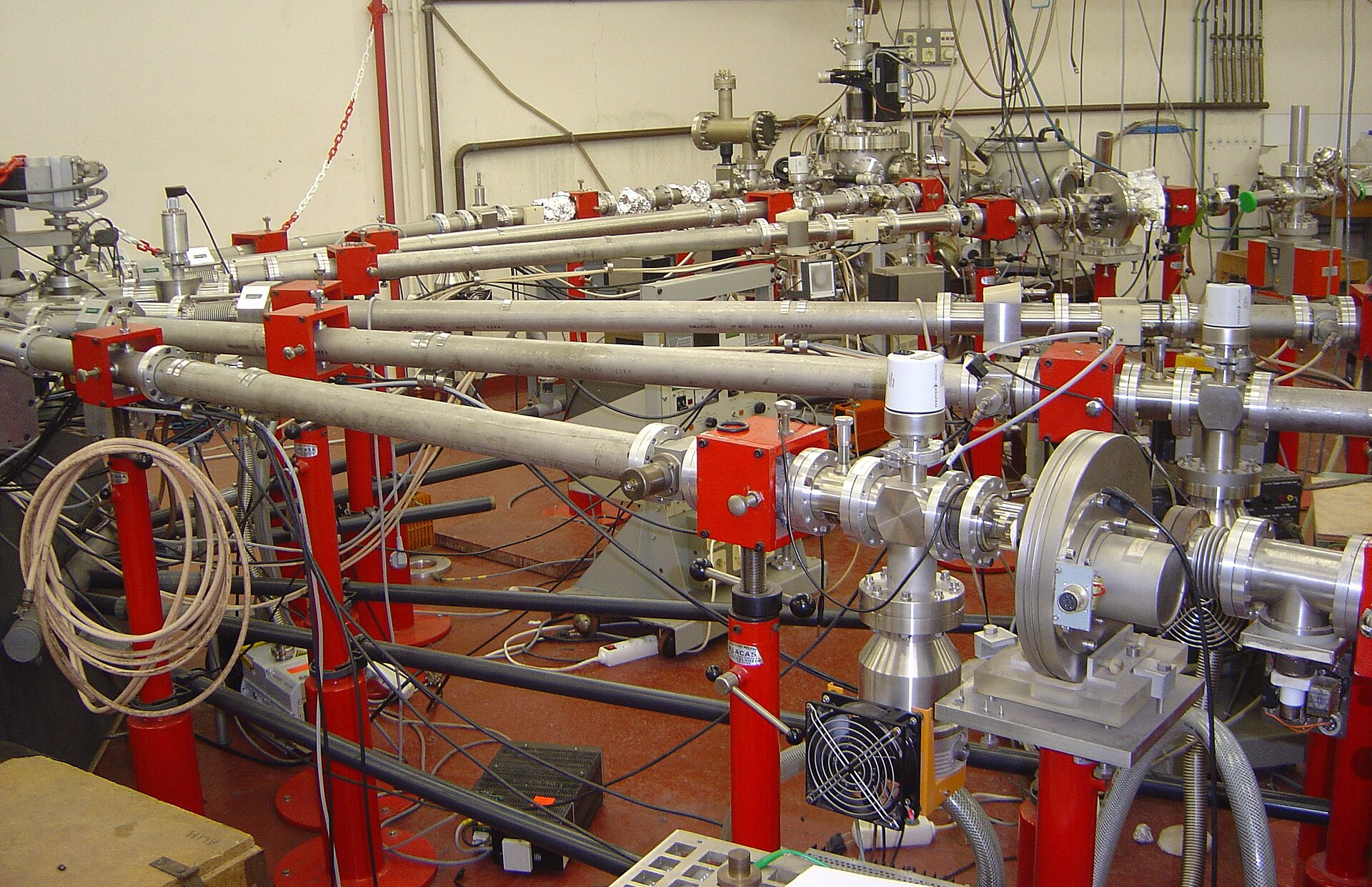
Dark matter makes up roughly 85 percent of all matter in the universe, yet it remains one of the most elusive components of the cosmos. Scientists infer its existence through gravitational effects on galaxies, but because it does not interact with ordinary matter, its composition is unknown. For decades, researchers have debated whether this substance consists of a single particle type or a variety of particles with different properties. Earlier this year, scientists reported the most convincing evidence to date for a dark matter particle, fueling speculation that if multiple types exist, they might interact with each other to form dark atoms and molecules.
Extending the Mirror Twin Higgs Theory
A new study by five physicists explores this possibility by extending the “Mirror Twin Higgs” hypothesis. Originally proposed two decades ago to address issues with the Higgs boson mass, this theory suggests a “mirror sector” of particles that barely interact with visible matter but have their own forces. Zackaria Chacko, one of the original creators of the Mirror Twin Higgs theory, is now leading this investigation into how these mirror particles might combine.

The researchers propose that under certain conditions, these particles could form dark equivalents of known elements, ranging from simple structures to complex ones like carbon. However, this dark matter would not be an exact copy of ordinary matter. The particles would have different masses and properties, altering the rules for bonding and stability. For instance, the team notes that in their model, dark hydrogen atoms would be unstable, contrasting sharply with the abundance of hydrogen in our visible universe.
Need for a New Classification System
If such dark elements exist, understanding the rules governing their formation would be essential for classifying them. The authors suggest that humanity might need a “dark periodic table” to bring order to this diversity, similar to how the standard periodic table organizes ordinary elements and predicts undiscovered ones. This classification system would reveal patterns among dark particle properties, helping scientists navigate the potential complexity of the dark universe.
Currently, this work remains in the realm of theoretical physics. Researchers have not observed any of these atoms, and some doubt such structures could actually form. The study, published as a preprint, highlights the need for future frameworks to interpret potential discoveries, should they ever be made.

Source: Wired
