


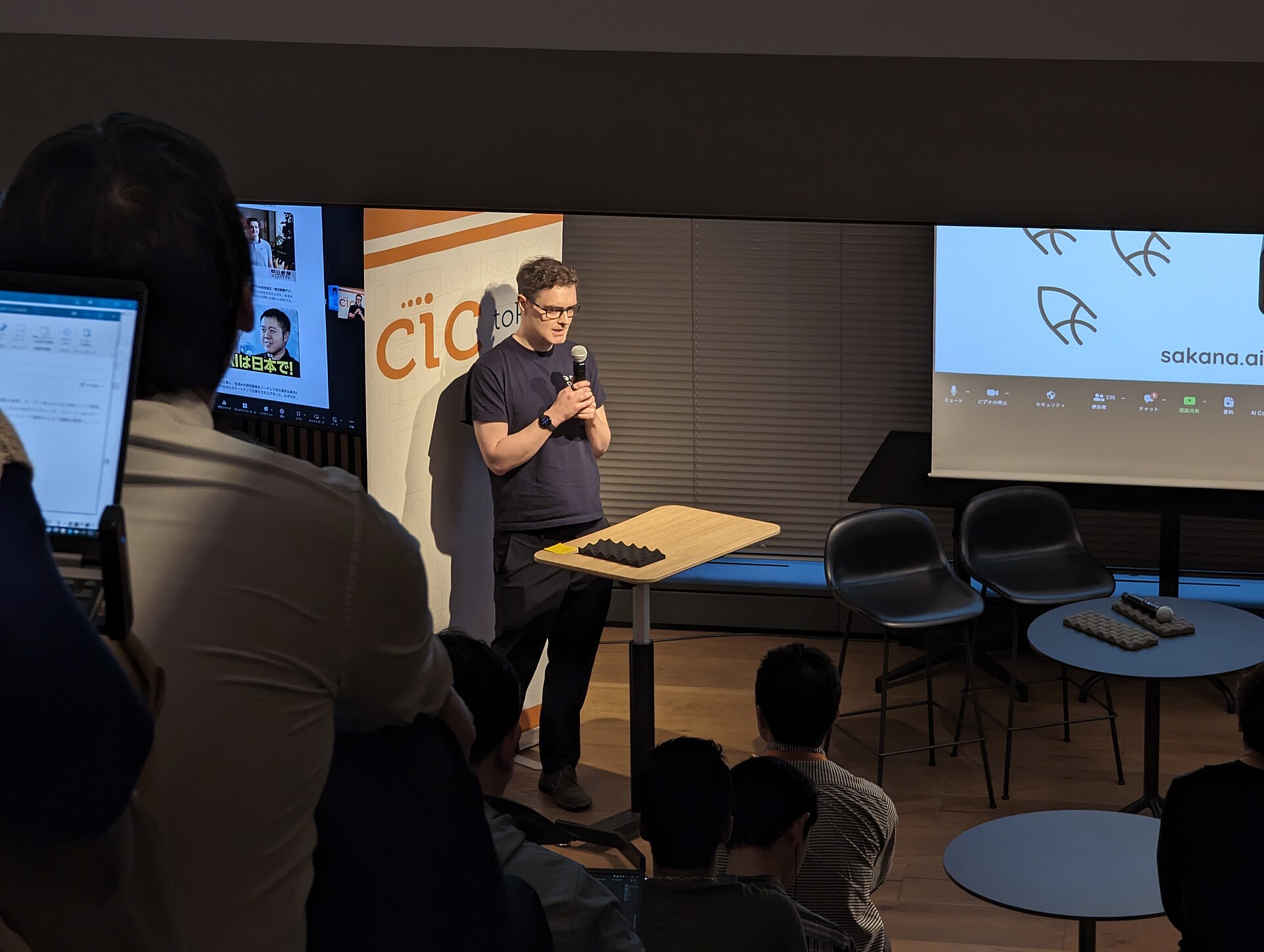
Sakana AI, a Tokyo-based artificial intelligence startup, has announced plans to develop its own foundation model named Sawara. The initiative marks a strategic shift for the company, which previously relied on orchestrating existing large language models rather than training its own base architectures. According to CEO David Ha, the project addresses specific needs within Japan’s defense and manufacturing sectors while reducing reliance on foreign technology.
Sawara Development Timeline and Scope
Work on the Sawara model is scheduled to begin this month. The company aims to release a smaller-scale version in early 2027, followed by a larger iteration later. Ha emphasized that the primary long-term goal is to support physical AI applications in manufacturing and industry. However, he acknowledged that immediate demands in cybersecurity require robust domestic alternatives.
The development of Sawara represents the final piece in Sakana AI’s transition to a full-stack AI company. The startup has already launched Fugu, an orchestration system that combines various large language models to create specialized AI agents. It also developed Namazu, a language model fine-tuned on open-weight models from Meta and DeepSeek to better understand Japanese culture, business contexts, and political nuances.

Ha noted that existing open-weight models often carry biases from their creators, which can lead to refusal to answer questions about Japan or provide responses that do not align with local expectations. This limitation has driven the need for a homegrown foundation model that can be customized for domestic enterprises.
Government Contracts and Security Requirements
Sakana AI’s approach to Sawara has been heavily influenced by its work with Japanese government agencies. In July, the company signed a research contract with the Ministry of Defense to explore how AI can integrate information from multiple sources. It has also collaborated with the Ministry of Internal Affairs and Communications on systems designed to detect disinformation.
Government clients typically require stricter controls than commercial customers. These requirements include the ability to audit training data, customize model behavior, and deploy systems on-premises. Ha stated that these lessons have directly shaped the planning for Sawara, particularly its focus on on-premises deployment capabilities which are critical for national defense applications.
While Japan will continue to utilize systems from U.S. companies like Palantir and Snowflake for certain functions, Ha argued that national defense requires independent domestic systems. He expressed respect for foreign technology but stressed that sensitive applications need locally controlled alternatives.
Future Growth and IPO Speculation
The announcement comes amid reports from Nikkei and Bloomberg suggesting that Sakana AI is considering an initial public offering. Ha clarified that the company has no near-term plans to go public. He described the reported timing and valuation as speculative, though he confirmed that an eventual listing in Japan is part of the company’s long-term strategy.
Ha views the company’s future growth as tied to the global expansion of Japanese manufacturers. Rather than simply selling AI models, Sakana AI intends to help local industrial companies become more competitive on the international stage. The company plans to work closely with the government and the industrial base to facilitate this expansion.
Ha confirmed that the company expects to eventually go public in Japan itself, stating that there is a gravitational pull toward a domestic listing. For now, the focus remains on building the Sawara foundation model and delivering on its commitments to the defense and manufacturing sectors.
Source: TechCrunch
