


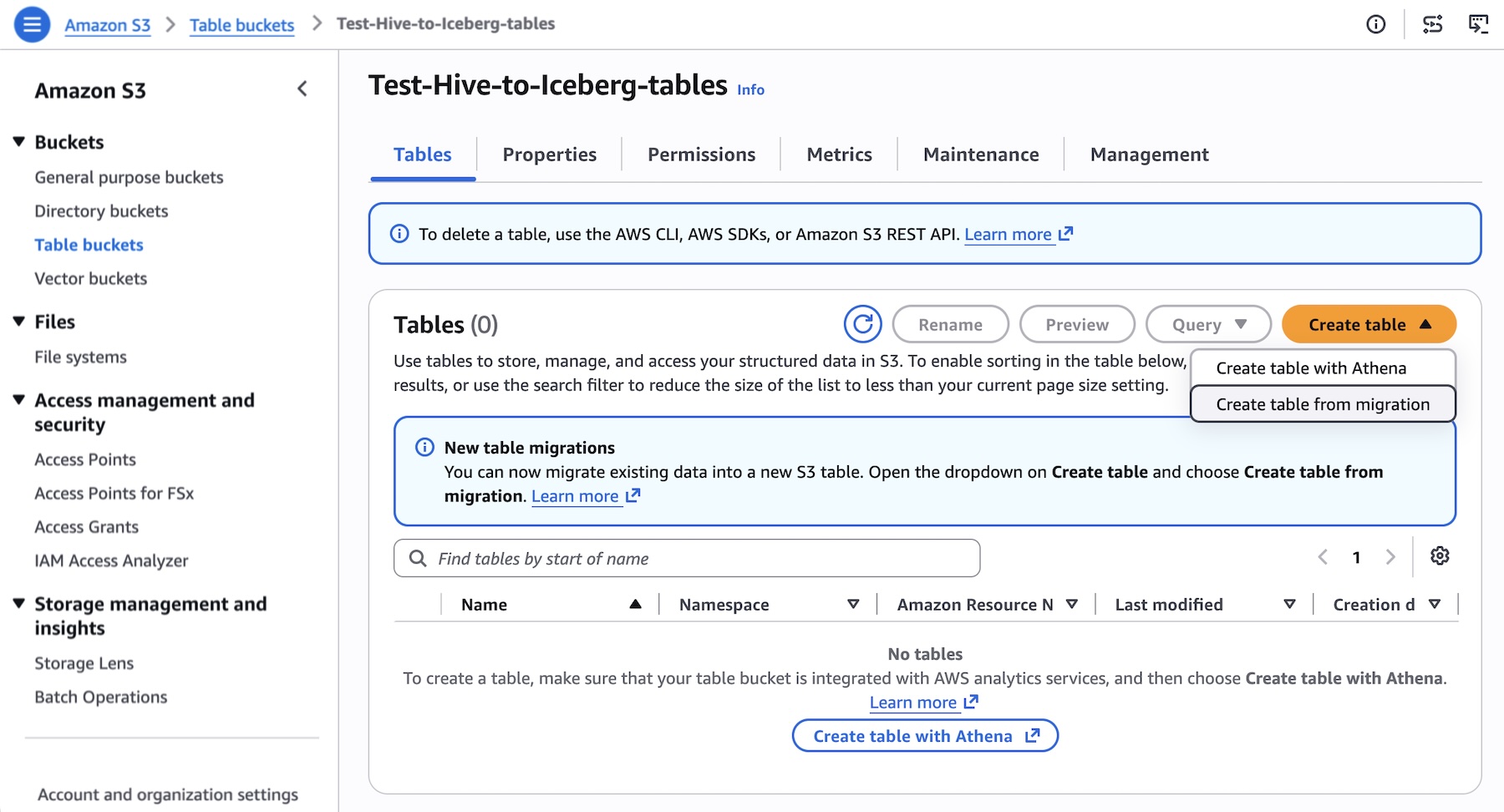
Amazon Web Services has introduced a managed migration capability within Amazon S3 Tables, designed to simplify the transition from Apache Hive to Apache Iceberg. This new feature allows data engineers to upgrade their data lake infrastructure with minimal engineering overhead, addressing a process that previously required weeks of custom development.
Streamlining Data Lake Modernization
The shift from Apache Hive to Apache Iceberg has become a priority for many organizations seeking to manage large-scale analytics datasets. Iceberg serves as an open table format that supports schema evolution, hidden partitioning, and time travel queries. However, moving data from Hive to Iceberg traditionally involved significant operational complexity, including data type conversions and the construction of rollback mechanisms.
Amazon S3 Tables now handles the entire workflow as a managed, API-driven operation. The service performs data validation, compatibility checks, type conversions, file recompression, and compaction automatically. Before any data is copied, the system identifies all source objects and generates a compatibility report. This approach eliminates the need for users to provision compute resources or build custom data pipelines.
Production workloads can continue running during the preparation phase. Users can sync the migration as many times as needed without interrupting writes to the source table. The only downtime occurs during the final cutover, which lasts only a few minutes. This capability reduces the risk associated with large-scale data migrations and allows teams to verify data integrity before going live.
Cost and Performance Considerations
Compared to self-managed migration strategies, the new managed migration option offers a different cost structure. Users pay only for the data copied during the process. There are no additional charges for the Hive-to-Iceberg conversion logic itself. Furthermore, source objects stored in S3 Intelligent-Tiering remain in their current access tier, preventing unexpected storage cost increases during the transition.
Amazon S3 Tables are purpose-built to keep Iceberg tables performant as they grow. The service includes automatic maintenance, optimization, replication, and S3 Intelligent-Tiering. These features help maintain query performance and storage efficiency without manual intervention. Destination tables are created with recommended default settings tuned for these specific goals.
Once the migration is complete, the destination table is promoted from read-only to read-write status. Users can immediately begin querying the data using direct integrations with Amazon Athena and Amazon SageMaker Unified Studio. The tables are also compatible with any tool that supports the Apache Iceberg REST API, providing flexibility for existing analytics workflows.
Availability and Access
The managed migration feature is available today in US East (N. Virginia, Ohio), US West (Oregon), Asia Pacific (Mumbai, Singapore, Sydney, Tokyo), and Europe (Frankfurt, Ireland, Stockholm) Regions. At launch, the capability supports AWS Glue-registered Hive tables stored in Parquet format within the same AWS account and AWS Region.
Users can initiate the migration through the Amazon S3 console by selecting the Create table from migration option. Alternatively, the feature can be controlled via the AWS Command Line Interface, AWS SDKs, or the Agent Toolkit for AWS. Coding agents using the Agent Toolkit can access specific skills that provide step-by-step guidance with safety guardrails.
Feedback on the new feature can be submitted to AWS re:Post for Amazon S3 or through standard AWS Support contacts. AWS also recommends using the AWS MCP Server and plugins for documentation searches and troubleshooting.
Source: AWS
