


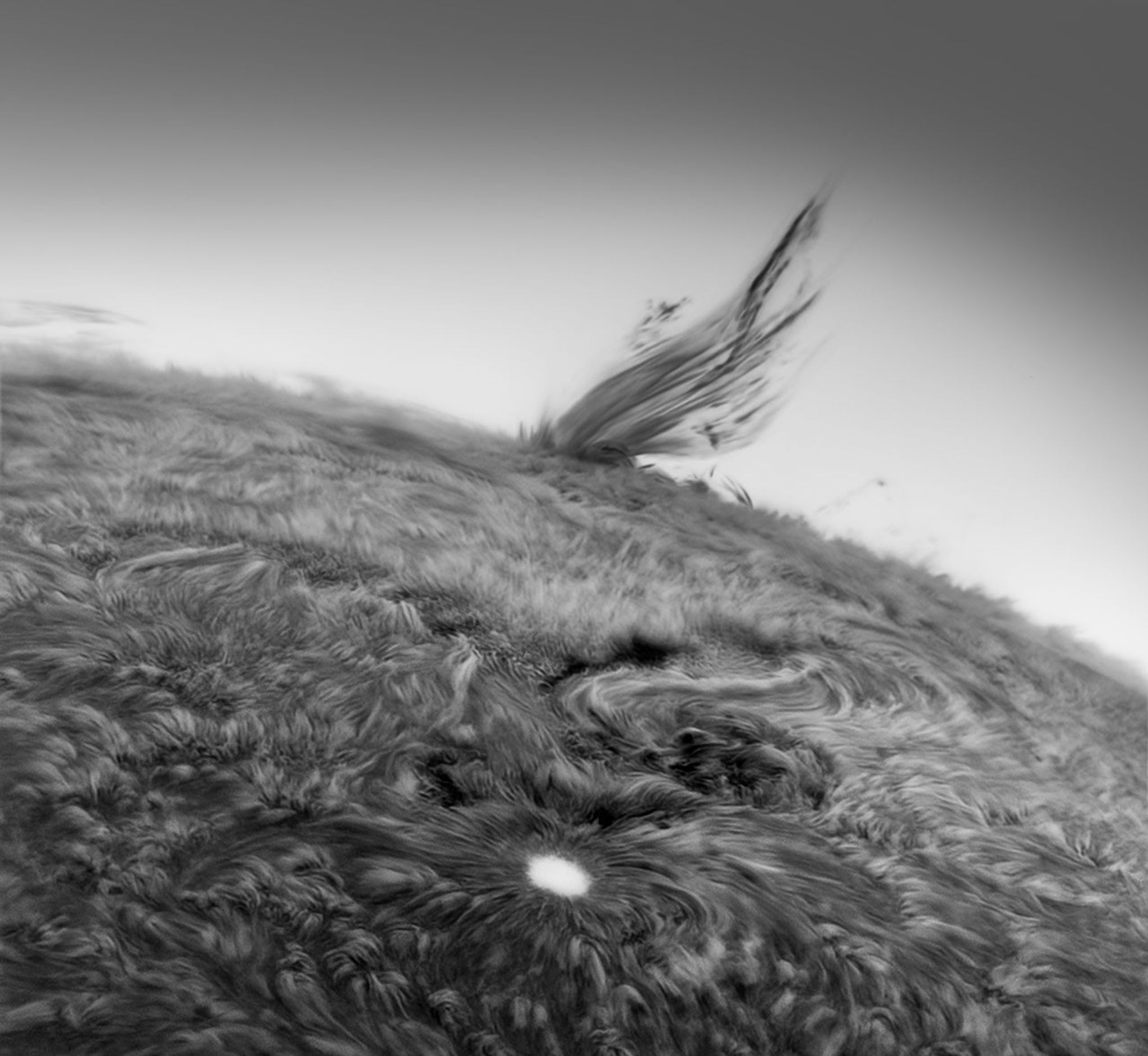
NASA’s Astronomy Picture of the Day (APOD) for November 18, 2026, showcases a detailed view of the Sun’s chromosphere during an M1 solar flare. The image, taken on May 14, 2025, uses an H-alpha filter to isolate light from energized hydrogen atoms as they escape the solar surface. This specific flare was classified as M1 based on observations from the Geostationary Operational Environmental Satellite (GOES) network.
Chromosphere Dynamics and Magnetic Energy
The chromosphere is the layer of the Sun’s atmosphere situated just above the visible surface. In this region, temperatures unexpectedly rise as altitude increases, a phenomenon that scientists attribute to energy transported by swirling magnetic fields. These fields extend upward through the atmosphere and can twist, storing vast amounts of potential energy.
When these magnetic structures snap or reconfigure, they release that energy in the form of light and high-speed particles. The resulting solar flare is a sudden brightening that can be detected across multiple wavelengths. The APOD image captures this moment of release, highlighting the dynamic nature of the solar atmosphere.
Impact of M-Class Events
Solar flares are categorized by their peak X-ray flux, with M-class events representing moderate intensity. While not as powerful as X-class flares, M-class events are significant enough to affect Earth’s environment. An M1 flare, like the one featured, can cause radio blackouts at Earth’s poles and trigger minor radiation storms.
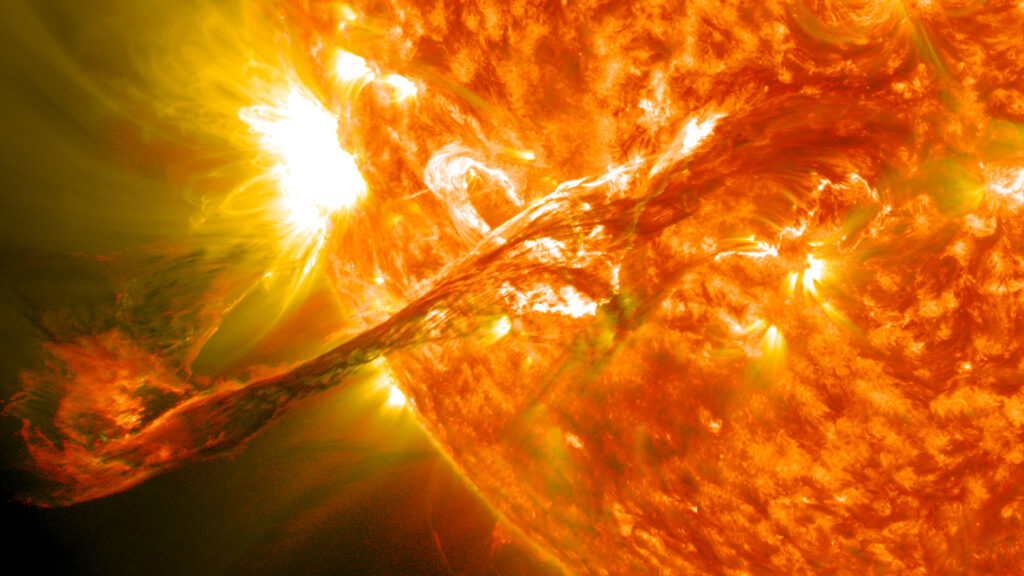
These radiation storms pose a risk to astronauts in space and can affect high-altitude flights. To mitigate these risks, agencies including NASA and the National Oceanic and Atmospheric Administration (NOAA) continuously monitor solar activity. Their data helps predict when such storms might occur, allowing for protective measures to be taken for both ground-based infrastructure and space missions.
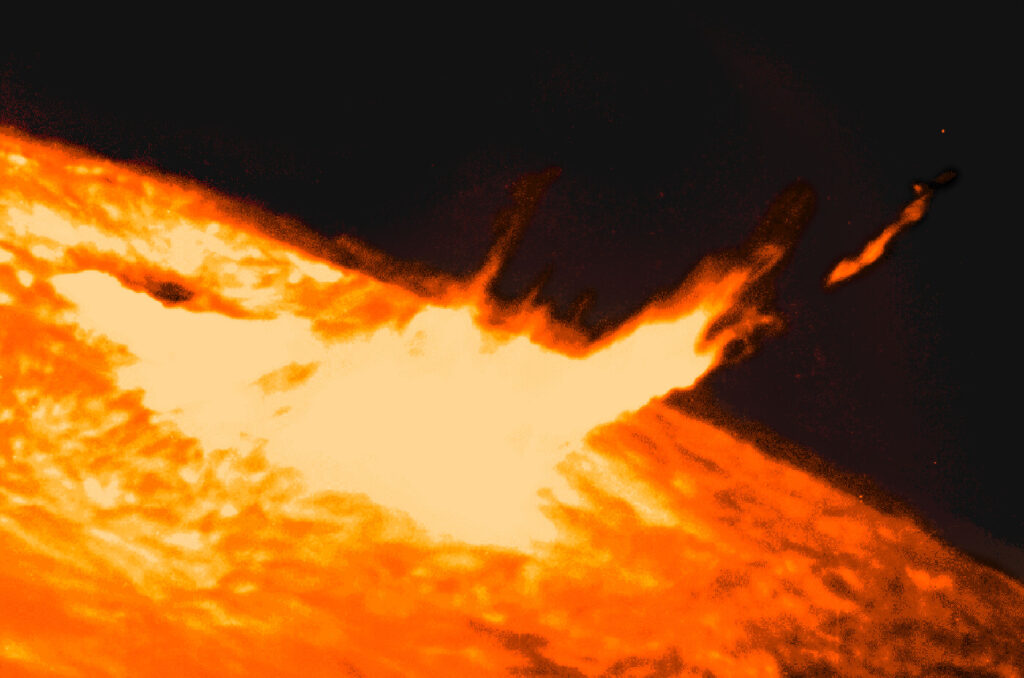
The featured image serves as a reminder of the Sun’s constant activity and the importance of space weather monitoring. By studying these events, scientists can better understand the mechanisms that drive solar storms and improve forecasting capabilities for future missions.
Source: NASA
