


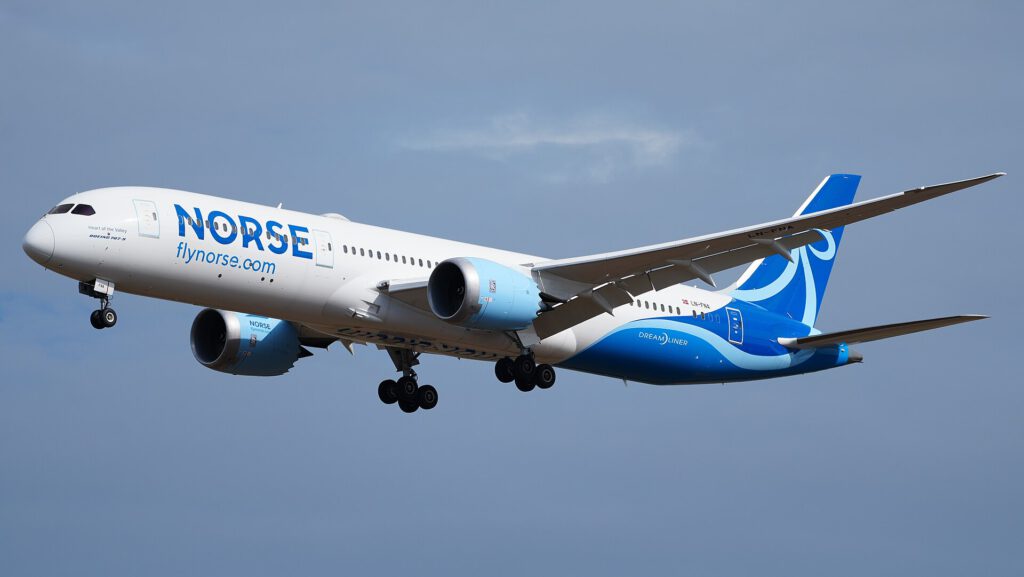
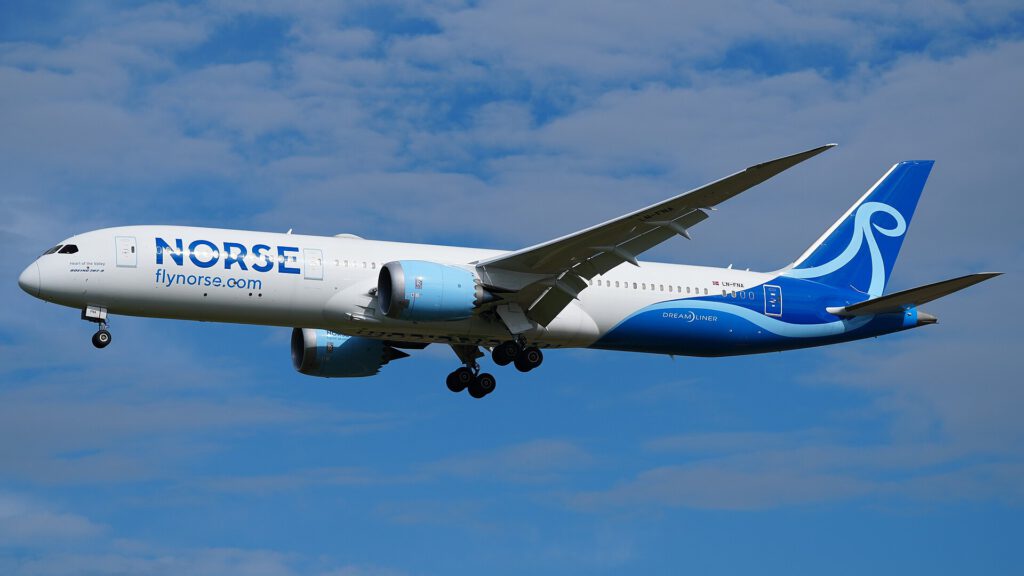
Norse Atlantic Airways’ Norwegian operating subsidiary filed for bankruptcy on Saturday, bringing an abrupt end to the carrier’s operations just four and a half years after its launch. The announcement came hours after the airline confirmed it had received lease termination notices covering its entire fleet of 12 Boeing 787 Dreamliners.
The move follows the suspension of all flights on Thursday, a decision driven by the carrier’s inability to secure sufficient emergency financing. While the listed parent company, Norse Atlantic ASA, and its UK subsidiary are not included in the bankruptcy petition, the Norwegian entity will file with the Agder District Court. Management stated they are continuing to explore opportunities to salvage the remaining business.
Financial Struggles and Fleet Termination
Norse had appeared to be making progress toward profitability in recent years. The airline reduced its annual net loss from $135.5 million in 2024 to $61.9 million in 2025. However, that improvement reversed sharply in 2026. Declining income coincided with rising personnel and maintenance costs, while financing expenses were worsened by a $32.9 million noncash charge related to bond conversions.
The airline’s financial position was further strained by its lack of fuel hedging arrangements. Despite average jet fuel prices soaring by 92% year-on-year in the second quarter of 2026, Norse’s fuel expenditure increased by only 2.5% in the first half of the year. This discrepancy occurred because the carrier slashed its own-network capacity by 64% in the quarter, yet could not reduce its fixed fuel costs, leading to substantially higher unit costs.
Norse had secured attractive aircraft leases during the pandemic when widebody demand collapsed. It originally signed agreements with AerCap for nine Dreamliners and BOC Aviation for six. After relinquishing three smaller 787-8s, the airline operated a uniform fleet of 12 Boeing 787-9s. The carrier is currently contesting the validity of the lease termination notices.
Potential Buyers for the Dreamliner Fleet
The 12 Boeing 787s could prove desirable to other carriers given the current shortage of modern widebodies and long wait times as Boeing works through its production backlog. Several airlines have been identified as potential candidates for the aircraft.
LOT Polish Airlines has shown an appetite for secondhand Dreamliners and has already secured additional aircraft previously operated by Virgin Atlantic. British Airways, which faces delays to its Boeing 777X deliveries, could use the 787-9s to bolster long-haul capacity. Thai Airways has also turned to secondhand widebodies to support network expansion, and Royal Brunei Airlines, which has ordered additional Trent 1000-powered 787-9s, might seek to accelerate fleet growth.
Southwest Airlines has been reported to be considering adding long-haul flying. Acquiring 12 Dreamliners within months would allow for a rapid transformation of its business model, bypassing the multi-year wait times for new deliveries from Boeing.
Strategic Shift and Operational Halt
Norse launched operations in June 2022 between Oslo and New York, aiming to fill the gap left by Norwegian’s withdrawal from long-haul flying. The carrier gradually shifted its focus from its original low-cost transatlantic network to Southeast Asian destinations and ACMI (Aircraft, Crew, Maintenance, and Insurance) contracts.
US Department of Transportation data shows that between the summers of 2025 and 2026, Norse reduced its US capacity by more than 60%, including the withdrawal of all Los Angeles services. By the time operations were suspended, London Gatwick to Orlando was its sole remaining scheduled US route. Load factors improved during this period, but the airline’s reliance on individual airline customers increased.
ACMI and charter flying rose from 11% of Norse’s flights in the second quarter of 2025 to 56% in the second quarter of 2026. While these contracts reduced exposure to fuel prices, they increased dependence on specific clients. After losing a six-aircraft agreement with IndiGo, Norse secured a smaller deal with Pakistan International Airlines. Ultimately, the carrier recognized the need to reinvent its business but lacked the financial resilience to survive the transformation.
CEO Eivind Roald acknowledged the impact of the decision in a stock exchange announcement. “We are deeply sorry for the impact this has on our passengers, employees and partners,” Roald said. “The Board, management and advisers of the listed entity Norse Atlantic ASA and the UK subsidiary are working to find a solution for the remaining part of the business to continue operations.”
Source: Simple Flying
