


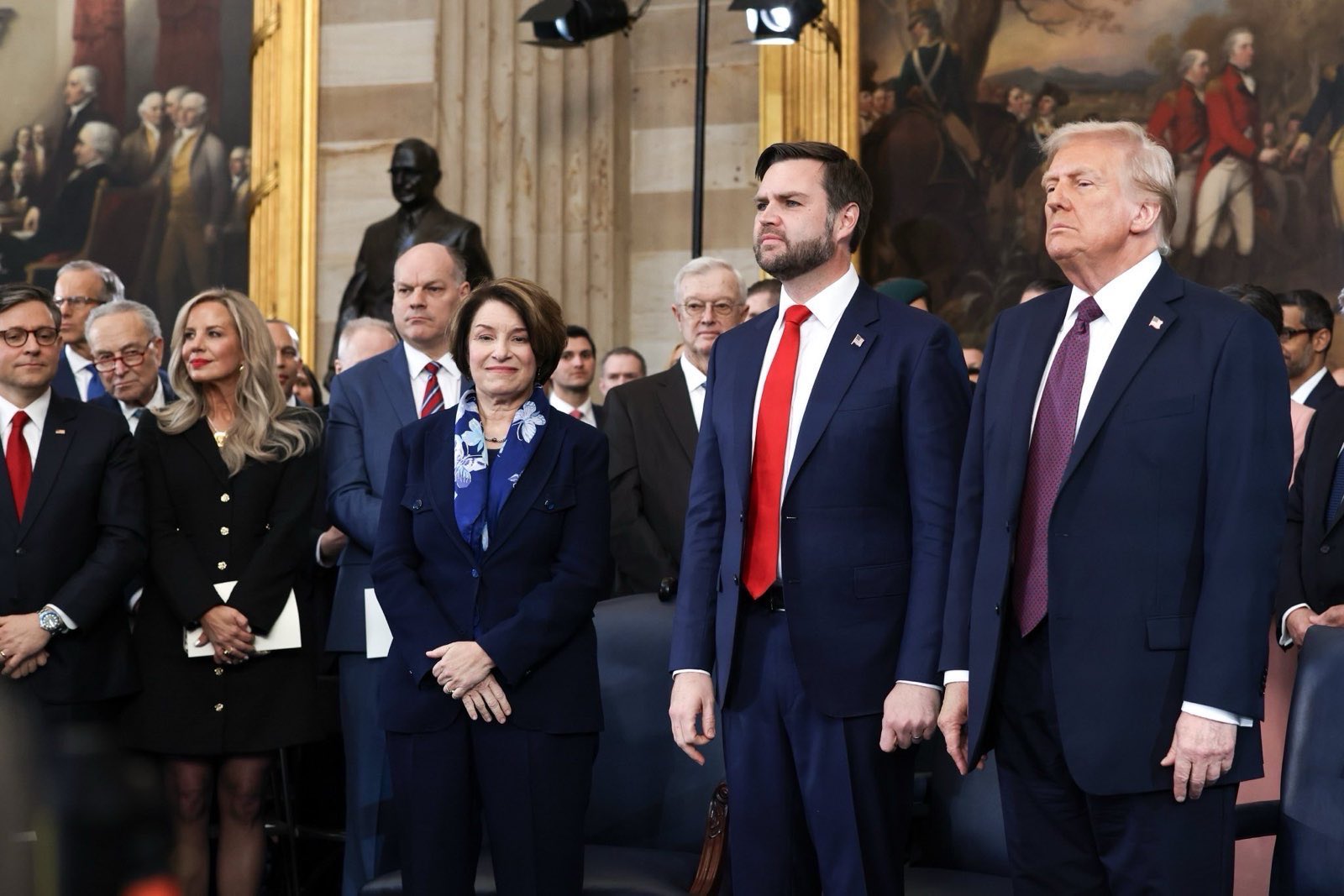
President Donald Trump hosted a press conference in the White House briefing room on Friday that appeared designed to test his potential successors for the 2028 presidential election. Vice President JD Vance and Secretary of State Marco Rubio stood behind the president as he fielded questions about his recent diplomatic trip to Asia, though the event took an unexpected turn when White House official Stephen Miller stepped forward to dominate the attention of the room.
Technical Glitches and Political Posturing
The briefing began with technical difficulties that disrupted the proceedings. Trump remarked on the size of the crowd, but reporters struggled to hear him over the noise of an air conditioning unit. An engineer attempted to fix the audio, but the adjustment resulted in an eerie echo that persisted for several minutes before order was restored.
Once the audio issues were resolved, Trump discussed his trilateral summit with the leaders of China and Russia. He drew comparisons to the Yalta meeting, though he did not specify which historical figure he identified with. He expressed particular admiration for the welcome he received from Chinese President Xi Jinping at the airport, noting that the Chinese leader did not greet former President Joe Biden in the same manner.
Trump also highlighted the nuclear capabilities of the three nations, stating that the US, Russia, and China hold 92% of global nuclear power. He used this point to discuss his family background, mentioning his uncle John Trump, an electrical engineer and former professor at the Massachusetts Institute of Technology. Trump suggested he had a genetic understanding of the subject, a comment that prompted Rubio and Vance to exchange smiles.
Rubio appeared visibly restless during the president’s remarks. He shifted his weight, adjusted his tie, and touched his hair while Trump spoke. Vance, by contrast, remained still, hiding behind his beard and maintaining a composed expression.
Vance and Rubio Make Their Cases
Vance took the podium first to address the audience. He noted that he had remained in Washington rather than joining the Asia trip, comparing his situation to the character Kevin McCallister in the film Home Alone. Vance praised Trump for securing historic trade deals and reorganizing the global economy to benefit American workers.
Rubio followed by defending the president’s engagement with authoritarian leaders. He argued that it is dangerous for the three countries possessing the majority of the world’s nuclear weapons to avoid regular engagement. He shook his fist at critics who accused Trump of prioritizing dictators over democratic allies.
When a reporter asked Trump which of the two men standing behind him would make a better president, the president declined to answer. Vance maintained a stony face, while Rubio smiled. The same reporter then pressed Vance on his recent social media posts regarding the war in Iran. Vance stated that while he supported the goal of preventing Iran from obtaining a nuclear weapon, his role was to support the president’s decisions. He added that he believed the president would make the same choice again.
Miller Steals the Spotlight
The dynamic of the briefing shifted dramatically when Trump asked the room if they wanted to continue. He then turned to Stephen Miller, who had been seated to the side. Trump described Miller as the most powerful man in the room and invited him to the lectern.
Miller delivered a lengthy speech praising Trump’s achievements over the last two years. He claimed that the president’s record surpassed that of any other president in American history and predicted that the next two years would be even more significant. Trump returned to the podium and announced breaking news, pointing to Miller and joking that he performed better than Vance and Rubio. He then asked Miller if he wanted to run for president.
The event concluded with Trump reminiscing about hosting Ultimate Fighting Championship bouts on the South Lawn of the White House. The president appeared to enjoy the competitive atmosphere, treating the press conference as a stage for his potential heirs to vie for his approval.
Source: The Guardian
