


While electric vehicle sales in the United States have seen a leveling off, the demand for the batteries that power them has grown fivefold over the last five years. Much of this battery production is happening domestically, yet the industry remains heavily reliant on Chinese imports for essential components, most notably graphite.
Graphite is a fundamental ingredient in lithium-ion batteries, serving as the anode that stores electrical charge. Currently, Chinese firms control approximately 75 percent of the graphite anode supply chain and 97 percent of synthetic graphite anode production, according to data from Benchmark Mineral Intelligence. A five-year-old startup, Molten Industries, is attempting to disrupt this battery graphite monopoly.
Molten Industries launches Oakland demonstration plant
The company has begun operations at a demonstration facility in Oakland, California, to prove its production technology is viable. The plant is designed to establish a pathway for American-made graphite to enter the global market.
“The new plant will be producing graphite that is at cost parity with China plus tariffs,” Caleb Boyd, co-founder and CTO of Molten Industries, told TechCrunch. This means that once U.S. import taxes are applied to Chinese graphite, the price from Molten Industries would be competitive. Boyd noted that future facilities should be able to match Chinese costs even without the influence of tariffs.
The Oakland facility is expected to produce roughly 300 metric tons of graphite per year. This volume is sufficient to support 300 megawatt-hours of battery capacity, which translates to enough material for approximately 4,300 electric vehicles. Most of this initial output will be sent to undisclosed customers currently testing the material in their battery cells.
New technology uses natural gas for production
The startup’s process originated in a Silicon Valley garage and utilizes electrical resistive heating. By passing electricity through a material, the system splits methane, the primary component of natural gas, into pure carbon and hydrogen. Boyd described the mechanism as being similar to a massive toaster.
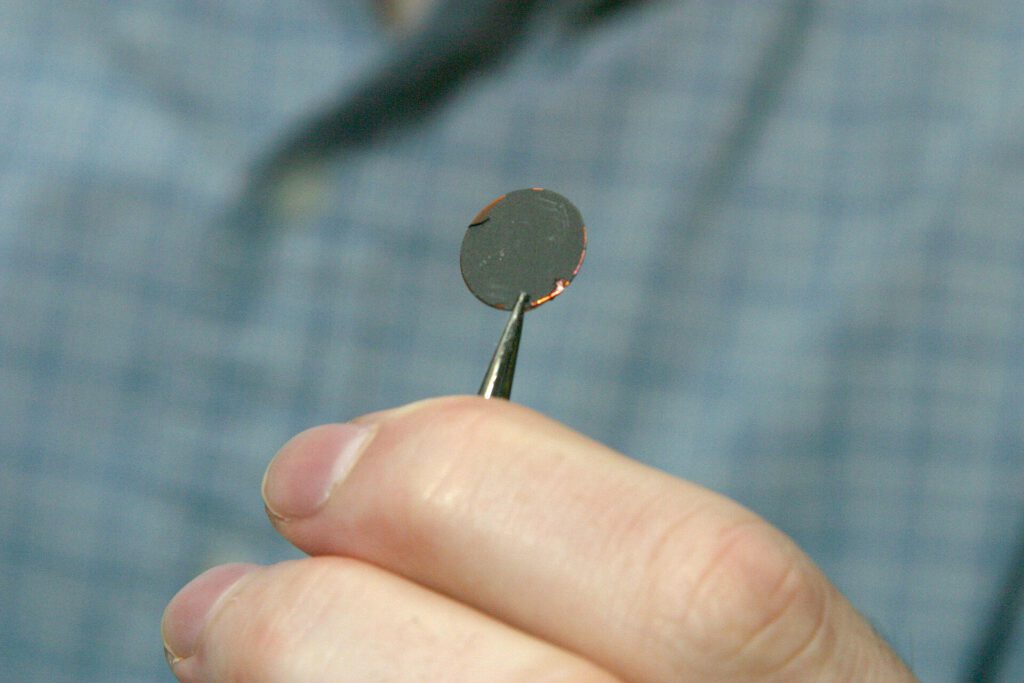
The company claims this method uses three times less electricity than current industry standards and relies on natural gas, a resource that is both abundant and inexpensive in the United States. The chemical process involves heating methane without oxygen, which breaks the molecules into carbon atoms and hydrogen atoms. The hydrogen gas is then sold as a byproduct to neighboring customers.
“We think it is very hard to compete with China if you are just copying their processes and trying to compete on cost,” said Kevin Bush, CEO and co-founder of Molten Industries. “So we are using a resource in the United States that is abundant in natural gas, and we have brought some innovation to actually be able to drive down the cost of graphite production globally.”
From hydrogen to battery materials
The concept of using heat to separate methane has existed for over a century, but previous attempts often failed because carbon buildup would clog the reactors. Boyd and Bush, both materials science PhDs from Stanford, originally focused on creating clean hydrogen from natural gas. They intended to sell the leftover carbon as a secondary product.
However, as they developed methods to keep the reactor clean, they discovered they were producing exceptionally high-quality graphite. This discovery shifted the company’s entire economic model. Molten Industries transitioned from a hydrogen company that sold graphite as a byproduct to a battery-grade graphite company that sells hydrogen as a byproduct.
The company believes the dual-revenue stream could be worth billions of dollars. If Molten Industries were to supply the entire U.S. battery market, it could also provide roughly one-third of the nation’s hydrogen needs. Boyd stated that the new Oakland factory represents a milestone for the company and the global industry.
Source: TechCrunch
