


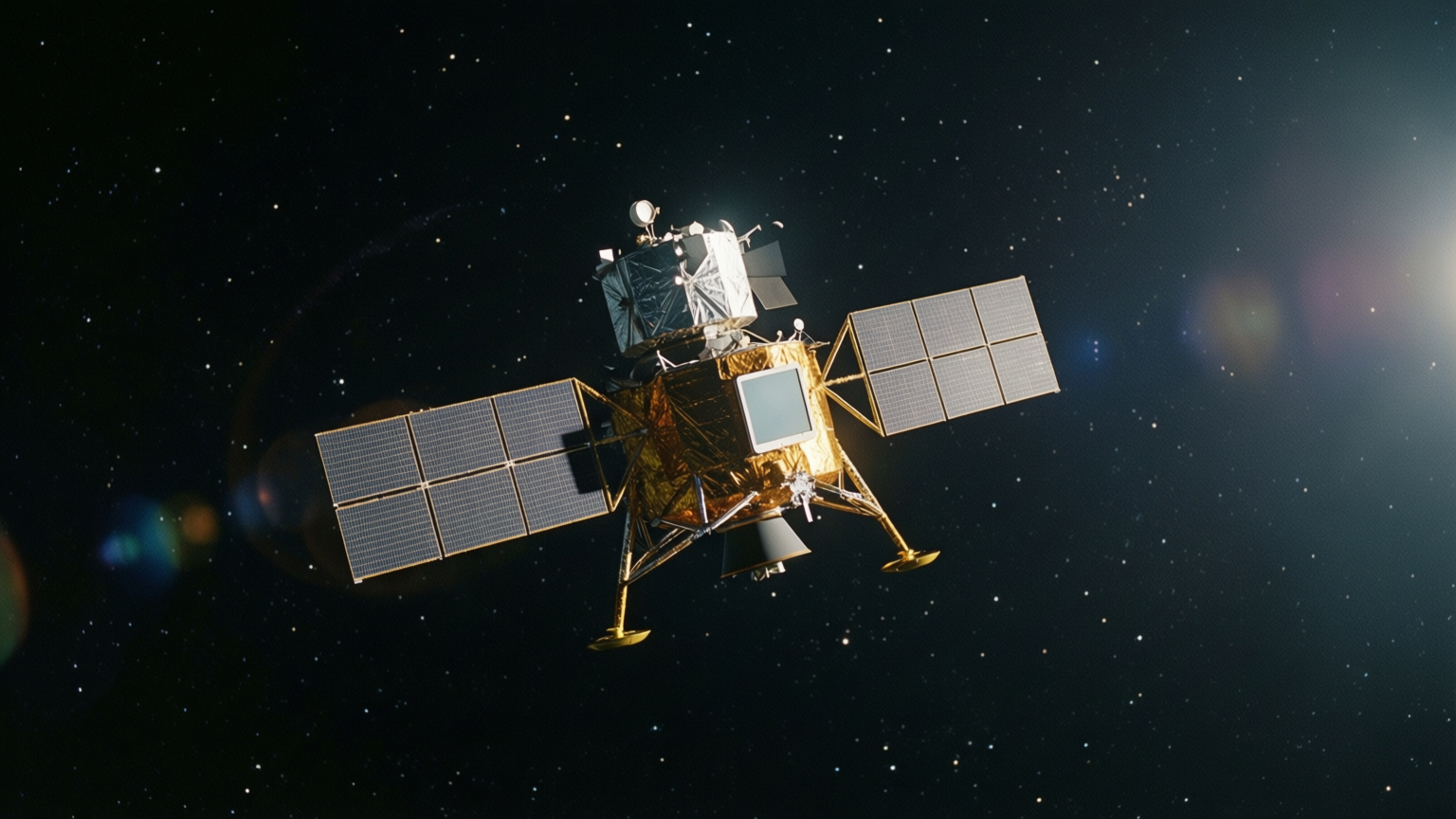
NASA’s Voyager 1 probe is approaching a distance of one light-day from Earth, a significant milestone in its nearly 50-year journey through the outer solar system. The spacecraft, which remains the farthest human-made object from our planet, continues to push the boundaries of deep space exploration.
Nearly 50 Years in Deep Space
NASA launched the Voyager 1 and Voyager 2 probes almost five decades ago to explore the outer reaches of our solar system. Voyager 1 has since traveled farther than any other human-made object, maintaining its position as the most distant probe from Earth. This upcoming milestone highlights the enduring reach of the mission and the vast distances covered since its launch.
The journey has taken the probe through the outer planets and beyond the heliosphere, the protective bubble created by the Sun’s magnetic field. As it moves further into interstellar space, Voyager 1 continues to send data back to Earth, providing insights into the environment beyond our solar system.
Expert Insight on the Mission
To discuss the significance of this milestone, Madeleine Finlay spoke with Jim Bell, a planetary scientist and professor at Arizona State University’s school of Earth and space exploration. Bell explained the seismic impact the Voyager mission has had on our understanding of the solar system.
The conversation covered the probe’s current trajectory and where it could be heading now that it has left the heliosphere. Bell’s expertise provides context for how Voyager 1’s data has reshaped scientific knowledge about the outer solar system and the space between stars.
The mission’s longevity and continued operation demonstrate the engineering precision and resilience of the spacecraft. Despite the vast distances and harsh conditions of interstellar space, Voyager 1 remains a critical tool for studying the outer limits of our cosmic neighborhood.
Source: The Guardian
