


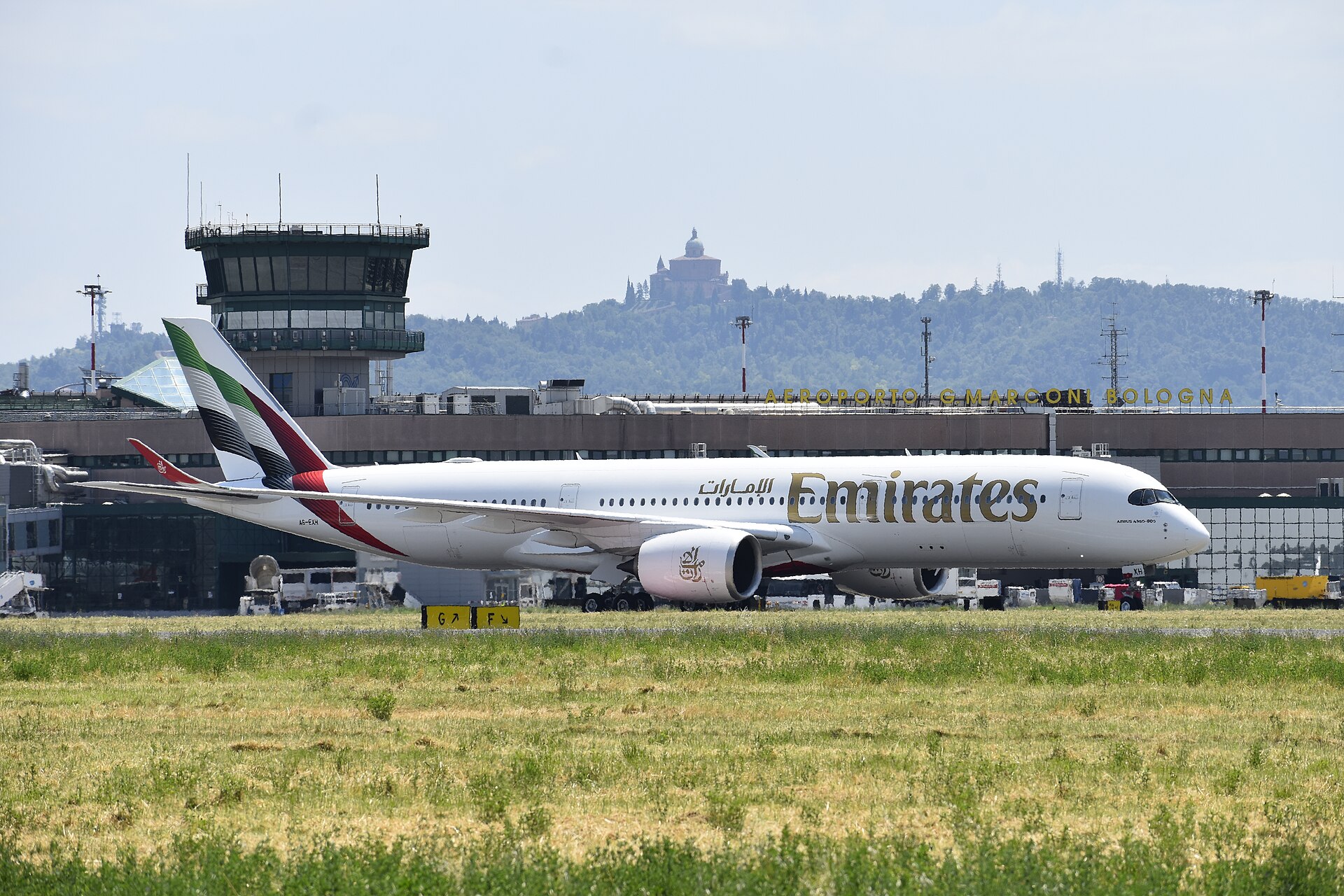
Emirates is significantly expanding its Airbus A350 network with eight new route deployments from Dubai International Airport (DXB). The schedule changes, which roll out between October and March 2027, cover destinations across Europe, Africa, Asia, the Indian Ocean, and North America. This expansion marks a strategic shift for the carrier, which is increasingly relying on the A350 to balance capacity and frequency across its global network.
The airline now operates 29 A350-900 aircraft, a rapid increase from the first delivery in November 2024. With dozens more on order, the A350 is becoming a cornerstone of Emirates’ fleet strategy. Unlike the larger Boeing 777-300ERs and A380s that have traditionally dominated the carrier’s operations, the approximately 300-seat A350 offers greater flexibility. This allows the airline to adjust capacity more precisely to market demand and expand the availability of its latest premium cabins.
New Destinations and Enhanced Frequencies
The latest deployment includes daily flights on seven existing routes and one entirely new service to Helsinki. Six of the eight introductions involve replacing current Boeing 777 operations with the more efficient A350. A notable exception is the route to Rome Fiumicino Airport (FCO), where the A350 will be added as a third daily flight starting in late March. This addition complements the existing daily services operated by the 777-300ER and A380, providing passengers with more departure options.
The new Helsinki service, which began on October 1, establishes the only year-round nonstop connection between Finland and the UAE. Emirates is using the 298-seat long-haul variant for this route, demonstrating how the aircraft can open markets that might otherwise be difficult to serve profitably with larger planes. This move aligns with a broader trend at the airline, which has already introduced additional daily services to Copenhagen, Cape Town, and Phuket using the A350.
Upgrading the US Service to Orlando
A key highlight of this expansion is the introduction of the airline’s first A350 service to the United States. Starting November 1, Emirates will replace its Boeing 777-200LR with the 298-seat A350 on daily flights to Orlando International Airport (MCO). This route, originally launched in 2015, will see a modest capacity increase of approximately 8% compared to the previous aircraft.
The switch to the A350 also brings a substantial product improvement to the Central Florida route. Passengers will have access to the airline’s updated Business Class cabin, which features 32 seats in a 1-2-1 layout, and a 28-seat Premium Economy section. The Premium Economy seats include bespoke designs, generous legroom, and 13.3-inch screens with wood details. This upgrade supports Emirates’ wider strategy to enhance the passenger experience while maintaining operational efficiency.
The A350 allows Emirates to match aircraft size more closely to individual markets. Replacing a 354-seat 777-300ER with a 298-seat A350 reduces capacity by about 16%, which can improve load factors and reduce trip costs. Conversely, substituting the 276-seat 777-200LR in Orlando increases capacity slightly while offering a more premium-heavy configuration. As the airline noted in recent earnings briefings, the A350 provides greater freedom to balance capacity, frequency, and passenger experience.
Fleet Growth and Future Orders
Emirates’ A350 fleet is growing at an unprecedented pace. The carrier currently operates two configurations: a 312-seat regional version and the 298-seat long-haul variant. Neither aircraft features a First Class cabin, but both introduce updated Business Class products and improved entertainment systems. The A350’s fuel efficiency and modern design complement the ongoing refurbishment of the airline’s 777 and A380 fleets.
With 44 more A350-900s due to arrive, Emirates’ eventual fleet will reach 73 aircraft. Deliveries are scheduled to continue through 2031, including eight aircraft ordered at the Dubai Airshow last year. The airline has already increased its original commitment twice, adding 15 aircraft in 2023 and eight in 2025. Reuters has also reported that the carrier is interested in a potentially larger A350-2000 variant, suggesting its current order book may not be final.
This rapid expansion means the A350 now averages 37 daily departures from Dubai, accounting for 15% of the carrier’s megahub departures. While this is still a fraction of the nearly 1,000 weekly departures for the 777-300ERs, it represents tremendous growth from a baseline of zero less than two years ago. The continued influx of A350s will give Emirates greater flexibility to expand frequencies and develop new markets across its global network.
Source: Simple Flying
