


Meta has announced a series of long-term purchase commitments aimed at bringing clean manufacturing to commercial scale within its data center supply chains. The agreements span four critical sectors: cement, steel, recycled plastics, and freight transport. By securing these contracts, the company intends to provide suppliers with the revenue certainty needed to build new, lower-carbon production facilities.
Building the physical infrastructure that supports Meta technologies requires vast quantities of foundation materials. Reducing the emissions associated with this construction involves more than just sourcing differently. It requires bringing lower-carbon materials and services into existence at a commercial level. Meta states that these multi-year commitments are designed to demonstrate these technologies early, allowing the broader market to adopt them.
Lower Carbon Cement Production
A central component of this strategy involves significant investments in cement production. Meta has signed a multi-year agreement with Sublime Systems to support at least 180,000 tons of lower carbon cement. This support enables Sublime to construct its first commercial-scale facility. Meta will receive priority access to use Sublime Cement in its data center construction pipeline.
Additionally, Meta has entered an agreement with Fortera, another lower carbon cement producer. This deal supports a new plant in Ste. Genevieve, Missouri. Both companies expect their early plants to add domestic capacity for lower carbon cement and create new American jobs. These moves build on earlier projects with partners like CarbonBuilt and CarbiCrete.
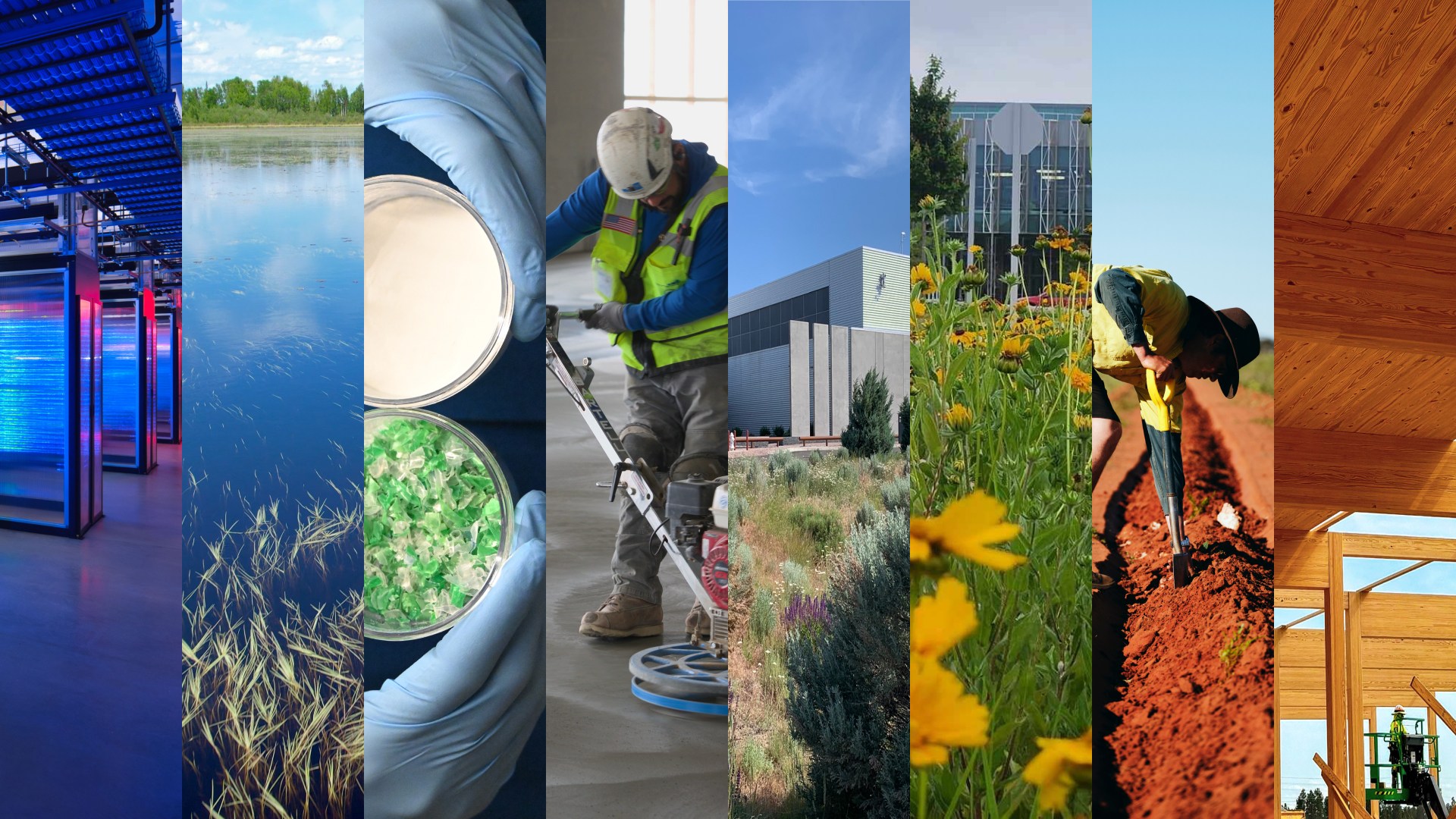
Meta has also piloted mass timber architecture to replace traditional carbon-intensive materials. The company has open-sourced AI models to design faster-curing, lower carbon concrete formulations. It also joined industry peers as a founding partner of the Data Center Innovation Initiative to advance these efforts.
Steel and Electric Freight Expansion
The company is expanding its decarbonization efforts from iron to steel. Last year, Meta supported domestic clean iron from Electra’s demonstration plant in Jefferson County, Colorado. Now, it has signed a new multi-year agreement with Sweden-based Stegra. This deal supports near-zero-emission primary steel produced through a process that eliminates coal entirely from iron reduction.
Structural steel reaches data centers through global supply chains. Supporting a first-of-its-kind facility helps validate technologies that can scale across the global steel industry. Meta notes that these long-term commitments help anchor new projects where domestic supply of clean materials is currently limited.
Freight logistics are also being transformed. Meta is expanding its zero-emission freight partnerships. Initial partnerships with NFI in Virginia and Nevoya in Texas are now extending to California and Arizona. The company is supporting heavy-duty electric trucks and dedicated charging infrastructure along the I-10 interstate. These permanent, open-access charging stations will support other commercial fleets along the corridor.
Recycled Plastics and Environmental Attributes
In the plastics sector, Meta has signed a long-term purchase agreement with MacroCycle Technologies. This deal enables the financing of their first commercial plant in the Southeastern US. The facility aims to divert hard-to-recycle plastic waste from landfills and incinerators. It will produce 5,000 tons per year of high-value recycled PET.
These agreements are structured to deliver Environmental Attribute Certificates. With an EAC, a supplier produces verified lower carbon materials or services. Meta pays for the environmental benefit, and the material is used in the local market. This allows Meta to support lower carbon production now while securing priority access as new factories come online.
Meta has matched 100% of its annual electricity use with clean and renewable energy since 2020. The company continues to reduce emissions through efficient design, extending hardware life, and prioritizing recycled materials. The estimated impact of these planned and expanded US plants includes hundreds of jobs across construction and long-term manufacturing.
Source: Meta
