

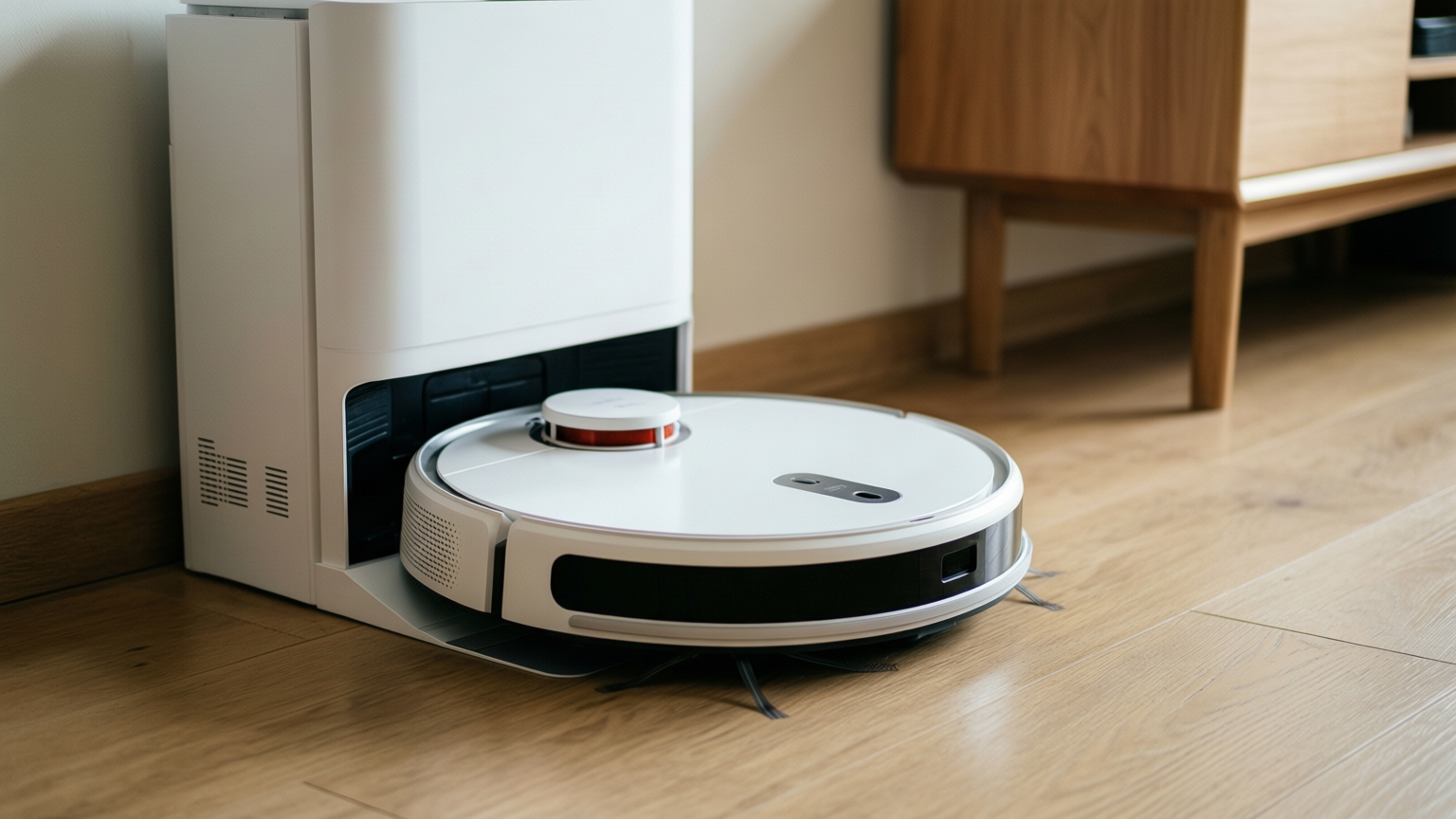
The Federal Communications Commission has added the Matic robot vacuum to its list of approved products, granting a waiver against recent import restrictions. This move makes the Mountain View-based company the first robot vacuum manufacturer to receive such clearance, although the practical impact on the company’s current operations is minimal.
The waiver specifically covers the original Matic model 4MA0001 and its charging dock, model 4DK0008. It allows the FCC to approve these radio products for import, marketing, and sale in the United States. The decision comes as the agency attempts to close loopholes in its bans on foreign-made drones, robots, and routers.
Already Approved Components
Matic does not strictly need this waiver because its radios were already approved years ago. The FCC’s foreign bans generally prevent future products from entering the US market, but they do not block existing products whose radio components have already received clearance.
Furthermore, Matic does not seek individual FCC approval for its robots. Instead, the company ships its devices with an off-the-shelf Intel AX210 Wi-Fi and Bluetooth chip. This component receives its own separate approval from the FCC, similar to the Wi-Fi cards found in desktop or laptop computers. This strategy bypasses the need for the robot itself to undergo the standard certification process.
The waiver is not a blanket approval for the entire brand, unlike those granted to router manufacturers such as Asus and Netgear. It is specific to the two Matic models listed above. This distinction matters because the FCC is currently cracking down on companies that it believes are exploiting regulatory gaps.
US Manufacturing Commitment
Unlike some other companies that received waivers, Matic is publicly committing to US manufacturing. The company assembles its robots in Mountain View, California, which exempts it from specific import bans. However, Matic admits it does not yet source 65 percent of its components from US suppliers, the threshold required to be labeled Made in the US.
Mehul Nariyawala, co-founder and CEO of Matic, stated that the company sources its core compute platform from Nvidia. He added that the company sources other critical components from US companies whenever possible. The waiver might provide a safety net if Matic were to build new products outside the United States and try to import them, though the company has no such plans currently.
Nariyawala told The Verge that the company has significantly expanded its production capabilities. Three months ago, both research and development offices and production facilities operated from the same 24,000 square foot office in Mountain View. The company has since converted that entire facility into a production space and moved its offices to Menlo Park.
Production volume has surged from 1,500 robots a year ago to 17,000 currently. Matic is actively seeking more US suppliers to reduce its reliance on foreign parts. Nariyawala noted that the company might be the only floor cleaning robot built in America, a fact that is becoming a key value proposition for the product.
The FCC’s actions reflect a broader effort to enforce trade and security policies. The agency is weighing whether to require manufacturers to disclose all components in their gadgets. This increased scrutiny could affect companies that rely on complex global supply chains, even those with domestic assembly operations.
Matic’s waiver highlights the nuances of the FCC’s enforcement strategy. While the company was not technically banned, the clearance provides legal certainty as it scales production. The company continues to prioritize domestic sourcing to meet the 65 percent threshold for Made in the US designation.
Source: The Verge
