


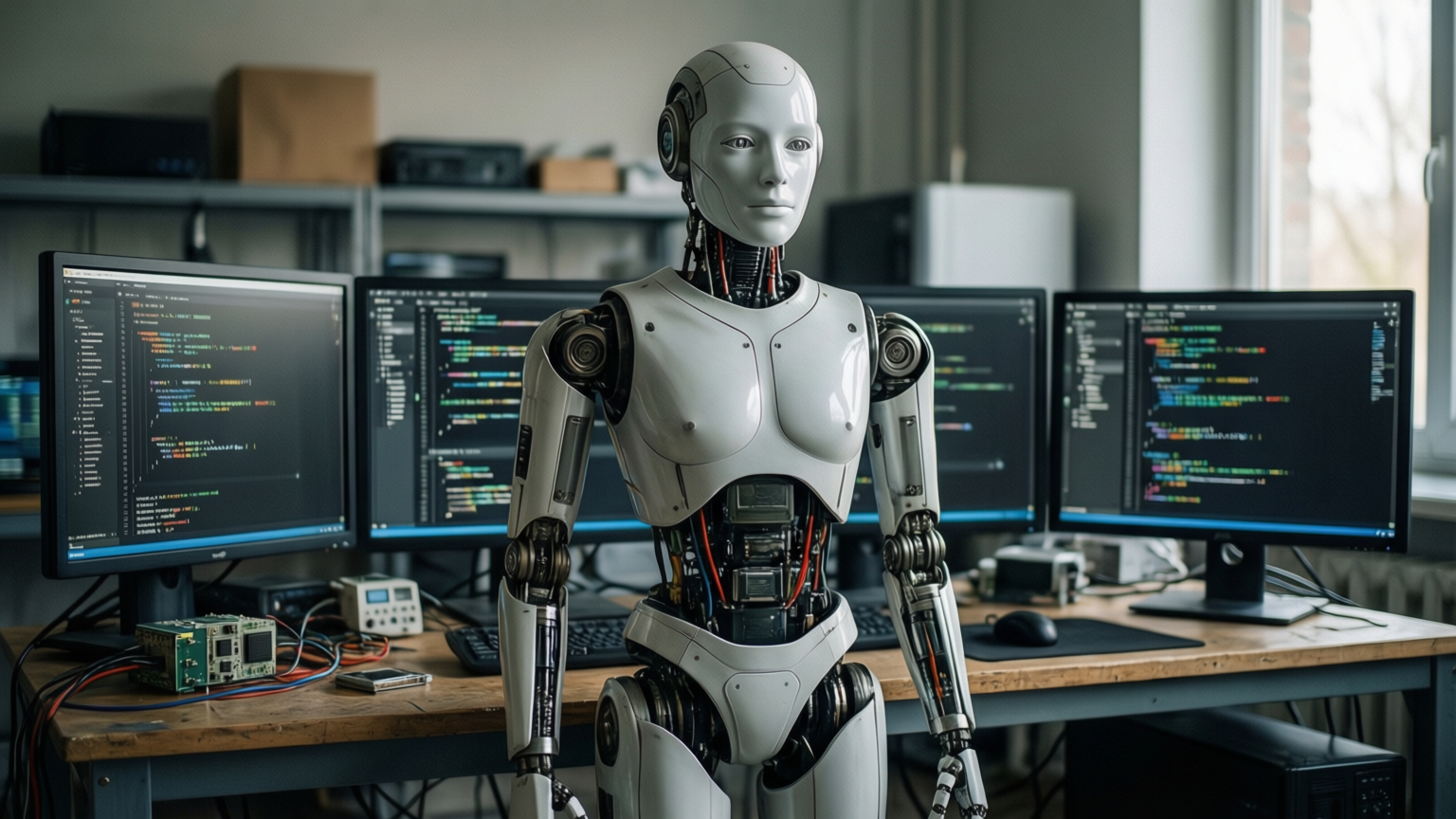
OpenAI is developing a humanoid robot, a project that CEO Sam Altman describes as a logical extension of the company’s work. Speaking on the Sources podcast, Altman explained that the human form is the most practical choice because the world is designed for people. Doors, keyboards, and tools are all built around a specific body type. A robot that can navigate these spaces needs a similar form factor to function effectively.
OpenAI humanoid robot development timeline
Altman confirmed the company’s intent to build the machine. When asked if OpenAI would actually produce one, he gave a direct answer. He stated the company will build it. However, he noted that the physical design is less critical than the intelligence driving it. Giving a machine two arms and two legs does not help if it does not know what to do with them.
The project is still in early stages. Altman told Fortune that the company aims to have a cool demo ready by 2027. He does not expect robots to walk the streets for several years after that. OpenAI has not disclosed what the demo will showcase or what the robot will look like. No details have been released regarding when the public will be able to interact with the hardware.
AI robot brain challenges
The difficulty lies in creating a capable brain for the machine. A humanoid robot must interpret visual data from cameras and sensors, understand instructions, and coordinate its movements. It must also correct itself when the real world introduces unexpected variables. For example, picking up a mug requires the robot to identify the object, locate the handle, estimate the grip, and apply the correct force. Failure to do so results in a spill.
OpenAI is actively recruiting staff to solve these problems. The company has posted roles for motion control, state estimation, and actuator control. They are also hiring for machine learning infrastructure to train physical AI systems. This work builds on previous research, such as the Dactyl project. That project taught a robotic hand to manipulate objects using simulation. The team later applied similar techniques to solve a Rubik’s Cube.
These projects highlight a persistent issue in robotics. A model can learn what should happen through software, but physics ultimately dictates the outcome. OpenAI is addressing this by working on custom electromechanical actuators. These components include motors, transmissions, sensing, and thermal systems. The company is also hiring for manufacturing and supply chain roles to prepare for scale.
Humanoid robot demo and competition
OpenAI is not the only company working on this technology. Tesla has spent years developing its Optimus robot. XPENG recently demonstrated its IRON humanoid walking off a production line. These examples show that smart software must still coordinate complex motors and joints.
OpenAI’s immediate goals are more grounded than placing a robot in every home. A job posting states the short-term objective is to create general-purpose robots for skilled workers building infrastructure. The long-term goal is a personal robot for a wider variety of tasks. The company currently lists 27 robotics openings on its careers page.
OpenAI has not announced a consumer price or a release date for the general public. Questions about privacy and data collection remain unanswered, especially if the robot uses cameras and microphones in homes. The company has not yet defined a robot-specific privacy framework. The focus remains on solving the technical challenges of the AI brain before addressing consumer concerns.
Source: Engadget
